Ciri dan struktur
The conidia of A. brassicicola are abundant in the outdoor environment from the months of May to late October in the northern hemisphere, peaking in June and again in October. The conidia are dark brown and smooth-walled, up to 60 x 14μm. The conidia are cylindrical to oblong in shape and are muriform and produced in chains of 8-10 spores. They are firmly attached to conidiophores that are olive-brown, septate, and growing to an upper range of 100-200 μm, although this overall length may vary. Conidia are borne in continuous, chain-like structure, but branching at the base has also been observed. Although conidia can be spread by rain, the most common means of spread is through the air. The fungus grows on epidermal leaf wax of plants, particularly those in the Brassicaceae, and prefers an environment with high humidity and temperature range of 20-30 C. Macroscopically, the mycelium exhibits a range of colour: unpigmented when young, to olive-grey, grey-black at maturity. Colonies of A. brassicicola tend to be dark brown or black in colour.
Habitat dan peran ekologis
Alternaria brassicicola is a fungal necrotrophic plant pathogen that causes black spot disease on a wide range of hosts, particularly in the genus of Brassica, including a number of economically important crops such as cabbage, Chinese cabbage, cauliflower, oilseeds, broccoli and canola. Although mainly known as a significant plant pathogen, it also contributes to various respiratory allergic conditions such as asthma and rhinoconjunctivitis. Despite the presence of mating genes, no sexual reproductive stage has been reported for this fungus. In terms of geography, it is most likely to be found in tropical and sub-tropical regions, but also in places with high rain and humidity such as Poland. It has also been found in Taiwan and Israel. Its main mode of propagation is vegetative. The resulting conidia reside in the soil, air and water. These spores are extremely resilient and can overwinter on crop debris and overwintering herbaceous plants. The conidia of A. brassicicola are abundant in the outdoor environment from the months of May to late October in the northern hemisphere, peaking in June and again in October. The conidia are dark brown and smooth-walled, up to 60 x 14μm. The conidia are cylindrical to oblong in shape and are muriform and produced in chains of 8-10 spores.
- Habitat atau konteks temuan
- Informasi belum tersedia pada sumber rilis ini.
- Substrat
- Informasi belum tersedia pada sumber rilis ini.
- Peran atau konteks
- Belum dikategorikan pada rilis ini.
Reproduksi
The conidia of A. brassicicola are abundant in the outdoor environment from the months of May to late October in the northern hemisphere, peaking in June and again in October. The conidia are dark brown and smooth-walled, up to 60 x 14μm. The conidia are cylindrical to oblong in shape and are muriform and produced in chains of 8-10 spores. They are firmly attached to conidiophores that are olive-brown, septate, and growing to an upper range of 100-200 μm, although this overall length may vary. Conidia are borne in continuous, chain-like structure, but branching at the base has also been observed. Although conidia can be spread by rain, the most common means of spread is through the air. The fungus grows on epidermal leaf wax of plants, particularly those in the Brassicaceae, and prefers an environment with high humidity and temperature range of 20-30 C.
Catatan identitas dan cakupan
- Nama diterima mengikuti Catalogue of Life Base2026-09-11; uraian mempertahankan konsep dan nama sumber aslinya.
- Original geographic, specimen and life-cycle scope retained; source import awaits individual editorial review.
- Impor dan terjemahan otomatis belum diperiksa editorial per profil. Struktur reproduktif yang disebutkan tidak membuktikan seluruh siklus hidup diketahui.
- Pengukuran pada uraian mengikuti spesimen, kultur, dan metode sumber; angka tidak diperluas ke semua populasi.
Catatan distribusi dalam narasi mengikuti sumbernya. Dokumentasi spesimen atau foto mengikuti catatan sumber. Bukti wilayah Indonesia dan penilaian konservasi tidak disimpulkan dari gambar.
Melihat dengan konteks
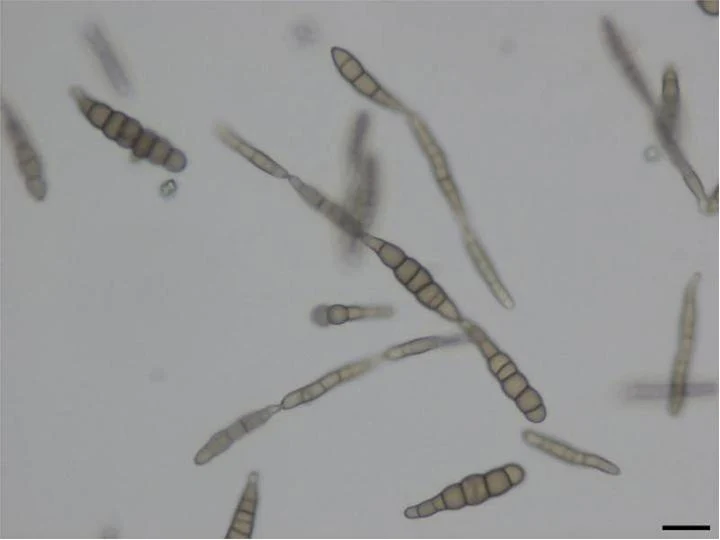
Konidia Alternaria brassicicola dari kultur PDA berumur dua hari. Batang skala asli: 10 µm. Identitas mengikuti berkas sumber.
- Jenis
- Mikrograf
- Kredit
- Seemadua, S. Department of Agriculture, Thailand; PaDIL
- Lisensi
- CC BY 3.0 AU
- Sumber media
- Buka entri sumber
Dokumentasi tambahan
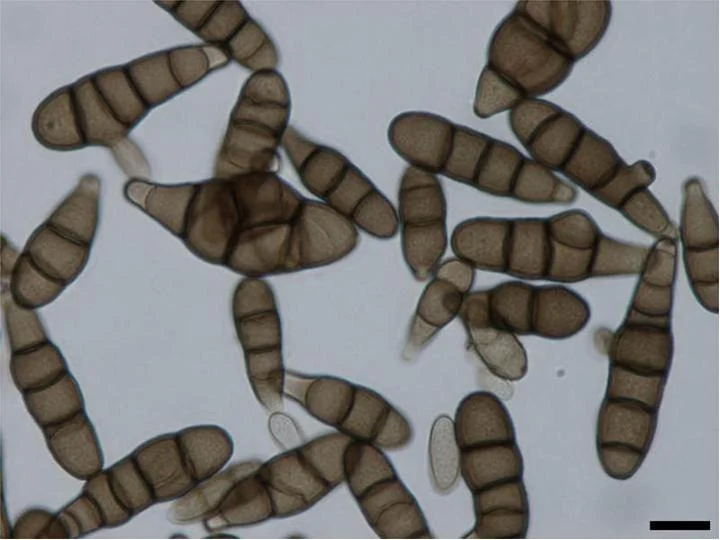
Konidia Alternaria brassicicola dari tanaman inang. Batang skala asli: 10 µm. Identitas mengikuti berkas sumber.
Kredit dan penggunaan
Seemadua, S. Department of Agriculture, Thailand; PaDIL
Ukuran dan format gambar disesuaikan tanpa pemotongan, retus, atau penambahan skala. Lisensi sumber dipertahankan.
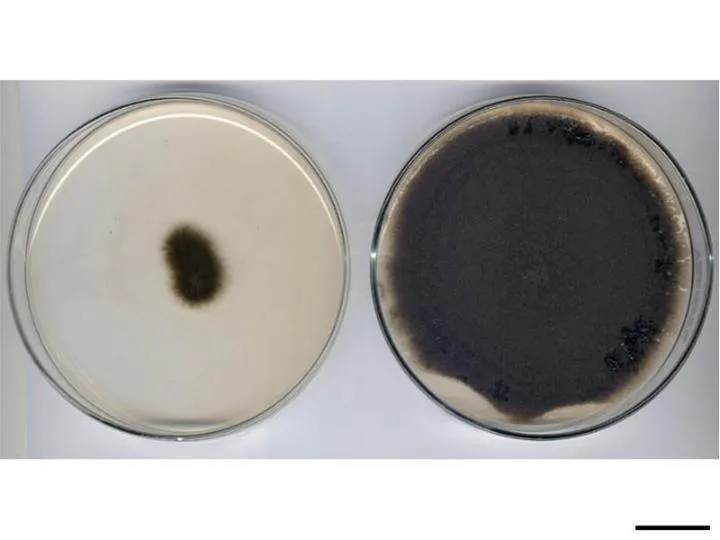
Koloni Alternaria brassicicola pada PDA setelah 3 hari (kiri) dan 17 hari (kanan). Batang skala asli: 2 cm. Identitas mengikuti berkas sumber.
Kredit dan penggunaan
Seemadua, S. Department of Agriculture, Thailand; PaDIL
Ukuran dan format gambar disesuaikan tanpa pemotongan, retus, atau penambahan skala. Lisensi sumber dipertahankan.
Sumber profil
- [1] Alternaria brassicicola — Wikipedia (en)
- [2] Catalogue of Life Base2026-09-11 — Alternaria brassicicola
- [3] Dokumentasi visual — Alternaria brassicicola
- [4] Dokumentasi visual — Alternaria brassicicola
- [5] Dokumentasi visual — Alternaria brassicicola
Rujukan halaman ini
Fungi. Alternaria brassicicola. Rilis data fungi-2026-10-12-expansion-2. https://fungi-atlas.mgadib.chatgpt.site/jamur/alternaria-brassicicola/.
Status: impor sumber; pemeriksaan editorial per profil belum selesai. Untuk klaim biologis, gunakan rujukan pada bagian terkait dan periksa konteks sumber aslinya.