01 / Morfologi

Ciri dan struktur

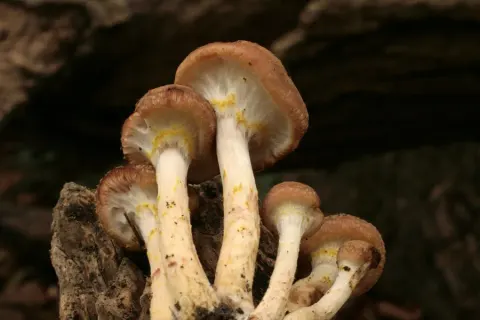
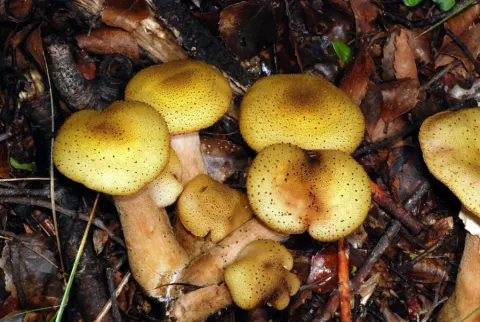
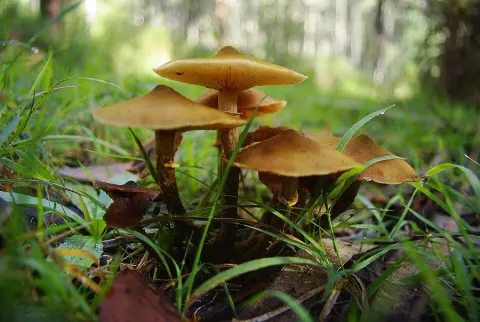
Armillaria root rot is a disease that affects a wide variety of trees and is caused by multiple species in the Armillaria species complex. Armillaria spp. is a basidiomycete fungi. The symptoms for Armillaria spp. can vary greatly because of the wide host range and different species of pathogen. The hosts of Armillaria fuscipes specifically are tropical members of the genus Pinus, Camellia sinensis (tea), and members of the genus Coffea. General symptoms of A. fuscipes, include stunting of the plant, sparse foliage and chlorosis of the leaves. For hosts in the Pinus genus, such as Pinus elliottii, P. kesiya, P. patula, P. taeda, chlorosis of the needles of the infected plant is also a common symptom. Signs of this pathogen are white fans of hyphae that grow between the bark and wood of infected trees as well as the black mycelial cord or rhizomorph of the fungi growing in a net around the root system. The mycelium of A. fuscipes are bioluminescent and the rhizomorph is used to transfer nutrients over large distances to create fruiting bodies as well as infect other trees. The fruiting bodies are brown and white mushrooms that emerge from the base of the tree. The cracking of bark and resin leaking from the base of the tree are other symptoms seen mostly in the Pinus hosts.

Sebagian uraian ditampilkan dalam bahasa sumber; terjemahannya belum tersedia atau belum lolos pemeriksaan.

Rujukan: [1]

Pengukuran mengikuti objek, spesimen atau kultur, dan metode yang disebutkan sumber. Baca uraian asli untuk konteks lengkap.

02 / Kehidupan

Habitat dan peran ekologis

Armillaria root busuk adalah penyakit yang mempengaruhi berbagai macam pohon dan disebabkan oleh beberapa spesies dalam kompleks Armillaria species. Armillaria spp. adalah jamur basidiomycete. Gejala untuk Armillaria spp. dapat sangat bervariasi karena rentang inang yang luas dan spesies patogen yang berbeda. Tuan rumah Armillaria fuscipes secara khusus adalah anggota tropis dari genus Pinus, Camellia sinensis (te), dan anggota dari genus Coffea. General symptoms dari A. fuscipes, termasuk penuaan tanaman, daun langka dan klorosis daun. For hosts pada Pinus genus, seperti Pinus elliottii, P. kesiya, P. patula, P. taeda, klorosis jarum tumbuhan yang terinfeksi juga merupakan gejala umum. Signs of patogen ini adalah penggemar putih dari hifa yang tumbuh di antara kulit dan kayu pohon yang terinfeksi serta tali mycelial hitam atau rhizomorph dari jamur yang tumbuh di jaring di sekitar sistem akar. Mycelium A. fuscipes adalah bioluminescent dan rhizomorph digunakan untuk mentransfer nutrisi di jarak yang jauh untuk menciptakan tubuh berbuah serta menginfeksi pohon lain. Tubuh berbuah adalah jamur coklat dan putih yang muncul dari dasar pohon. Patah kulit dan resin yang bocor dari dasar pohon adalah gejala lain yang terutama terlihat pada Pinus hosts.

Rujukan: [1]

Habitat atau konteks temuan
Informasi belum tersedia pada sumber rilis ini.
Substrat
Informasi belum tersedia pada sumber rilis ini.
Peran atau konteks
Belum dikategorikan pada rilis ini.
Temukan hubungan serupa
03 / Siklus hidup

Reproduksi

Armillaria root rot is a disease that affects a wide variety of trees and is caused by multiple species in the Armillaria species complex. Armillaria spp. is a basidiomycete fungi. The symptoms for Armillaria spp. can vary greatly because of the wide host range and different species of pathogen. The hosts of Armillaria fuscipes specifically are tropical members of the genus Pinus, Camellia sinensis (tea), and members of the genus Coffea. General symptoms of A. fuscipes, include stunting of the plant, sparse foliage and chlorosis of the leaves. For hosts in the Pinus genus, such as Pinus elliottii, P. kesiya, P. patula, P. taeda, chlorosis of the needles of the infected plant is also a common symptom.

Sebagian uraian ditampilkan dalam bahasa sumber; terjemahannya belum tersedia atau belum lolos pemeriksaan.

Rujukan: [1]

04 / Batas informasi

Catatan identitas dan cakupan

  • Nama diterima mengikuti Catalogue of Life Base2026-09-11; uraian mempertahankan konsep dan nama sumber aslinya.
  • Original geographic, specimen and life-cycle scope retained; source import awaits individual editorial review.
  • Impor dan terjemahan otomatis belum diperiksa editorial per profil. Struktur reproduktif yang disebutkan tidak membuktikan seluruh siklus hidup diketahui.
  • Pengukuran pada uraian mengikuti spesimen, kultur, dan metode sumber; angka tidak diperluas ke semua populasi.

Catatan distribusi dalam narasi mengikuti sumbernya. Dokumentasi spesimen atau foto mengikuti catatan sumber. Bukti wilayah Indonesia dan penilaian konservasi tidak disimpulkan dari gambar.

05 / Dokumentasi

Melihat dengan konteks

Dokumentasi Armillaria fuscipes dari Wikimedia Commons. For more information about this, see the observation page at Mushroom Observer. Identifikasi mengikuti record berkas sumber.

Jenis
Fotografi
Kredit
This image was created by user Liz Popich (Lizzie) at Mushroom Observer , a source for mycological images. You can contact this user here .
Sumber media
Buka entri sumber

Gambar menunjukkan objek menurut identifikasi sumber, bukan verifikasi independen spesimen oleh Fungi. Tidak ada skala baru yang ditambahkan.

06 / Rujukan

Sumber profil

  1. [1] Armillaria fuscipes — Wikipedia (en)Bagian sumber: Frozen revision 1226012906
    Tanggal penghimpunan sumber: 2026-10-12
    Teks sumber: CC BY-SA4.0 · Wikipedia contributors
  2. [2] Catalogue of Life Base2026-09-11 — Armillaria fuscipesBagian sumber: ColDP NameUsage.tsv ID GSLT; accepted species; source 2073
    Tanggal penghimpunan sumber: 2026-10-12
  3. [3] Dokumentasi visual — Armillaria fuscipesBagian sumber: Individual media record; identification follows the source, not independent determination
    Tanggal penghimpunan sumber: 2026-10-12
    Media sumber: CC BY-SA 3.0 · This image was created by user Liz Popich (Lizzie) at Mushroom Observer , a source for mycological images. You can contact this user here .

Adaptasi teks: CC BY-SA 4.0. Wikipedia contributors — Armillaria fuscipes — Wikipedia (en)

Uraian asli dan riwayat sumber

Riwayat atau halaman sumber

Ringkasan sumber

Armillaria root rot is a disease that affects a wide variety of trees and is caused by multiple species in the Armillaria species complex. Armillaria spp. is a basidiomycete fungi. The symptoms for Armillaria spp. can vary greatly because of the wide host range and different species of pathogen. The hosts of Armillaria fuscipes specifically are tropical members of the genus Pinus, Camellia sinensis (tea), and members of the genus Coffea. General symptoms of A. fuscipes, include stunting of the plant, sparse foliage and chlorosis of the leaves.

Revisi sumber

Morfologi sumber

Armillaria root rot is a disease that affects a wide variety of trees and is caused by multiple species in the Armillaria species complex. Armillaria spp. is a basidiomycete fungi. The symptoms for Armillaria spp. can vary greatly because of the wide host range and different species of pathogen. The hosts of Armillaria fuscipes specifically are tropical members of the genus Pinus, Camellia sinensis (tea), and members of the genus Coffea. General symptoms of A. fuscipes, include stunting of the plant, sparse foliage and chlorosis of the leaves. For hosts in the Pinus genus, such as Pinus elliottii, P. kesiya, P. patula, P. taeda, chlorosis of the needles of the infected plant is also a common symptom. Signs of this pathogen are white fans of hyphae that grow between the bark and wood of infected trees as well as the black mycelial cord or rhizomorph of the fungi growing in a net around the root system. The mycelium of A. fuscipes are bioluminescent and the rhizomorph is used to transfer nutrients over large distances to create fruiting bodies as well as infect other trees. The fruiting bodies are brown and white mushrooms that emerge from the base of the tree. The cracking of bark and resin leaking from the base of the tree are other symptoms seen mostly in the Pinus hosts.

Revisi sumber

Ekologi sumber

Armillaria root rot is a disease that affects a wide variety of trees and is caused by multiple species in the Armillaria species complex. Armillaria spp. is a basidiomycete fungi. The symptoms for Armillaria spp. can vary greatly because of the wide host range and different species of pathogen. The hosts of Armillaria fuscipes specifically are tropical members of the genus Pinus, Camellia sinensis (tea), and members of the genus Coffea. General symptoms of A. fuscipes, include stunting of the plant, sparse foliage and chlorosis of the leaves. For hosts in the Pinus genus, such as Pinus elliottii, P. kesiya, P. patula, P. taeda, chlorosis of the needles of the infected plant is also a common symptom. Signs of this pathogen are white fans of hyphae that grow between the bark and wood of infected trees as well as the black mycelial cord or rhizomorph of the fungi growing in a net around the root system. The mycelium of A. fuscipes are bioluminescent and the rhizomorph is used to transfer nutrients over large distances to create fruiting bodies as well as infect other trees. The fruiting bodies are brown and white mushrooms that emerge from the base of the tree. The cracking of bark and resin leaking from the base of the tree are other symptoms seen mostly in the Pinus hosts.

Revisi sumber

Struktur reproduksi sumber

Armillaria root rot is a disease that affects a wide variety of trees and is caused by multiple species in the Armillaria species complex. Armillaria spp. is a basidiomycete fungi. The symptoms for Armillaria spp. can vary greatly because of the wide host range and different species of pathogen. The hosts of Armillaria fuscipes specifically are tropical members of the genus Pinus, Camellia sinensis (tea), and members of the genus Coffea. General symptoms of A. fuscipes, include stunting of the plant, sparse foliage and chlorosis of the leaves. For hosts in the Pinus genus, such as Pinus elliottii, P. kesiya, P. patula, P. taeda, chlorosis of the needles of the infected plant is also a common symptom.

Revisi sumber

Rujukan halaman ini

Fungi. Armillaria fuscipes. Rilis data fungi-2026-10-12-expansion-2. https://fungi-atlas.mgadib.chatgpt.site/jamur/armillaria-fuscipes/.

Status: impor sumber; pemeriksaan editorial per profil belum selesai. Untuk klaim biologis, gunakan rujukan pada bagian terkait dan periksa konteks sumber aslinya.