Ciri dan struktur
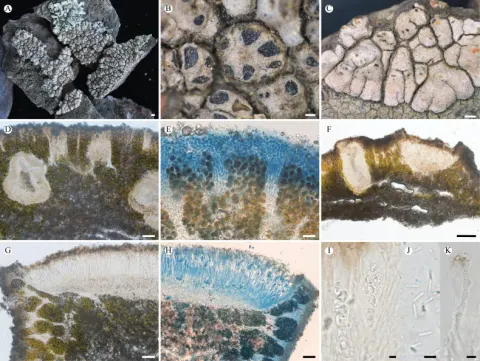
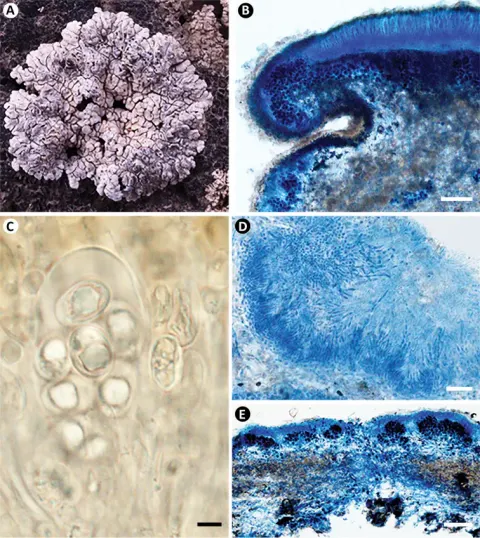
Aspiciliella intermutans is a species of crustose (crust-forming), rock-dwelling lichen in the fungal family Megasporaceae. It was described by William Nylander in 1872 as Lecanora intermutans, based on material collected on sandstone near Saint-Laon and on granite near Brest in France, and distinguished from the similar Lecanora cinerea by its larger spores and shorter spermatia (conidia). The species was later transferred to Aspicilia, and is now placed in Aspiciliella, a genus resurrected using DNA evidence. The lichen forms a -, partly continuous thallus that turns red when tested with potassium hydroxide (K+ red) and contains a green algal . It produces pale brown to black apothecia (fruiting bodies), and its asci are eight-spored with simple, colourless ellipsoid ascospores (Nylander reported spores 23–34 × 9–15 μm and conidia 7–9 × 1 μm; later work reports conidia about 7–11 μm long).
Habitat dan peran ekologis
It typically grows on siliceous or volcanic rocks in open habitats, often on exposed, roughly horizontal outcrop faces, and is reported mainly from the Mediterranean region (with many collections from Iran, Armenia, France and Greece), extending to areas such as Great Britain, the Canary Islands, Tunisia, Syria, the Ural Mountains, and North America, though some records have not been confirmed with DNA data. Molecular studies indicate that specimens identified as A. intermutans comprise several genetically distinct lineages, and broader revisions are planned to determine which lineage represents A. intermutans in the strict sense.
- Habitat atau konteks temuan
- Informasi belum tersedia pada sumber rilis ini.
- Substrat
- Informasi belum tersedia pada sumber rilis ini.
- Peran atau konteks
- Pembentuk liken
Reproduksi
Aspiciliella intermutans is a species of crustose (crust-forming), rock-dwelling lichen in the fungal family Megasporaceae. It was described by William Nylander in 1872 as Lecanora intermutans, based on material collected on sandstone near Saint-Laon and on granite near Brest in France, and distinguished from the similar Lecanora cinerea by its larger spores and shorter spermatia (conidia). The species was later transferred to Aspicilia, and is now placed in Aspiciliella, a genus resurrected using DNA evidence. The lichen forms a -, partly continuous thallus that turns red when tested with potassium hydroxide (K+ red) and contains a green algal . It produces pale brown to black apothecia (fruiting bodies), and its asci are eight-spored with simple, colourless ellipsoid ascospores (Nylander reported spores 23–34 × 9–15 μm and conidia 7–9 × 1 μm; later work reports conidia about 7–11 μm long).
Catatan identitas dan cakupan
- Nama diterima mengikuti Catalogue of Life Base2026-09-11; uraian mempertahankan konsep dan nama sumber aslinya.
- Original geographic, specimen and life-cycle scope retained; source import awaits individual editorial review.
- Impor dan terjemahan otomatis belum diperiksa editorial per profil. Struktur reproduktif yang disebutkan tidak membuktikan seluruh siklus hidup diketahui.
- Pengukuran pada uraian mengikuti spesimen, kultur, dan metode sumber; angka tidak diperluas ke semua populasi.
Catatan distribusi dalam narasi mengikuti sumbernya. Dokumentasi spesimen atau foto mengikuti catatan sumber. Bukti wilayah Indonesia dan penilaian konservasi tidak disimpulkan dari gambar.
Melihat dengan konteks
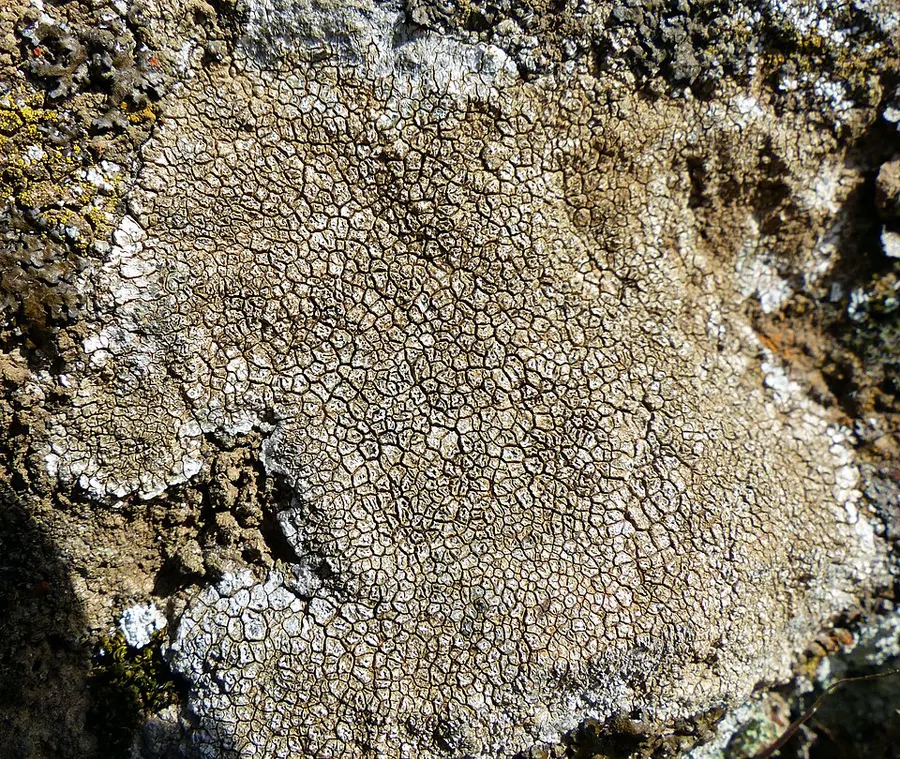
Dokumentasi Aspiciliella intermutans dari Wikimedia Commons. The crustose lichen Aspiciliella intermutans (formerly in genus Aspicilia ), photographed in Italy, Lazio, Roma, Ruines of ancient Tusculum, above Frascati. Identifikasi mengikuti record berkas sumber.
- Jenis
- Fotografi
- Kredit
- Andrea Moro; Owner: Department of Life Sciences, University of Trieste
- Lisensi
- CC BY 4.0
- Sumber media
- Buka entri sumber
Sumber profil
- [1] Aspiciliella intermutans — Wikipedia (en)
- [2] Catalogue of Life Base2026-09-11 — Aspiciliella intermutans
- [3] Dokumentasi visual — Aspiciliella intermutans
Rujukan halaman ini
Fungi. Aspiciliella intermutans. Rilis data fungi-2026-10-12-expansion-2. https://fungi-atlas.mgadib.chatgpt.site/jamur/aspiciliella-intermutans/.
Status: impor sumber; pemeriksaan editorial per profil belum selesai. Untuk klaim biologis, gunakan rujukan pada bagian terkait dan periksa konteks sumber aslinya.