01 / Morfologi

Ciri dan struktur

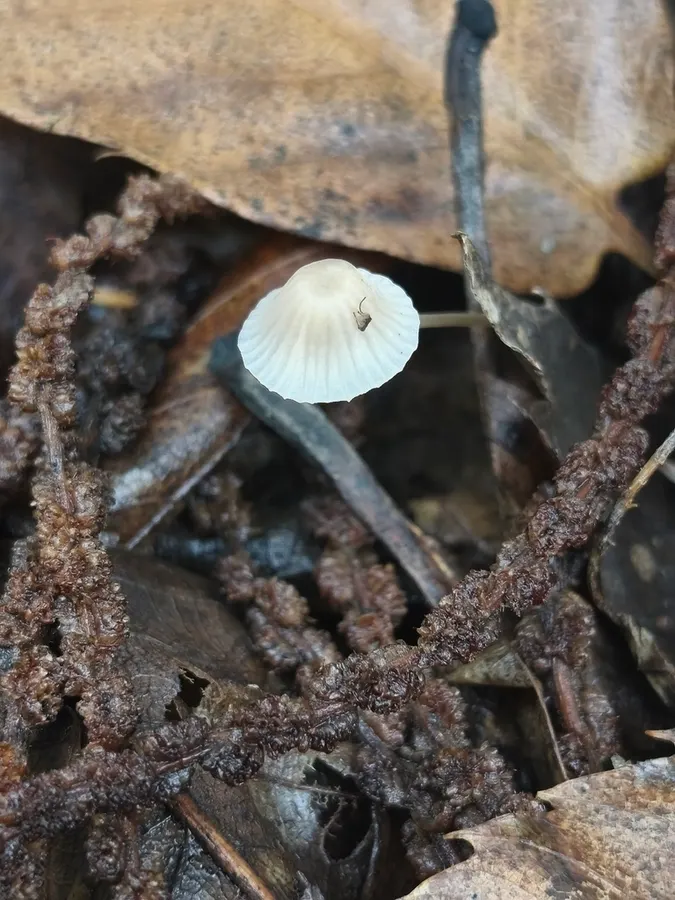
The cap of A. flavoalba is 1 – 2 cm in diameter, conical when young, becoming somewhat bell-shaped, broadly conic or at times nearly convex. It may develop a papilla (a nipple-like structure) in its center. The cap margin is initially pressed against the stem, but in maturity either flares out or curves inward slightly. The cap surface is smooth, moist, and partially translucent, so that the outline of the gills underneath the cap may be seen. The mushroom is hygrophanous (changing color as it loses or gains moisture), being cream-buff to yellowish initially, with a paler (almost white) margin, and fading to buff in the center and yellowish-white along the margin when dry. The flesh is yellowish to white, thick under the disc but otherwise thin, moderately fragile, and without any distinctive odor and taste. The gills are ascending and somewhat hooked or toothed, narrow at first but becoming rather broad (2.5 mm and becoming 3–4 mm). They are nearly equal in width throughout or slightly ventricose in age, with a spacing that is close to subdistant. About 18–24 gills reach the stem, with two tiers of lamellulae (short gills that do not extend fully from the cap margin to the stem) that may develop veins running between them. The gills are white to creamy-white with edges that are even and whitish, and waxy in appearance and consistency. The stem is 3 – 8 cm long, 1 – 2.5 mm thick, equal, tubular, somewhat elastic, cartilaginous, and not particularly fragile. The base of the stem is either strigose (covered with sharp, straight, stiff white hairs) or surrounded with a matted white mycelium.

Sebagian uraian ditampilkan dalam bahasa sumber; terjemahannya belum tersedia atau belum lolos pemeriksaan.

Rujukan: [1]

Pengukuran mengikuti objek, spesimen atau kultur, dan metode yang disebutkan sumber. Baca uraian asli untuk konteks lengkap.

02 / Kehidupan

Habitat dan peran ekologis

The fruit bodies of Atheniella flavoalba grow scattered to densely gregarious in mossy pastures, needle beds under conifers, or on humus in oak woods during the autumn. Spesies ini umum di padang rumput tua di Eropa, tetapi kurang umum di Utara America though kadang-kadang terjadi dalam jumlah besar di daerah-daerah tertentu. Di Amerika Serikat, itu telah dikumpulkan dari Colorado, Idaho, Michigan, North Carolina, Oregon, Washington, Wyoming, Florida, dan Kansas. Hal ini juga ditemukan di Israel. Spesies ini terdaftar sebagai "Least Concern" dalam Danish Red Data Book. Atheniella flavoalba dianggap tidak dapat dimakan.

Sebagian uraian ditampilkan dalam bahasa sumber; terjemahannya belum tersedia atau belum lolos pemeriksaan.

Rujukan: [1]

Habitat atau konteks temuan
padang rumput
Substrat
Informasi belum tersedia pada sumber rilis ini.
Peran atau konteks
Belum dikategorikan pada rilis ini.
Temukan hubungan serupa
03 / Siklus hidup

Reproduksi

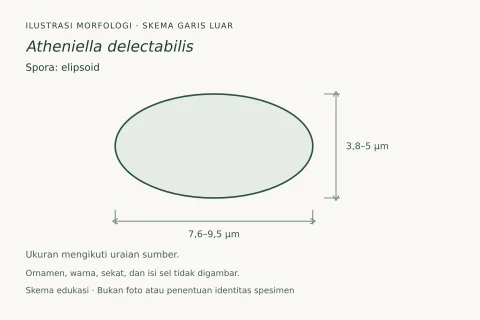
The spores are 7–9 by 3–4.5 μm, ellipsoid, and nonamyloid. The basidia (spore-bearing cells) are four-spored. The pleurocystidia and cheilocystidia (cystidia found on the face and edge of a gill, respectively) are similar in structure and abundant, ventricose with long, rather narrow necks, and measure 46–62 by 9–14 μm. The neck is often encrusted with a mucilaginous substance, but it is otherwise smooth and hyaline. The flesh of the gill is homogeneous, and stains pale yellow in iodine. The flesh of the cap has a thin, poorly differentiated pellicle (a thin membrane), a somewhat differentiated hypoderm (that is most pronounced in old caps) and the remainder is made up of somewhat enlarged cells that stain pale yellow in iodine.

Sebagian uraian ditampilkan dalam bahasa sumber; terjemahannya belum tersedia atau belum lolos pemeriksaan.

Rujukan: [1]

Sinonim menurut acuan taksonomi rilis: Agaricus flavoalbus; Hemimycena flavoalba; Marasmiellus flavoalbus; Mycena flavoalba; Mycena flavoalba var. amara; Mycena flavoalba var. microspora; Mycena pumila
04 / Batas informasi

Catatan identitas dan cakupan

  • Nama diterima mengikuti Catalogue of Life Base2026-09-11; uraian mempertahankan konsep dan nama sumber aslinya.
  • Original geographic, specimen and life-cycle scope retained; source import awaits individual editorial review.
  • Impor dan terjemahan otomatis belum diperiksa editorial per profil. Struktur reproduktif yang disebutkan tidak membuktikan seluruh siklus hidup diketahui.
  • Pengukuran pada uraian mengikuti spesimen, kultur, dan metode sumber; angka tidak diperluas ke semua populasi.

Catatan distribusi dalam narasi mengikuti sumbernya. Dokumentasi spesimen atau foto mengikuti catatan sumber. Bukti wilayah Indonesia dan penilaian konservasi tidak disimpulkan dari gambar.

05 / Dokumentasi

Melihat dengan konteks

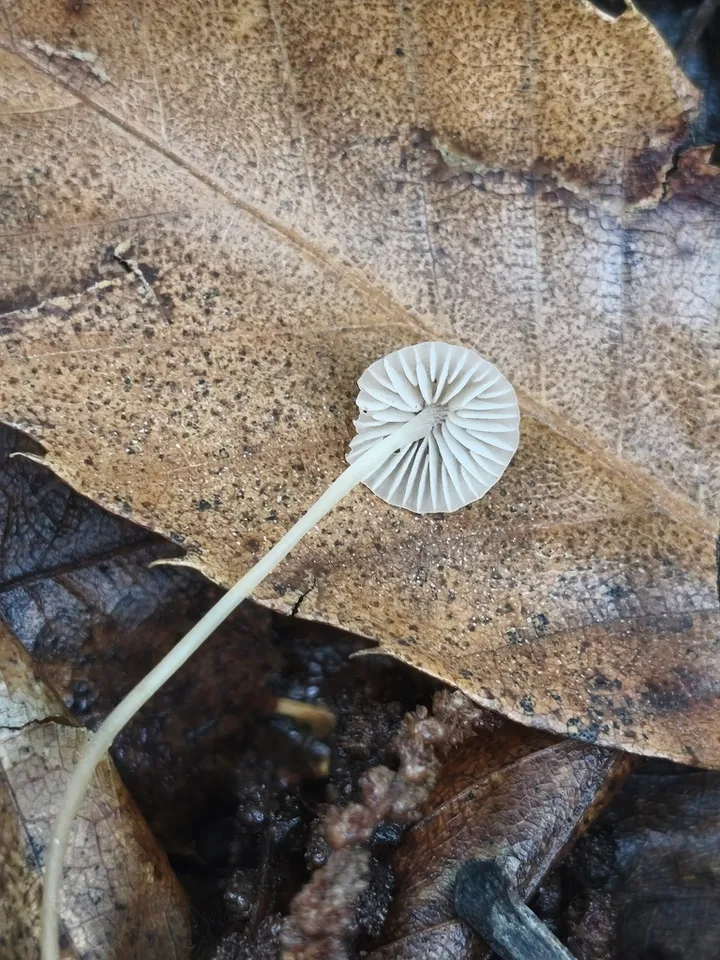
Dokumentasi Atheniella flavoalba menurut asosiasi foto pada record takson iNaturalist. Kredit: victor laborde. Identitas mengikuti sumber; bukan penentuan spesimen independen.

Jenis
Fotografi
Kredit
(c) victor laborde, some rights reserved (CC BY)
Lisensi
CC BY 4.0
Sumber media
Buka entri sumber

Gambar menunjukkan objek menurut identifikasi sumber, bukan verifikasi independen spesimen oleh Fungi. Tidak ada skala baru yang ditambahkan.

Dokumentasi tambahan

06 / Rujukan

Sumber profil

  1. [1] Atheniella flavoalba — Wikipedia (en)Bagian sumber: Frozen revision 1194754473
    Tanggal penghimpunan sumber: 2026-10-12
    Teks sumber: CC BY-SA4.0 · Wikipedia contributors
  2. [2] Catalogue of Life Base2026-09-11 — Atheniella flavoalbaBagian sumber: ColDP NameUsage.tsv ID 5VVC8; accepted species; source 2073
    Tanggal penghimpunan sumber: 2026-10-12
  3. [3] Dokumentasi visual — Atheniella flavoalbaBagian sumber: Identitas mengikuti sumber dokumentasi; bukan penentuan spesimen independen.
    Tanggal penghimpunan sumber: 2026-10-17
    Media sumber: CC BY 4.0 · (c) victor laborde, some rights reserved (CC BY)
  4. [4] Dokumentasi visual — Atheniella flavoalbaBagian sumber: Identitas mengikuti sumber dokumentasi; bukan penentuan spesimen independen.
    Tanggal penghimpunan sumber: 2026-10-17
    Teks sumber: CC BY 4.0 · (c) victor laborde, some rights reserved (CC BY)

Adaptasi teks: CC BY-SA 4.0. Wikipedia contributors — Atheniella flavoalba — Wikipedia (en)

Uraian asli dan riwayat sumber

Riwayat atau halaman sumber

Ringkasan sumber

Atheniella flavoalba, which has the recommended name of ivory bonnet in the UK, is a species of agaric in the family Cyphellaceae. The cap is initially conical, before becoming convex and then flat; it may reach up to 1.5 cm across. The cap is ivory-white to yellowish white, sometimes more yellowish at the center. The tubular stems are up to 8 cm long and 2.5 mm thick, and have long, coarse white hairs at their bases. Atheniella flavoalba is found in Europe, the Middle East, and North America, where it grows scattered in pastures or in dense groups under conifers and on humus in oak woods.

Revisi sumber

Morfologi sumber

The cap of A. flavoalba is 1 – 2 cm in diameter, conical when young, becoming somewhat bell-shaped, broadly conic or at times nearly convex. It may develop a papilla (a nipple-like structure) in its center. The cap margin is initially pressed against the stem, but in maturity either flares out or curves inward slightly. The cap surface is smooth, moist, and partially translucent, so that the outline of the gills underneath the cap may be seen. The mushroom is hygrophanous (changing color as it loses or gains moisture), being cream-buff to yellowish initially, with a paler (almost white) margin, and fading to buff in the center and yellowish-white along the margin when dry. The flesh is yellowish to white, thick under the disc but otherwise thin, moderately fragile, and without any distinctive odor and taste. The gills are ascending and somewhat hooked or toothed, narrow at first but becoming rather broad (2.5 mm and becoming 3–4 mm). They are nearly equal in width throughout or slightly ventricose in age, with a spacing that is close to subdistant. About 18–24 gills reach the stem, with two tiers of lamellulae (short gills that do not extend fully from the cap margin to the stem) that may develop veins running between them. The gills are white to creamy-white with edges that are even and whitish, and waxy in appearance and consistency. The stem is 3 – 8 cm long, 1 – 2.5 mm thick, equal, tubular, somewhat elastic, cartilaginous, and not particularly fragile. The base of the stem is either strigose (covered with sharp, straight, stiff white hairs) or surrounded with a matted white mycelium.

Revisi sumber

Ekologi sumber

The fruit bodies of Atheniella flavoalba grow scattered to densely gregarious in mossy pastures, needle beds under conifers, or on humus in oak woods during the autumn. The species is common in old grassland in Europe, but less common in North America though sometimes occurring in large quantities in certain localities. In the United States, it has been collected from Colorado, Idaho, Michigan, North Carolina, Oregon, Washington, Wyoming, Florida, and Kansas. It is also found in Israel. The species is listed as "Least Concern" in the Danish Red Data Book. Atheniella flavoalba is considered inedible.

Revisi sumber

Struktur reproduksi sumber

The spores are 7–9 by 3–4.5 μm, ellipsoid, and nonamyloid. The basidia (spore-bearing cells) are four-spored. The pleurocystidia and cheilocystidia (cystidia found on the face and edge of a gill, respectively) are similar in structure and abundant, ventricose with long, rather narrow necks, and measure 46–62 by 9–14 μm. The neck is often encrusted with a mucilaginous substance, but it is otherwise smooth and hyaline. The flesh of the gill is homogeneous, and stains pale yellow in iodine. The flesh of the cap has a thin, poorly differentiated pellicle (a thin membrane), a somewhat differentiated hypoderm (that is most pronounced in old caps) and the remainder is made up of somewhat enlarged cells that stain pale yellow in iodine.

Revisi sumber

Rujukan halaman ini

Fungi. Atheniella flavoalba. Rilis data fungi-2026-10-12-expansion-2. https://fungi-atlas.mgadib.chatgpt.site/jamur/atheniella-flavoalba/.

Status: impor sumber; pemeriksaan editorial per profil belum selesai. Untuk klaim biologis, gunakan rujukan pada bagian terkait dan periksa konteks sumber aslinya.