Ciri dan struktur
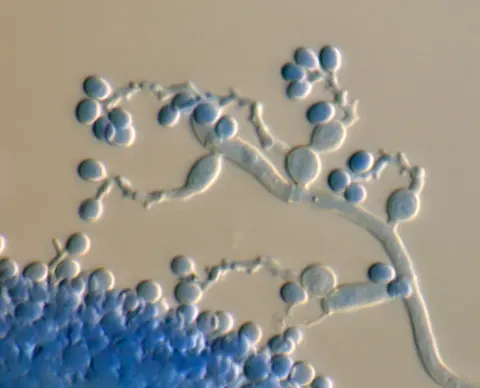
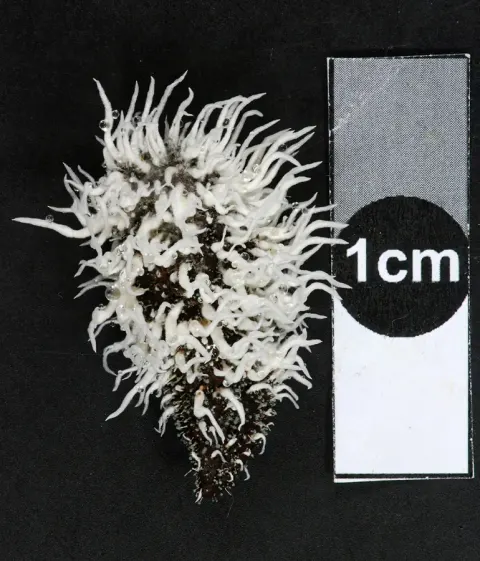
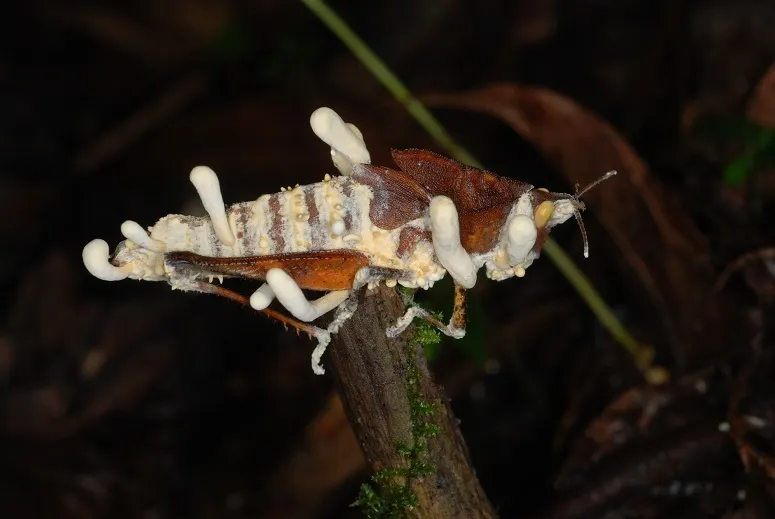
The fruiting bodies of Cordyceps locustiphila form gregariously as clubs through breaks and joints in the chitinous shell of their host locusts. The stipe of the club is a fleshy greyish yellow with a length of 1–4 mm long and a diameter of 1–2 mm. The stromata formed on the ends of the club are bright yellow and have a simple, claviform, body plan, ranging from 3–5 mm in length and 2–4 mm in width. Ovoid perithecia are semi-immersed within the walls of the stoma, and have a wall smaller than 50 micrometers. The anamorph of this fungi forms as an ocher yellow hyphal network which turns white at the external margins. The hyphae have a diameter of 1.5–2.5 nanometers. The fungi produces conidiophores with acremonium-like phialides that are simple and erect from the hyphal mat. Conidia are cylindrical in appearance, and are produced solitarily, or via the slime drop method. This asexual phase is what spurned the reclassification as a Beauveria species
Habitat dan peran ekologis
C. locustiphila has evolved to be closely dependent on its host species, grasshoppers in the genus Colpolopha. As such, it is limited to the range of this grasshopper, and are endemic to South America, including regions of north-central Argentina, Northern Chile, Southern Brazil, and south east Peru. { "type": "FeatureCollection", "features": [ { "type": "Feature", "properties": {}, "geometry": { "type": "Polygon", "coordinates": [ [ [ -69.448097, -14.891352 ], [ -51.875133, -20.714656 ], [ -51.945419, -29.246826 ], [ -59.115196, -31.611849 ], [ -64.527667, -36.673339 ], [ -69.166923, -39.060634 ], [ -69.448097, -14.891352 ] ] ] } } ] } The fungus colonizes the bodies of its host when ascospores become trapped on the chitin exoskeleton by the grasshoppers fine hairs and begin to germinate. As the mycelium develops, it breaks through the exoskeleton to invade the interior cavities of the insects body for protection during growth. The fungi then uses the insect as a source of nutrients and shelter for its lifespan. When it is time to reproduce and disperse spores, the mycelium produces stroma that emerge through gaps and joints in the exoskeleton. Ascospores are then released by semi-embedded Perithecia in the stroma's wall to be dispersed by the wind.
- Habitat atau konteks temuan
- Informasi belum tersedia pada sumber rilis ini.
- Substrat
- Informasi belum tersedia pada sumber rilis ini.
- Peran atau konteks
- Belum dikategorikan pada rilis ini.
Reproduksi
The anamorph of this fungi forms as an ocher yellow hyphal network which turns white at the external margins. The hyphae have a diameter of 1.5–2.5 nanometers. The fungi produces conidiophores with acremonium-like phialides that are simple and erect from the hyphal mat. Conidia are cylindrical in appearance, and are produced solitarily, or via the slime drop method. This asexual phase is what spurned the reclassification as a Beauveria species
Catatan identitas dan cakupan
- Nama diterima mengikuti Catalogue of Life Base2026-09-11; uraian mempertahankan konsep dan nama sumber aslinya.
- Original geographic, specimen and life-cycle scope retained; source import awaits individual editorial review.
- Impor dan terjemahan otomatis belum diperiksa editorial per profil. Struktur reproduktif yang disebutkan tidak membuktikan seluruh siklus hidup diketahui.
- Pengukuran pada uraian mengikuti spesimen, kultur, dan metode sumber; angka tidak diperluas ke semua populasi.
Catatan distribusi dalam narasi mengikuti sumbernya. Dokumentasi spesimen atau foto mengikuti catatan sumber. Bukti wilayah Indonesia dan penilaian konservasi tidak disimpulkan dari gambar.
Melihat dengan konteks
Dokumentasi Beauveria locustiphila menurut asosiasi foto pada record takson iNaturalist. Kredit: Douglas Goldman. Identitas mengikuti sumber; bukan penentuan spesimen independen.
- Jenis
- Fotografi
- Kredit
- (c) Douglas Goldman, some rights reserved (CC BY-SA), uploaded by Douglas Goldman
- Lisensi
- CC BY-SA 4.0
- Sumber media
- Buka entri sumber
Dokumentasi tambahan
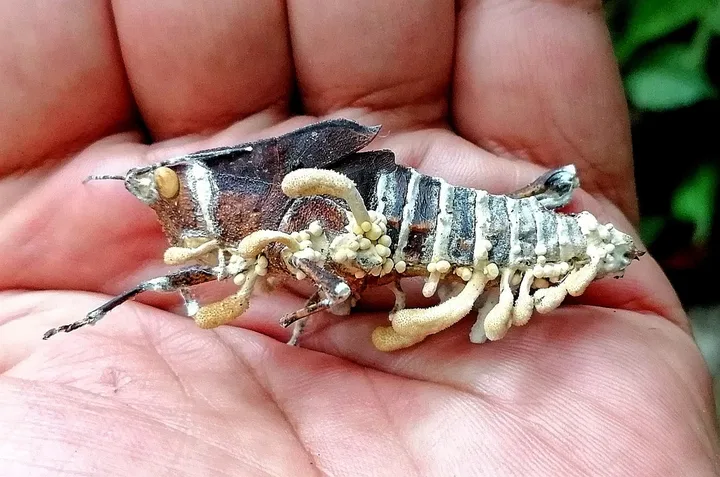
Foto yang diasosiasikan dengan Beauveria locustiphila pada iNaturalist. Identifikasi mengikuti sumber; bukan penentuan spesimen independen.
Kredit dan penggunaan
no rights reserved, uploaded by Ferhat Gundogdu
Ukuran dan format gambar disesuaikan tanpa pemotongan, retus, atau penambahan skala. Lisensi sumber dipertahankan.
Sumber profil
- [1] Cordyceps locustiphila — Wikipedia (en)
- [2] Catalogue of Life Base2026-09-11 — Beauveria locustiphila
- [3] Dokumentasi visual — Beauveria locustiphila
- [4] Dokumentasi visual — Beauveria locustiphila
Rujukan halaman ini
Fungi. Beauveria locustiphila. Rilis data fungi-2026-10-12-expansion-2. https://fungi-atlas.mgadib.chatgpt.site/jamur/beauveria-locustiphila/.
Status: impor sumber; pemeriksaan editorial per profil belum selesai. Untuk klaim biologis, gunakan rujukan pada bagian terkait dan periksa konteks sumber aslinya.