01 / Morfologi

Ciri dan struktur

The thallus is crustose and consists of discrete, rounded granules that may be scattered or crowded; as they develop they can look somewhat (broken into discrete angular patches), with individual units about 0.1–0.2 mm wide. The surface is yellow to bright yellow and smooth, and many granules disintegrate into much smaller propagules interpreted as blastidia, usually between 35 and 80 micrometres (μm) in diameter. The (photosynthetic partner) is a green alga. Apothecia are uncommon (only a few fertile specimens were seen). When present, they are and usually small, about 0.3–0.5 mm in diameter (ranging from 0.2–0.8 mm). The is yellow to slightly darker yellow than the thallus and is flat to convex in larger apothecia. Microscopically, the hymenium is colourless and about 90–115 μm high, the is yellow to golden-brown with fine granular crystals, and the clavate asci are polyspored (typically about 16–20 spores per ascus). The ascospores are mostly (non-septate), only rarely with a thin septum, and are usually narrowly ellipsoid but variable to almost oblong, measuring 9.5–13 × 4–5.5 μm (with extremes of 8.5–14 × 3–6 μm recorded). Pycnidia were not observed. Chemical analyses detected calycin together with pulvinic acid lactone and pulvinic acid. The thallus reacts to spot tests K+ (reddish), KC−, and C−.

Sebagian uraian ditampilkan dalam bahasa sumber; terjemahannya belum tersedia atau belum lolos pemeriksaan.

Rujukan: [1]

Pengukuran mengikuti objek, spesimen atau kultur, dan metode yang disebutkan sumber. Baca uraian asli untuk konteks lengkap.

02 / Kehidupan

Habitat dan peran ekologis

Candelariella granuliformis is an arctic–alpine species that grows on soil, bryophytes, and plant debris on the ground in open tundra and exposed mountain habitats. It is known from scattered localities in arctic North America, and also from high-elevation sites in the western United States, including mountain ranges of the Sierra Nevada and the Rocky Mountains. In Europe, it has been reported from alpine Scandinavia and the Alps. In Sweden it has been collected in Padjelanta National Park (Lule lappmark), both on bryophytes and plant debris on the ground near the river on the south slope of Mount Unna Duvgge and on bryophytes growing on rock along the Nordkalott trail.

Sebagian uraian ditampilkan dalam bahasa sumber; terjemahannya belum tersedia atau belum lolos pemeriksaan.

Rujukan: [1]

Habitat atau konteks temuan
Informasi belum tersedia pada sumber rilis ini.
Substrat
tanah
Peran atau konteks
Pembentuk liken
Temukan hubungan serupa
03 / Siklus hidup

Reproduksi

Apothecia are uncommon (only a few fertile specimens were seen). When present, they are and usually small, about 0.3–0.5 mm in diameter (ranging from 0.2–0.8 mm). The is yellow to slightly darker yellow than the thallus and is flat to convex in larger apothecia. Microscopically, the hymenium is colourless and about 90–115 μm high, the is yellow to golden-brown with fine granular crystals, and the clavate asci are polyspored (typically about 16–20 spores per ascus). The ascospores are mostly (non-septate), only rarely with a thin septum, and are usually narrowly ellipsoid but variable to almost oblong, measuring 9.5–13 × 4–5.5 μm (with extremes of 8.5–14 × 3–6 μm recorded). Pycnidia were not observed.

Sebagian uraian ditampilkan dalam bahasa sumber; terjemahannya belum tersedia atau belum lolos pemeriksaan.

Rujukan: [1]

04 / Batas informasi

Catatan identitas dan cakupan

  • Nama diterima mengikuti Catalogue of Life Base2026-09-11; uraian mempertahankan konsep dan nama sumber aslinya.
  • Original geographic, specimen and life-cycle scope retained; source import awaits individual editorial review.
  • Impor dan terjemahan otomatis belum diperiksa editorial per profil. Struktur reproduktif yang disebutkan tidak membuktikan seluruh siklus hidup diketahui.
  • Pengukuran pada uraian mengikuti spesimen, kultur, dan metode sumber; angka tidak diperluas ke semua populasi.

Catatan distribusi dalam narasi mengikuti sumbernya. Dokumentasi spesimen atau foto mengikuti catatan sumber. Bukti wilayah Indonesia dan penilaian konservasi tidak disimpulkan dari gambar.

05 / Dokumentasi

Melihat dengan konteks

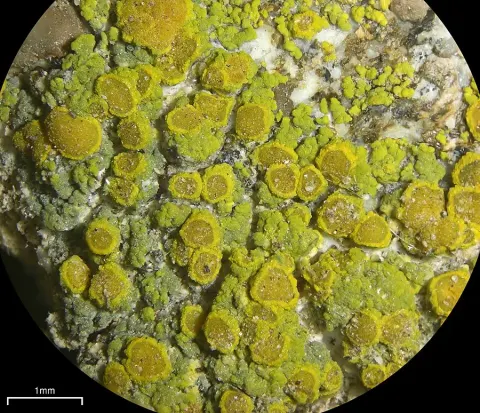
Dokumentasi Candelariella granuliformis dari Wikimedia Commons. Figure 5 ; Candelariella granuliformis – lecanorine apothecia on a granular thallus with small granules soon disintegrating into blastidia Identifikasi mengikuti record berkas sumber.

Jenis
Fotografi
Kredit
Westberg M, Clerc P (2012) Five species of Candelaria and Candelariella (Ascomycota, Candelariales) new to Switzerland. MycoKeys 3: 1-12. https://doi.org/10.3897/mycokeys.3.2864
Lisensi
CC BY 3.0
Sumber media
Buka entri sumber

Gambar menunjukkan objek menurut identifikasi sumber, bukan verifikasi independen spesimen oleh Fungi. Tidak ada skala baru yang ditambahkan.

06 / Rujukan

Sumber profil

  1. [1] Candelariella granuliformis — Wikipedia (en)Bagian sumber: Frozen revision 1341957983
    Tanggal penghimpunan sumber: 2026-10-12
    Teks sumber: CC BY-SA4.0 · Wikipedia contributors
  2. [2] Catalogue of Life Base2026-09-11 — Candelariella granuliformisBagian sumber: ColDP NameUsage.tsv ID QKWR; accepted species; source 2073
    Tanggal penghimpunan sumber: 2026-10-12
  3. [3] Dokumentasi visual — Candelariella granuliformisBagian sumber: Individual media record; identification follows the source, not independent determination
    Tanggal penghimpunan sumber: 2026-10-12
    Media sumber: CC BY 3.0 · Westberg M, Clerc P (2012) Five species of Candelaria and Candelariella (Ascomycota, Candelariales) new to Switzerland. MycoKeys 3: 1-12. https://doi.org/10.3897/mycokeys.3.2864

Adaptasi teks: CC BY-SA 4.0. Wikipedia contributors — Candelariella granuliformis — Wikipedia (en)

Uraian asli dan riwayat sumber

Riwayat atau halaman sumber

Ringkasan sumber

Candelariella granuliformis is a species of terricolous (ground-dwelling) crustose lichen in the family Candelariaceae. It forms a yellow crust made up of tiny granules that break apart into smaller fragments for asexual reproduction. Fruiting bodies are rarely produced. The species occurs in arctic and alpine habitats across northern Canada, Scandinavia, and the mountains of the western United States.

Revisi sumber

Morfologi sumber

The thallus is crustose and consists of discrete, rounded granules that may be scattered or crowded; as they develop they can look somewhat (broken into discrete angular patches), with individual units about 0.1–0.2 mm wide. The surface is yellow to bright yellow and smooth, and many granules disintegrate into much smaller propagules interpreted as blastidia, usually between 35 and 80 micrometres (μm) in diameter. The (photosynthetic partner) is a green alga. Apothecia are uncommon (only a few fertile specimens were seen). When present, they are and usually small, about 0.3–0.5 mm in diameter (ranging from 0.2–0.8 mm). The is yellow to slightly darker yellow than the thallus and is flat to convex in larger apothecia. Microscopically, the hymenium is colourless and about 90–115 μm high, the is yellow to golden-brown with fine granular crystals, and the clavate asci are polyspored (typically about 16–20 spores per ascus). The ascospores are mostly (non-septate), only rarely with a thin septum, and are usually narrowly ellipsoid but variable to almost oblong, measuring 9.5–13 × 4–5.5 μm (with extremes of 8.5–14 × 3–6 μm recorded). Pycnidia were not observed. Chemical analyses detected calycin together with pulvinic acid lactone and pulvinic acid. The thallus reacts to spot tests K+ (reddish), KC−, and C−.

Revisi sumber

Ekologi sumber

Candelariella granuliformis is an arctic–alpine species that grows on soil, bryophytes, and plant debris on the ground in open tundra and exposed mountain habitats. It is known from scattered localities in arctic North America, and also from high-elevation sites in the western United States, including mountain ranges of the Sierra Nevada and the Rocky Mountains. In Europe, it has been reported from alpine Scandinavia and the Alps. In Sweden it has been collected in Padjelanta National Park (Lule lappmark), both on bryophytes and plant debris on the ground near the river on the south slope of Mount Unna Duvgge and on bryophytes growing on rock along the Nordkalott trail.

Revisi sumber

Struktur reproduksi sumber

Apothecia are uncommon (only a few fertile specimens were seen). When present, they are and usually small, about 0.3–0.5 mm in diameter (ranging from 0.2–0.8 mm). The is yellow to slightly darker yellow than the thallus and is flat to convex in larger apothecia. Microscopically, the hymenium is colourless and about 90–115 μm high, the is yellow to golden-brown with fine granular crystals, and the clavate asci are polyspored (typically about 16–20 spores per ascus). The ascospores are mostly (non-septate), only rarely with a thin septum, and are usually narrowly ellipsoid but variable to almost oblong, measuring 9.5–13 × 4–5.5 μm (with extremes of 8.5–14 × 3–6 μm recorded). Pycnidia were not observed.

Revisi sumber

Rujukan halaman ini

Fungi. Candelariella granuliformis. Rilis data fungi-2026-10-12-expansion-2. https://fungi-atlas.mgadib.chatgpt.site/jamur/candelariella-granuliformis/.

Status: impor sumber; pemeriksaan editorial per profil belum selesai. Untuk klaim biologis, gunakan rujukan pada bagian terkait dan periksa konteks sumber aslinya.