Ciri dan struktur
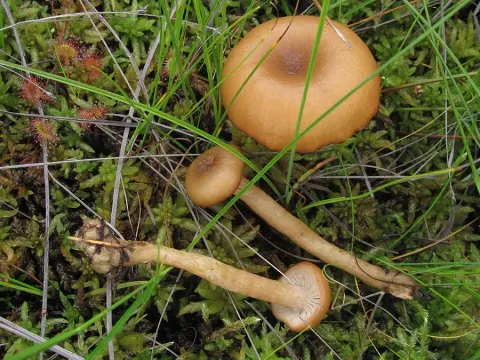
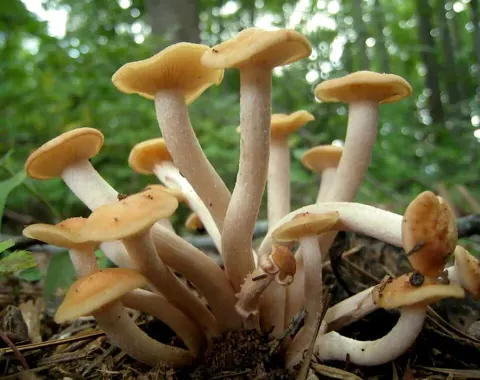
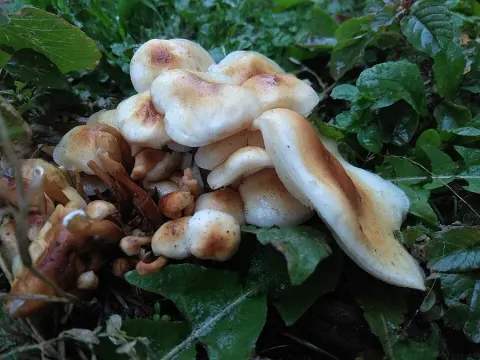
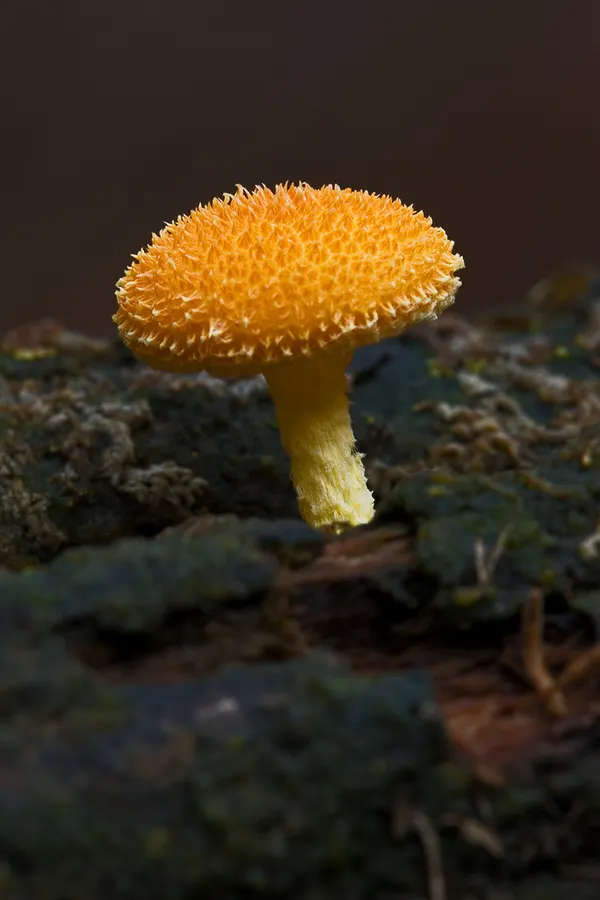
The cap is 0.6 to 2.7 cm in diameter, convex to cushion-shaped. The cap surface is dry, and younger specimens are covered with characteristic spikes; as the spikes break up with age, they tend to look more hairy or woolly. Older specimens typically have the surface features worn off. The cap margin tends to be rolled inwards when young, gradually becoming straight with maturity. The color of the cap is bright or pale yellow, increasing in intensity towards the center of the cap. C. asprata has a web-like ring that soon disappears. The gills, pale yellow to white in color, are distantly spaced and have an adnate (squarely attached) or short decurrent (running down the length) attachment to the stem; they feel greasy when dried and crushed. The stem is 1 to 6.7 cm long by 0.2 to 0.4 cm thick at the stem apex; the stem is slightly thicker towards the base, and may be covered with hyphae that appear woolly (flocculose) or hairy (fibrillose). The surface of the stem may also be scaly – especially towards the base – or it may be covered with very small particles (granular). The flesh of this mushroom is white or pale yellow, with no distinctive taste or odor. Spores are thin-walled, smooth, and ellipsoidal or oval in shape. Viewed with a microscope, they appear translucent (hyaline), and stain red or blue with Melzer's reagent (inamyloid). Their dimensions are typically 7–10 by 5–7 μm; the spores contain a single large oil droplet. The spore-bearing cells, the basidia, are club-shaped, two- to four-spored, and 25–30 by 5–7 μm. The presence of sterile cells called pleurocystidia (large cells found on the gill face in some mushrooms) is uncommon; specimens may contain few or abundant cheilocystidia (large sterile cells found on the gill edge) that are club-shaped, thin-walled and 39–87.5 by 8.5–16 μm in size.
Habitat dan peran ekologis
Cyptotrama asprata is a saprobic fungus, and grows on the decaying wood of deciduous and coniferous trees. Host species include white fir (Abies concolor), sugar maple (Acer saccharum) and other maple (Acer) species, grey alder (Alnus oblongifolia), beech (Fagus) species, spruce (Picea) species, ponderosa pine (Pinus ponderosa) and other pine (Pinus) species, poplar (Populus) and oak (Quercus) species. In temperate North America, specimens are typically collected between July through September. China, India, Japan, and the Russian Far East. It is absent from Europe and northwestern North America.
- Habitat atau konteks temuan
- Informasi belum tersedia pada sumber rilis ini.
- Substrat
- Informasi belum tersedia pada sumber rilis ini.
- Peran atau konteks
- Pengurai
Reproduksi
Spores are thin-walled, smooth, and ellipsoidal or oval in shape. Viewed with a microscope, they appear translucent (hyaline), and stain red or blue with Melzer's reagent (inamyloid). Their dimensions are typically 7–10 by 5–7 μm; the spores contain a single large oil droplet. The spore-bearing cells, the basidia, are club-shaped, two- to four-spored, and 25–30 by 5–7 μm. The presence of sterile cells called pleurocystidia (large cells found on the gill face in some mushrooms) is uncommon; specimens may contain few or abundant cheilocystidia (large sterile cells found on the gill edge) that are club-shaped, thin-walled and 39–87.5 by 8.5–16 μm in size.
Catatan identitas dan cakupan
- Nama diterima mengikuti Catalogue of Life Base2026-09-11; uraian mempertahankan konsep dan nama sumber aslinya.
- Original geographic, specimen and life-cycle scope retained; source import awaits individual editorial review.
- Impor dan terjemahan otomatis belum diperiksa editorial per profil. Struktur reproduktif yang disebutkan tidak membuktikan seluruh siklus hidup diketahui.
- Pengukuran pada uraian mengikuti spesimen, kultur, dan metode sumber; angka tidak diperluas ke semua populasi.
Catatan distribusi dalam narasi mengikuti sumbernya. Dokumentasi spesimen atau foto mengikuti catatan sumber. Bukti wilayah Indonesia dan penilaian konservasi tidak disimpulkan dari gambar.
Melihat dengan konteks
Dokumentasi Cyptotrama asprata menurut asosiasi foto pada record takson iNaturalist. Kredit: JJ Harrison. Identitas mengikuti sumber; bukan penentuan spesimen independen.
- Jenis
- Fotografi
- Kredit
- (c) JJ Harrison, some rights reserved (CC BY-SA)
- Lisensi
- CC BY-SA 4.0
- Sumber media
- Buka entri sumber
Dokumentasi tambahan
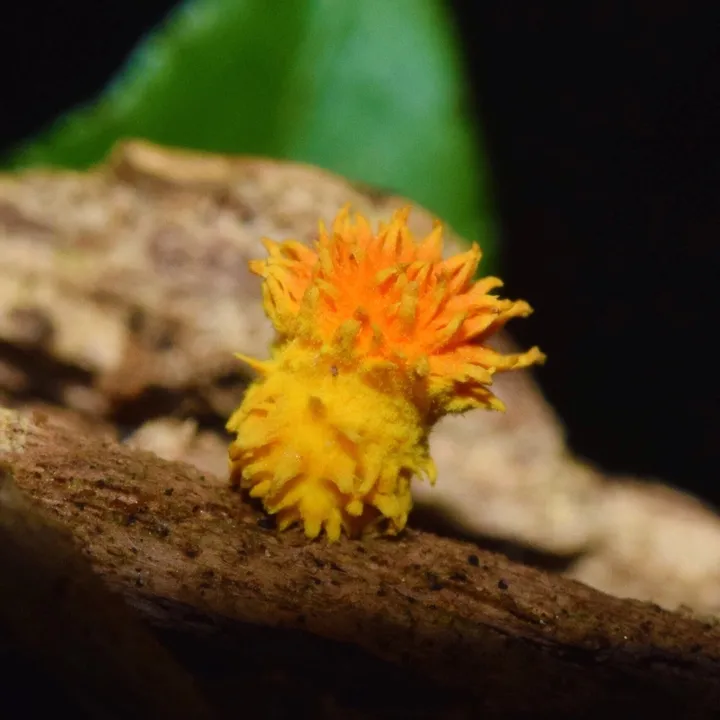
Foto yang diasosiasikan dengan Cyptotrama asprata pada iNaturalist. Identifikasi mengikuti sumber; bukan penentuan spesimen independen.
Kredit dan penggunaan
(c) Sunčana Bradley, some rights reserved (CC BY), uploaded by Sunčana Bradley
Ukuran dan format gambar disesuaikan tanpa pemotongan, retus, atau penambahan skala. Lisensi sumber dipertahankan.
Sumber profil
- [1] Cyptotrama asprata — Wikipedia (en)
- [2] Catalogue of Life Base2026-09-11 — Cyptotrama asprata
- [3] Dokumentasi visual — Cyptotrama asprata
- [4] Dokumentasi visual — Cyptotrama asprata
Rujukan halaman ini
Fungi. Cyptotrama asprata. Rilis data fungi-2026-10-12-expansion-2. https://fungi-atlas.mgadib.chatgpt.site/jamur/cyptotrama-asprata/.
Status: impor sumber; pemeriksaan editorial per profil belum selesai. Untuk klaim biologis, gunakan rujukan pada bagian terkait dan periksa konteks sumber aslinya.