01 / Morfologi

Ciri dan struktur

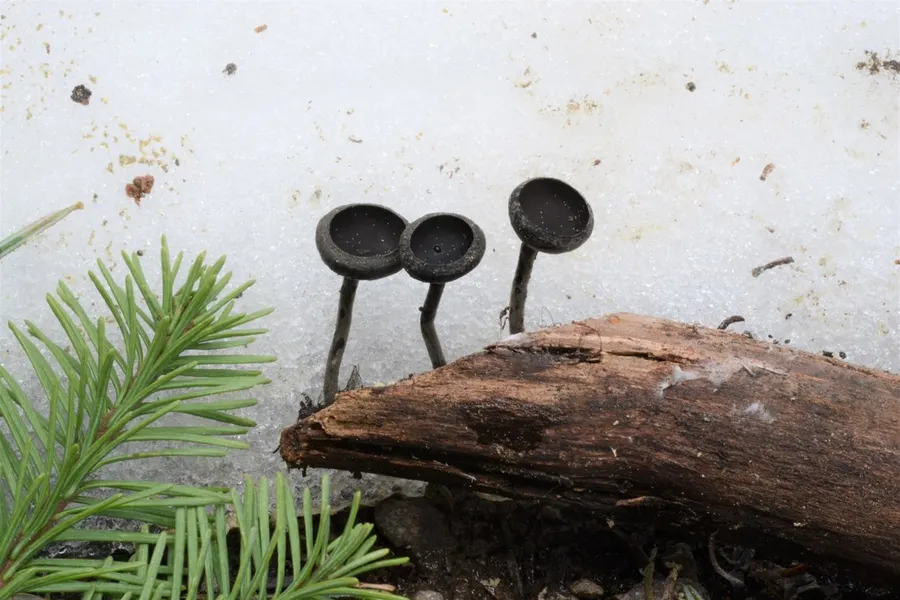
The fruit body is shallowly cup- or goblet-shaped and may be up to 3 cm in diameter. The edges of the cup are somewhat wavy, and remain curled inward until they flare out when they are very old. The external surface is covered with delicate blackish-brown hairs, while the color of the surface underneath is also brownish-black. The surface wrinkles when the fruit body is dry. The internal, convex surface of the cup contains the spore-producing tissue layer known as the hymenium; it is black. The stem is thin and may be up to 4 cm long with a diameter of 2–3 mm, tapering towards the base. Like the fruit body, it is covered in delicate brownish-black hairs, and it is similar in color to the outer surface of the cup. The dense, coarse mycelium at the base of the stem is black. The flesh is thin and blackish-gray. Edibility has not been determined for this species. In mass, the spores are white. The spores are hyaline (translucent), ellipsoid, with dimensions of 30–35 by 15 μm. Opinions are divided about the distribution of oil droplets in the spores: Miller says that the spores typically have two oil droplets at either end, Trudell and Ammirati, in their field guide to mushrooms of the Pacific Northwest, says that the spores "lack large oil drops", while Evenson claims that there are "numerous tiny oil drops." The walls of the spores have thin horizontal ridges that are cyanophilic, that is, they are visible with light microscopy when stained with methyl blue. The spore-bearing cells, the asci, are about 500 μm long and 20 μm wide. The asci are operculate, that is, with a flap at one end that opens to discharge the spores.

Sebagian uraian ditampilkan dalam bahasa sumber; terjemahannya belum tersedia atau belum lolos pemeriksaan.

Rujukan: [1]

Pengukuran mengikuti objek, spesimen atau kultur, dan metode yang disebutkan sumber. Baca uraian asli untuk konteks lengkap.

02 / Kehidupan

Habitat dan peran ekologis

Plectania nannfeldtii biasanya ditemukan di ketinggian yang lebih tinggi di hutan konifer yang tumbuh di ranting basah atau puing-puing kayu yang membusuk lainnya, seringkali di salju atau di dekatnya. Ia sering mulai berkembang di bawah salju, mencapai kematangan ketika bangku salju mundur untuk mengeksposnya; satu sumber menunjukkan bahwa panas metabolisme dapat membantu ia meleleh jalan melalui salju saat tumbuh. It may grow singly, scattered or in clusters, and has been noted to have a preference for the wood of Picea engelmannii and Abies lasiocarpa as well as other conifers. In North America, it is found in the Western United States and Canada, where it fruits from late May to early August; it is common in the Sierra Nevada and in higher elevations of the Pacific Coast Ranges. Distribusiannya juga mencakup China and Jepang.

Sebagian uraian ditampilkan dalam bahasa sumber; terjemahannya belum tersedia atau belum lolos pemeriksaan.

Rujukan: [1]

Habitat atau konteks temuan
hutan
Substrat
Informasi belum tersedia pada sumber rilis ini.
Peran atau konteks
Belum dikategorikan pada rilis ini.
Temukan hubungan serupa
03 / Siklus hidup

Reproduksi

The fruit body is shallowly cup- or goblet-shaped and may be up to 3 cm in diameter. The edges of the cup are somewhat wavy, and remain curled inward until they flare out when they are very old. The external surface is covered with delicate blackish-brown hairs, while the color of the surface underneath is also brownish-black. The surface wrinkles when the fruit body is dry. The internal, convex surface of the cup contains the spore-producing tissue layer known as the hymenium; it is black. The stem is thin and may be up to 4 cm long with a diameter of 2–3 mm, tapering towards the base. Like the fruit body, it is covered in delicate brownish-black hairs, and it is similar in color to the outer surface of the cup.

Sebagian uraian ditampilkan dalam bahasa sumber; terjemahannya belum tersedia atau belum lolos pemeriksaan.

Rujukan: [1]

Sinonim menurut acuan taksonomi rilis: Macropodia nigrella; Macroscyphus nigrellus; Paxina nigrella; Plectania nannfeldtii
04 / Batas informasi

Catatan identitas dan cakupan

  • Nama diterima mengikuti Catalogue of Life Base2026-09-11; uraian mempertahankan konsep dan nama sumber aslinya.
  • Original geographic, specimen and life-cycle scope retained; source import awaits individual editorial review.
  • Impor dan terjemahan otomatis belum diperiksa editorial per profil. Struktur reproduktif yang disebutkan tidak membuktikan seluruh siklus hidup diketahui.
  • Pengukuran pada uraian mengikuti spesimen, kultur, dan metode sumber; angka tidak diperluas ke semua populasi.

Catatan distribusi dalam narasi mengikuti sumbernya. Dokumentasi spesimen atau foto mengikuti catatan sumber. Bukti wilayah Indonesia dan penilaian konservasi tidak disimpulkan dari gambar.

05 / Dokumentasi

Melihat dengan konteks

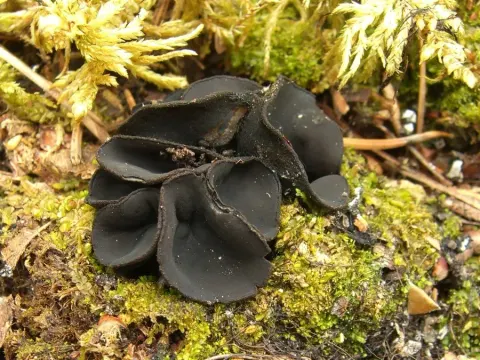
Dokumentasi Donadinia nigrella menurut asosiasi foto pada record takson iNaturalist. Kredit: Thea Chesney. Identitas mengikuti sumber; bukan penentuan spesimen independen.

Jenis
Fotografi
Kredit
(c) Thea Chesney, some rights reserved (CC BY), uploaded by Thea Chesney
Lisensi
CC BY 4.0
Sumber media
Buka entri sumber

Gambar menunjukkan objek menurut identifikasi sumber, bukan verifikasi independen spesimen oleh Fungi. Tidak ada skala baru yang ditambahkan.

06 / Rujukan

Sumber profil

  1. [1] Plectania nannfeldtii — Wikipedia (en)Bagian sumber: Frozen revision 1299271848
    Tanggal penghimpunan sumber: 2026-10-12
    Teks sumber: CC BY-SA4.0 · Wikipedia contributors
  2. [2] Catalogue of Life Base2026-09-11 — Donadinia nigrellaBagian sumber: ColDP NameUsage.tsv ID 379KN; accepted species; source 2073
    Tanggal penghimpunan sumber: 2026-10-12
  3. [3] Dokumentasi visual — Donadinia nigrellaBagian sumber: Individual media record; identification follows the source, not independent determination
    Tanggal penghimpunan sumber: 2026-10-12
    Media sumber: CC BY 4.0 · (c) Thea Chesney, some rights reserved (CC BY), uploaded by Thea Chesney

Adaptasi teks: CC BY-SA 4.0. Wikipedia contributors — Plectania nannfeldtii — Wikipedia (en)

Uraian asli dan riwayat sumber

Riwayat atau halaman sumber

Ringkasan sumber

The fruit body is shallowly cup- or goblet-shaped and may be up to 3 cm in diameter. The edges of the cup are somewhat wavy, and remain curled inward until they flare out when they are very old. The external surface is covered with delicate blackish-brown hairs, while the color of the surface underneath is also brownish-black. The surface wrinkles when the fruit body is dry. The internal, convex surface of the cup contains the spore-producing tissue layer known as the hymenium; it is black. The stem is thin and may be up to 4 cm long with a diameter of 2–3 mm, tapering towards the base.

Revisi sumber

Morfologi sumber

The fruit body is shallowly cup- or goblet-shaped and may be up to 3 cm in diameter. The edges of the cup are somewhat wavy, and remain curled inward until they flare out when they are very old. The external surface is covered with delicate blackish-brown hairs, while the color of the surface underneath is also brownish-black. The surface wrinkles when the fruit body is dry. The internal, convex surface of the cup contains the spore-producing tissue layer known as the hymenium; it is black. The stem is thin and may be up to 4 cm long with a diameter of 2–3 mm, tapering towards the base. Like the fruit body, it is covered in delicate brownish-black hairs, and it is similar in color to the outer surface of the cup. The dense, coarse mycelium at the base of the stem is black. The flesh is thin and blackish-gray. Edibility has not been determined for this species. In mass, the spores are white. The spores are hyaline (translucent), ellipsoid, with dimensions of 30–35 by 15 μm. Opinions are divided about the distribution of oil droplets in the spores: Miller says that the spores typically have two oil droplets at either end, Trudell and Ammirati, in their field guide to mushrooms of the Pacific Northwest, says that the spores "lack large oil drops", while Evenson claims that there are "numerous tiny oil drops." The walls of the spores have thin horizontal ridges that are cyanophilic, that is, they are visible with light microscopy when stained with methyl blue. The spore-bearing cells, the asci, are about 500 μm long and 20 μm wide. The asci are operculate, that is, with a flap at one end that opens to discharge the spores.

Revisi sumber

Ekologi sumber

Plectania nannfeldtii is typically found at higher elevations in coniferous forests growing on wet twigs or other rotting woody debris, often in or near snow. It often begins its development underneath the snow, reaching maturity as the snowbank recedes to expose it; one source suggests that its metabolic heat may help it melt a path through snow as it grows. It may grow singly, scattered or in clusters, and has been noted to have a preference for the wood of Picea engelmannii and Abies lasiocarpa as well as other conifers. In North America, it is found in the Western United States and Canada, where it fruits from late May to early August; it is common in the Sierra Nevada and in higher elevations of the Pacific Coast Ranges. Its distribution also includes China and Japan.

Revisi sumber

Struktur reproduksi sumber

The fruit body is shallowly cup- or goblet-shaped and may be up to 3 cm in diameter. The edges of the cup are somewhat wavy, and remain curled inward until they flare out when they are very old. The external surface is covered with delicate blackish-brown hairs, while the color of the surface underneath is also brownish-black. The surface wrinkles when the fruit body is dry. The internal, convex surface of the cup contains the spore-producing tissue layer known as the hymenium; it is black. The stem is thin and may be up to 4 cm long with a diameter of 2–3 mm, tapering towards the base. Like the fruit body, it is covered in delicate brownish-black hairs, and it is similar in color to the outer surface of the cup.

Revisi sumber

Rujukan halaman ini

Fungi. Donadinia nigrella. Rilis data fungi-2026-10-12-expansion-2. https://fungi-atlas.mgadib.chatgpt.site/jamur/donadinia-nigrella/.

Status: impor sumber; pemeriksaan editorial per profil belum selesai. Untuk klaim biologis, gunakan rujukan pada bagian terkait dan periksa konteks sumber aslinya.