01 / Morfologi

Ciri dan struktur

When grown in pure culture on agar plates, A. sydowii produces blue-green colonies with reddish-brown shades. The conidial heads are effuse (spread out), while the stalks of the conidiophores are hyaline (translucent), smooth, and measure up to 500 μm. Swollen cells (vesicles) are spherical or nearly so, and the conidiogenous cells (cells that produce conidia) are biseriate—having phialides that arise from metulae (sterile cells below the phialides). The conidia are echinulate (spiky), roughly spherical, and measure 2.5–4.0 μm in diameter.

Sebagian uraian ditampilkan dalam bahasa sumber; terjemahannya belum tersedia atau belum lolos pemeriksaan.

Rujukan: [1]

Pengukuran mengikuti objek, spesimen atau kultur, dan metode yang disebutkan sumber. Baca uraian asli untuk konteks lengkap.

02 / Kehidupan

Habitat dan peran ekologis

Aspergillus sydowii is a saprophytic fungus found in soil that can contaminate food and is occasionally pathogenic to humans. It is the predominant fungus found on wheat Qu, the most widely used source of raw microorganisms and crude enzymes for Chinese rice wine brewing.

Sebagian uraian ditampilkan dalam bahasa sumber; terjemahannya belum tersedia atau belum lolos pemeriksaan.

Rujukan: [1]

Habitat atau konteks temuan
Informasi belum tersedia pada sumber rilis ini.
Substrat
tanah
Peran atau konteks
Belum dikategorikan pada rilis ini.
Temukan hubungan serupa
03 / Siklus hidup

Reproduksi

When grown in pure culture on agar plates, A. sydowii produces blue-green colonies with reddish-brown shades. The conidial heads are effuse (spread out), while the stalks of the conidiophores are hyaline (translucent), smooth, and measure up to 500 μm. Swollen cells (vesicles) are spherical or nearly so, and the conidiogenous cells (cells that produce conidia) are biseriate—having phialides that arise from metulae (sterile cells below the phialides). The conidia are echinulate (spiky), roughly spherical, and measure 2.5–4.0 μm in diameter.

Sebagian uraian ditampilkan dalam bahasa sumber; terjemahannya belum tersedia atau belum lolos pemeriksaan.

Rujukan: [1]

Sinonim menurut acuan taksonomi rilis: Aspergillus sydowii; Aspergillus sydowii var. achlamydosporus; Aspergillus sydowii var. agrae; Aspergillus sydowii var. major; Sterigmatocystis sydowii
04 / Batas informasi

Catatan identitas dan cakupan

  • Nama diterima mengikuti Catalogue of Life Base2026-09-11; uraian mempertahankan konsep dan nama sumber aslinya.
  • Original geographic, specimen and life-cycle scope retained; source import awaits individual editorial review.
  • Impor dan terjemahan otomatis belum diperiksa editorial per profil. Struktur reproduktif yang disebutkan tidak membuktikan seluruh siklus hidup diketahui.
  • Pengukuran pada uraian mengikuti spesimen, kultur, dan metode sumber; angka tidak diperluas ke semua populasi.

Catatan distribusi dalam narasi mengikuti sumbernya. Dokumentasi spesimen atau foto mengikuti catatan sumber. Bukti wilayah Indonesia dan penilaian konservasi tidak disimpulkan dari gambar.

05 / Dokumentasi

Melihat dengan konteks

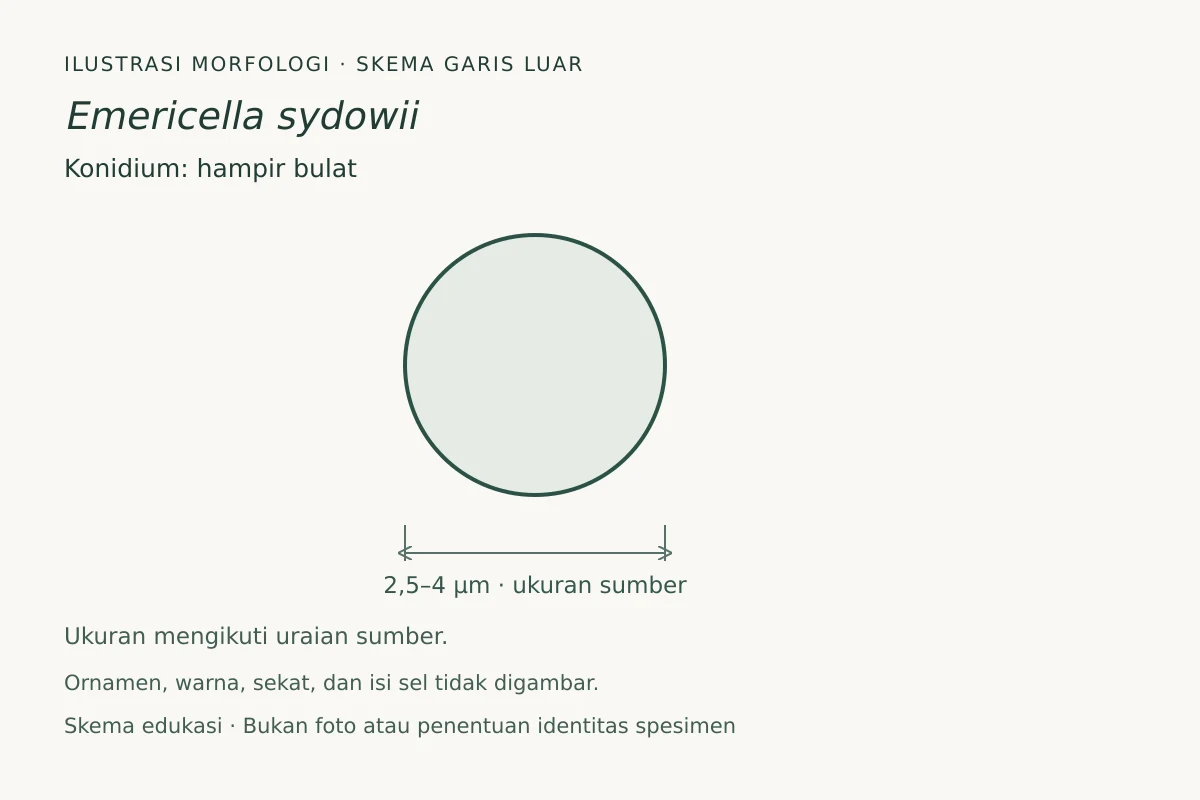
Ilustrasi skematis garis luar konidium Emericella sydowii, berdasarkan uraian sumber; ukuran yang dilaporkan 2,5–4 µm. Proporsi disederhanakan, bukan salinan satu spesimen. Ornamen permukaan, warna, sekat, dan isi sel tidak direkonstruksi. Konidium hampir bulat berdiameter 2,5–4 µm. Tonjolan permukaan yang disebut echinulate tidak digambar; identitas mengikuti alias Aspergillus sydowii. Ornamen, warna, sekat, dan isi sel tidak digambar. Skema edukasi, bukan alat identifikasi.

Jenis
Ilustrasi skematis
Kredit
Fungi, ilustrasi orisinal (2026); fakta morfologi berdasarkan Wikipedia contributors
Sumber media
Buka entri sumber

Gambar menunjukkan objek menurut identifikasi sumber, bukan verifikasi independen spesimen oleh Fungi. Tidak ada skala baru yang ditambahkan.

06 / Rujukan

Sumber profil

  1. [1] Aspergillus sydowii — Wikipedia (en)Bagian sumber: Frozen revision 1311690424
    Tanggal penghimpunan sumber: 2026-10-12
    Media sumber: CC BY-SA4.0 · Wikipedia contributors
  2. [2] Catalogue of Life Base2026-09-11 — Emericella sydowiiBagian sumber: ColDP NameUsage.tsv ID B33RW; accepted species; source 2073
    Tanggal penghimpunan sumber: 2026-10-12

Adaptasi teks: CC BY-SA 4.0. Wikipedia contributors — Aspergillus sydowii — Wikipedia (en)

Uraian asli dan riwayat sumber

Riwayat atau halaman sumber

Ringkasan sumber

When grown in pure culture on agar plates, A. sydowii produces blue-green colonies with reddish-brown shades. The conidial heads are effuse (spread out), while the stalks of the conidiophores are hyaline (translucent), smooth, and measure up to 500 μm. Swollen cells (vesicles) are spherical or nearly so, and the conidiogenous cells (cells that produce conidia) are biseriate—having phialides that arise from metulae (sterile cells below the phialides). The conidia are echinulate (spiky), roughly spherical, and measure 2.5–4.0 μm in diameter.

Revisi sumber

Morfologi sumber

When grown in pure culture on agar plates, A. sydowii produces blue-green colonies with reddish-brown shades. The conidial heads are effuse (spread out), while the stalks of the conidiophores are hyaline (translucent), smooth, and measure up to 500 μm. Swollen cells (vesicles) are spherical or nearly so, and the conidiogenous cells (cells that produce conidia) are biseriate—having phialides that arise from metulae (sterile cells below the phialides). The conidia are echinulate (spiky), roughly spherical, and measure 2.5–4.0 μm in diameter.

Revisi sumber

Ekologi sumber

Aspergillus sydowii is a saprophytic fungus found in soil that can contaminate food and is occasionally pathogenic to humans. It is the predominant fungus found on wheat Qu, the most widely used source of raw microorganisms and crude enzymes for Chinese rice wine brewing.

Revisi sumber

Struktur reproduksi sumber

When grown in pure culture on agar plates, A. sydowii produces blue-green colonies with reddish-brown shades. The conidial heads are effuse (spread out), while the stalks of the conidiophores are hyaline (translucent), smooth, and measure up to 500 μm. Swollen cells (vesicles) are spherical or nearly so, and the conidiogenous cells (cells that produce conidia) are biseriate—having phialides that arise from metulae (sterile cells below the phialides). The conidia are echinulate (spiky), roughly spherical, and measure 2.5–4.0 μm in diameter.

Revisi sumber

Rujukan halaman ini

Fungi. Emericella sydowii. Rilis data fungi-2026-10-12-expansion-2. https://fungi-atlas.mgadib.chatgpt.site/jamur/emericella-sydowii/.

Status: impor sumber; pemeriksaan editorial per profil belum selesai. Untuk klaim biologis, gunakan rujukan pada bagian terkait dan periksa konteks sumber aslinya.