Ciri dan struktur
Cap 1.1–8.0 cm in diameter, convex to umbonate, often broadly, margin smooth, sometimes involute, undulate in older specimens, tacky when moist, occasionally spotted, rarely hygrophanous, almost uniformly colored or variably bicolored, at center warm buff to grayish buff or dark pinkish buff through honey or ochraceous and dark olive buff to umber and clay pink or orange brown, at margin pale cream to cream to honey or pale pinkish buff, without any traces of veil. Lamellae when young very pale but becoming darker with maturity, emarginate to adnate, maximum depth 3–7 mm, number of lamellae {L} 35–71, droplets usually visible with naked eye or × 10 lens, occasionally absent, white fimbriate edge present. Stem (1.3–)1.5–10.75(–12) × (0.3–)0.35–1.2 {median} × (0.3–)0.55–1.4(–1.5) {base} cm, stem Q 2.5–17.2(–17.4), whitish to pale brownish at middle, hardly discoloring, gradually sordid brown in the mid portion, cylindrical to clavate, rarely subbulbous, usually pruinose particularly at apex, rarely with mycelial chords. Context firm, stem interior stuffed, becoming hollow with age and often with a superior wick, flesh often discoloring from base, particularly after handling. Smell raphanoid, sometimes with hints of cocoa, rarely absent. Taste mild to weakly bitter. Spore color dark olive buff or grayish brown through brownish olive to umber. Spores amygdaloid, limoniform, variably papillate, on ave. 10.0–12.5 × 5.0–7.5 µm, ave. Q = 1.6–2.1, yellow to yellow brown, usually guttulate, weakly, occasionally distinctly ornamented ((O1) O2 (O3)), perispore not or somewhat loosening (P0 P1 (P2)), indistinctly to weakly dextrinoid ((D0) D1 D2).
Habitat dan peran ekologis
One of the five most commonly recorded Hebeloma species in Greenland, with 11.6% of the records. Common and widespread in Europe; also recorded from other parts of North America (https://mycoportal.org/portal/collections/list.php, accessed 2 Dec 2020). To our knowledge not recorded from alpine sites in Europe (Beker et al. 2016). Forty-four collections, mainly with Salix glauca (15), Dryas (10) and S. herbacea (6). Minor hosts are S. arctophila and S. arctica, and two collections were difficult to separate from the roots of Bistorta vivipara. Found in all types of habitats from scrubland, grassland and heathland to snowbeds. In the Rocky Mountains, the hosts are S. arctica, S. glauca, S. planifolia, S. reticulata, Betula nana and Dryas (Cripps et al. 2019). For lowland Europe, there is a long list of deciduous trees as probable hosts (Beker et al. 2016).
- Habitat atau konteks temuan
- padang rumput
- Substrat
- Informasi belum tersedia pada sumber rilis ini.
- Peran atau konteks
- Belum dikategorikan pada rilis ini.
Reproduksi
Cap 1.1–8.0 cm in diameter, convex to umbonate, often broadly, margin smooth, sometimes involute, undulate in older specimens, tacky when moist, occasionally spotted, rarely hygrophanous, almost uniformly colored or variably bicolored, at center warm buff to grayish buff or dark pinkish buff through honey or ochraceous and dark olive buff to umber and clay pink or orange brown, at margin pale cream to cream to honey or pale pinkish buff, without any traces of veil. Lamellae when young very pale but becoming darker with maturity, emarginate to adnate, maximum depth 3–7 mm, number of lamellae {L} 35–71, droplets usually visible with naked eye or × 10 lens, occasionally absent, white fimbriate edge present.
Catatan identitas dan cakupan
- Nama diterima mengikuti Catalogue of Life Base2026-09-11; uraian mempertahankan konsep dan nama sumber aslinya.
- Preserve original treatment localities, hosts and substrate scope. Materials examined describe documented specimens, not the full global range.
- Impor dan terjemahan otomatis belum diperiksa editorial per profil. Struktur reproduktif yang disebutkan tidak membuktikan seluruh siklus hidup diketahui.
- Pengukuran pada uraian mengikuti spesimen, kultur, dan metode sumber; angka tidak diperluas ke semua populasi.
Catatan distribusi dalam narasi mengikuti sumbernya. Dokumentasi spesimen atau foto mengikuti catatan sumber. Bukti wilayah Indonesia dan penilaian konservasi tidak disimpulkan dari gambar.
Melihat dengan konteks
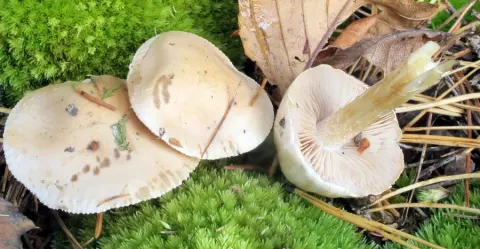
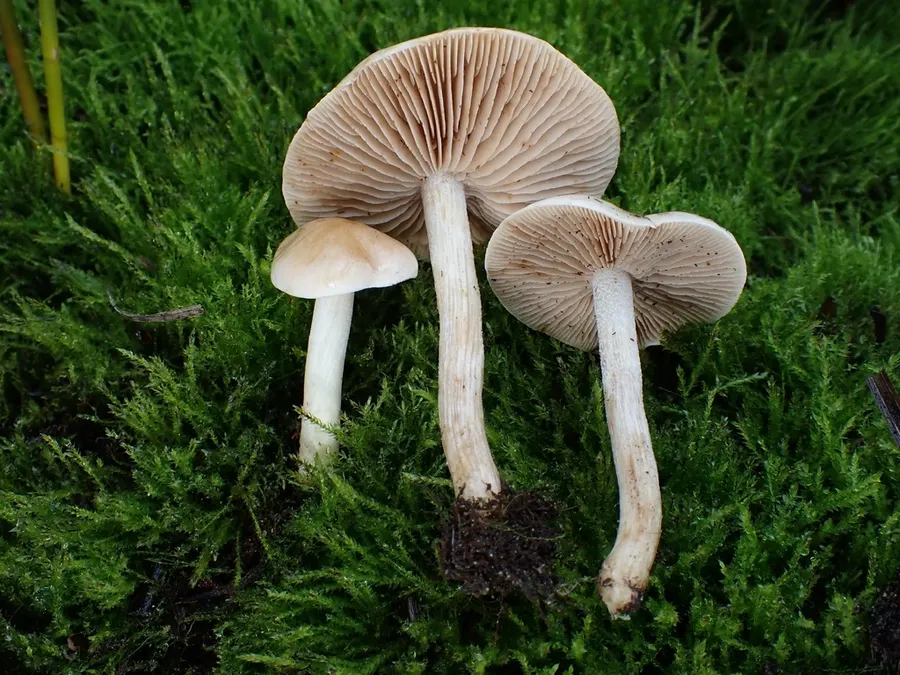
Dokumentasi Hebeloma hiemale menurut asosiasi foto pada record takson iNaturalist. Kredit: Mandy Hackney. Identitas mengikuti sumber; bukan penentuan spesimen independen.
- Jenis
- Fotografi
- Kredit
- (c) Mandy Hackney, some rights reserved (CC BY), uploaded by Mandy Hackney
- Lisensi
- CC BY 4.0
- Sumber media
- Buka entri sumber
Dokumentasi tambahan
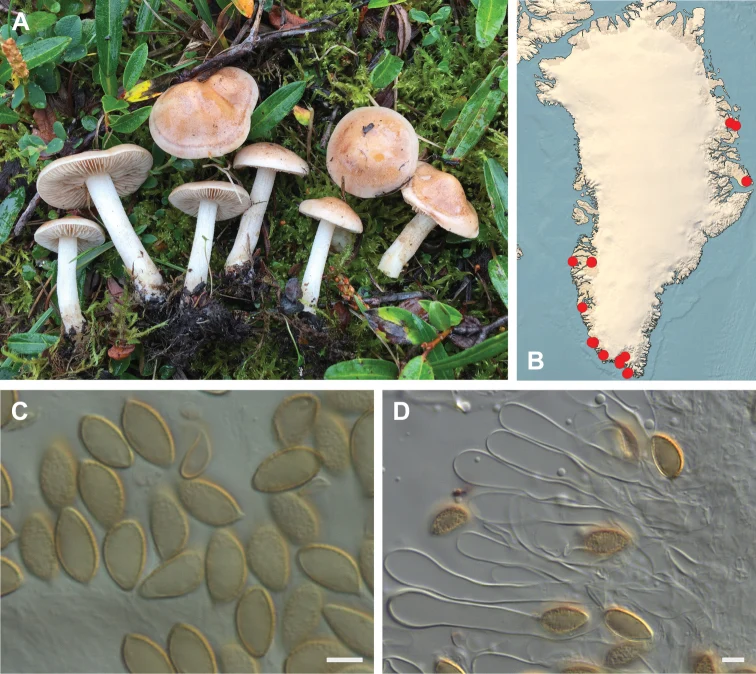
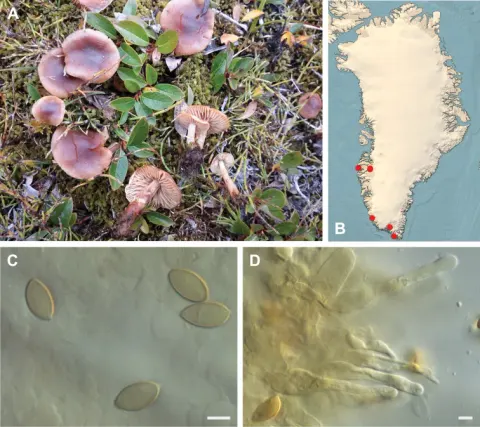
Pelat Hebeloma hiemale: tubuh buah pada panel A, peta koleksi pada B, serta spora dan keilosistidia pada C–D. Pembagian panel dan identitas mengikuti sumber.
Kredit dan penggunaan
Ursula Eberhardt, Henry J. Beker, Torbjørn Borgen, Henning Knudsen, Nicole Schütz, Steen A. Elborne
Ukuran dan format gambar disesuaikan tanpa pemotongan, retus, atau penambahan skala. Lisensi sumber dipertahankan.
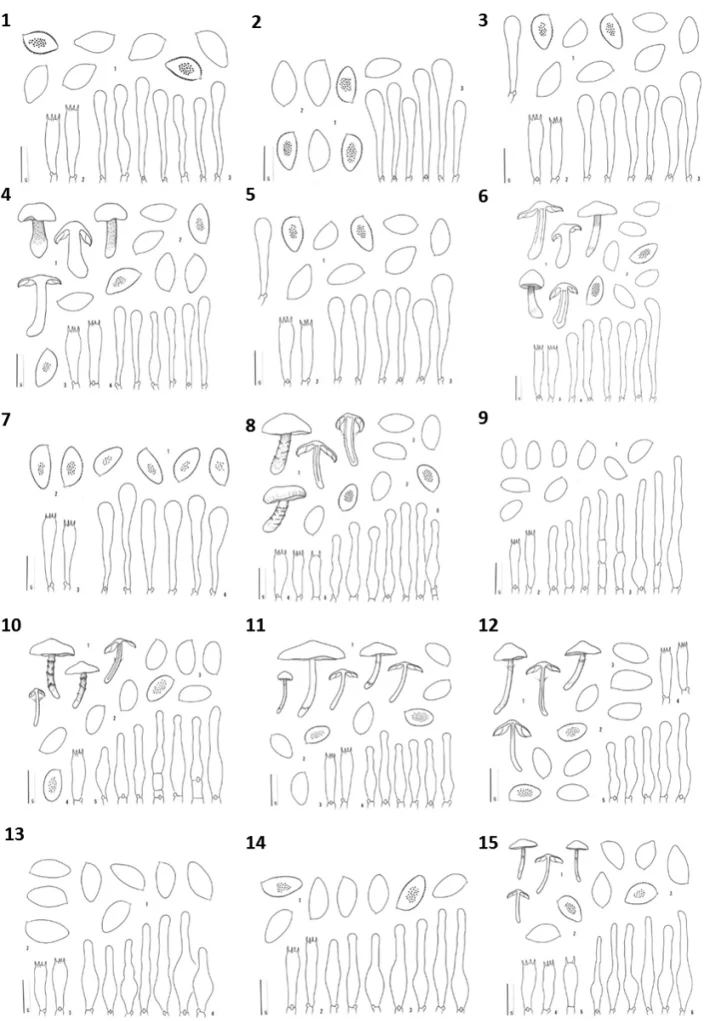
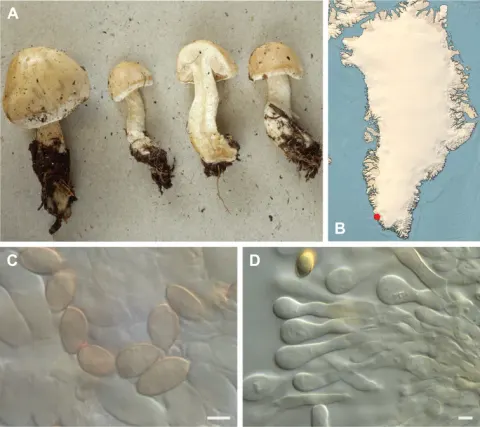
Ilustrasi perbandingan struktur mikroskopis Hebeloma. Hebeloma hiemale ditampilkan pada panel 4; panel lain juga memuat spesies pembanding. Pembagian panel mengikuti sumber.
Kredit dan penggunaan
Cathy L. Cripps, Ursula Eberhardt, Nicole Schütz, Henry J. Beker, Vera S. Evenson, Egon Horak
Ukuran dan format gambar disesuaikan tanpa pemotongan, retus, atau penambahan skala. Lisensi sumber dipertahankan.
Sumber profil
- [1] A survey of Hebeloma (Hymenogastraceae) in Greenland — Hebeloma hiemale
- [2] Catalogue of Life Base2026-09-11 — Hebeloma hiemale
- [3] Dokumentasi visual — Hebeloma hiemale
- [4] Dokumentasi visual — Hebeloma hiemale
- [5] Dokumentasi visual — Hebeloma hiemale
Rujukan halaman ini
Fungi. Hebeloma hiemale. Rilis data fungi-2026-10-12-expansion-2. https://fungi-atlas.mgadib.chatgpt.site/jamur/hebeloma-hiemale/.
Status: impor sumber; pemeriksaan editorial per profil belum selesai. Untuk klaim biologis, gunakan rujukan pada bagian terkait dan periksa konteks sumber aslinya.