Ciri dan struktur
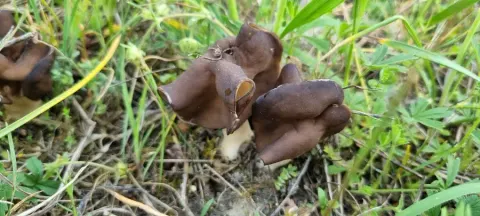
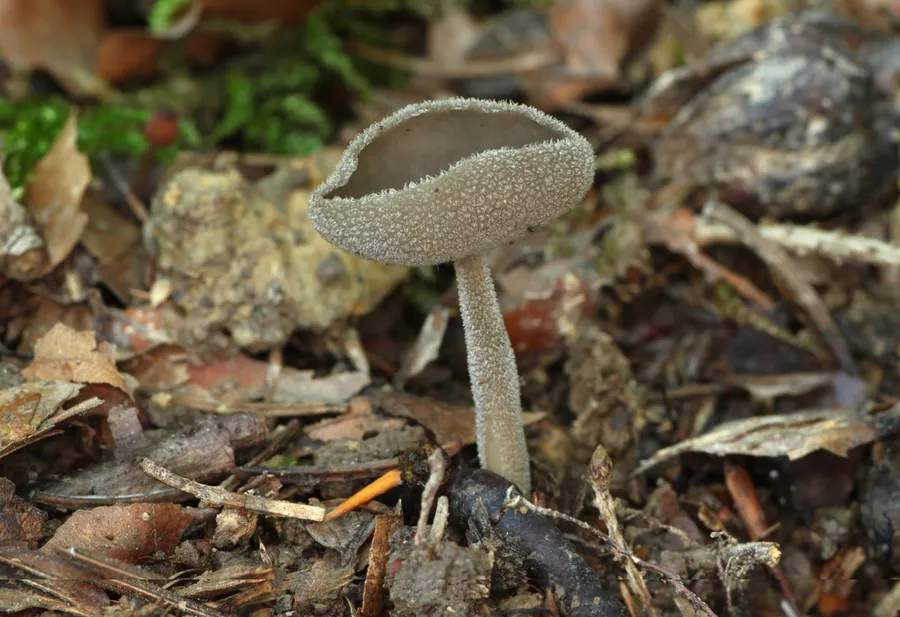
The apothecium of Helvella macropus is a stalked, cup-like structure that typically forms a regular, saucer-shaped head measuring 1.5–3 cm across. Its spore-bearing surface, or hymenium, varies from yellowish to greyish-brown, and the outer cup (receptacle) is the same colour and densely covered in fine hairs (villose). The supporting stipe is slender and cylindrical, ranging from 2.5 to 12 cm in height and 3–5 mm in width, with a pubescent (hairy) surface that emphasises its hollow interior. Beneath the hymenium lies the medullary excipulum, a loosely interwoven network of brownish hyphae about 4–6 μm wide, some inflated to 10–20 μm and constricted at their septa. Outside this is the ectal excipulum, where the innermost hyphae also form a textura intricata of cells 10–30 μm across. Toward the surface, these cells reorganise into fascicled rows of cylindrical hyphae 20–35 μm long by 10–15 μm wide, and some extend into tufts of hyphoid hairs up to 200 μm in length. The spore-bearing ascus are pleurorhynchous—originating from a hooked basal cell—and measure 240–300 × 13–16 μm, each enclosing eight ellipsoid-fusoid ascospores. These spores are 19.5–25.8 μm long by 9–12.0 μm wide and contain one large plus two to three medium-sized oil droplets (guttules). Interspersed among the asci are sterile paraphysis filaments, 3–4 μm wide at the base and swelling to 5–9 μm at their club-shaped tips.
Habitat dan peran ekologis
This species has a wide distribution in the Northern Hemisphere, having been recorded throughout North America, as well as in Central America, Europe, China, and Japan. It can be found on the ground or on rotting wood along with moss.
- Habitat atau konteks temuan
- Informasi belum tersedia pada sumber rilis ini.
- Substrat
- kayu; tanah
- Peran atau konteks
- Belum dikategorikan pada rilis ini.
Reproduksi
The apothecium of Helvella macropus is a stalked, cup-like structure that typically forms a regular, saucer-shaped head measuring 1.5–3 cm across. Its spore-bearing surface, or hymenium, varies from yellowish to greyish-brown, and the outer cup (receptacle) is the same colour and densely covered in fine hairs (villose). The supporting stipe is slender and cylindrical, ranging from 2.5 to 12 cm in height and 3–5 mm in width, with a pubescent (hairy) surface that emphasises its hollow interior. Beneath the hymenium lies the medullary excipulum, a loosely interwoven network of brownish hyphae about 4–6 μm wide, some inflated to 10–20 μm and constricted at their septa. Outside this is the ectal excipulum, where the innermost hyphae also form a textura intricata of cells 10–30 μm across.
Catatan identitas dan cakupan
- Nama diterima mengikuti Catalogue of Life Base2026-09-11; uraian mempertahankan konsep dan nama sumber aslinya.
- Original geographic, specimen and life-cycle scope retained; source import awaits individual editorial review.
- Impor dan terjemahan otomatis belum diperiksa editorial per profil. Struktur reproduktif yang disebutkan tidak membuktikan seluruh siklus hidup diketahui.
- Pengukuran pada uraian mengikuti spesimen, kultur, dan metode sumber; angka tidak diperluas ke semua populasi.
Catatan distribusi dalam narasi mengikuti sumbernya. Dokumentasi spesimen atau foto mengikuti catatan sumber. Bukti wilayah Indonesia dan penilaian konservasi tidak disimpulkan dari gambar.
Melihat dengan konteks
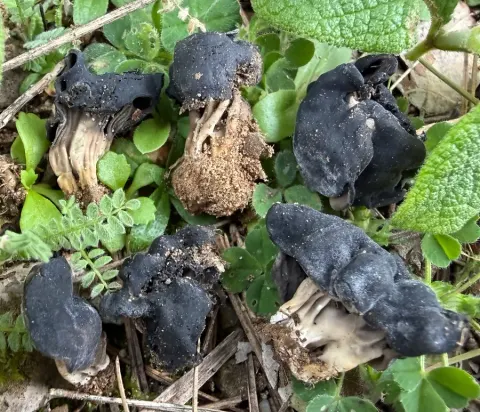
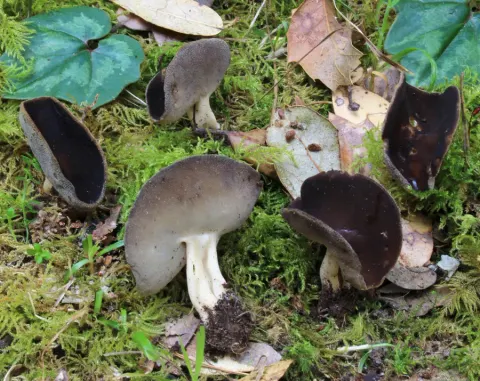
Dokumentasi Helvella macropus menurut asosiasi foto pada record takson iNaturalist. Kredit: H. Krisp. Identitas mengikuti sumber; bukan penentuan spesimen independen.
- Jenis
- Fotografi
- Kredit
- (c) H. Krisp, some rights reserved (CC BY)
- Lisensi
- CC BY 4.0
- Sumber media
- Buka entri sumber
Sumber profil
- [1] Helvella macropus — Wikipedia (en)
- [2] Catalogue of Life Base2026-09-11 — Helvella macropus
- [3] Dokumentasi visual — Helvella macropus
Rujukan halaman ini
Fungi. Helvella macropus. Rilis data fungi-2026-10-12-expansion-2. https://fungi-atlas.mgadib.chatgpt.site/jamur/helvella-macropus/.
Status: impor sumber; pemeriksaan editorial per profil belum selesai. Untuk klaim biologis, gunakan rujukan pada bagian terkait dan periksa konteks sumber aslinya.