Ciri dan struktur
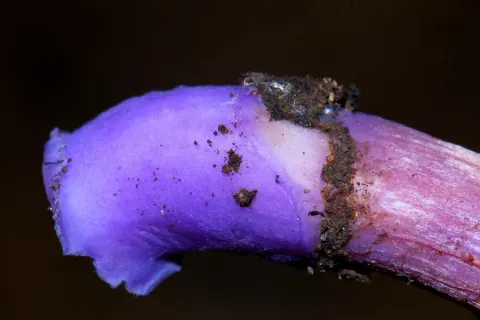
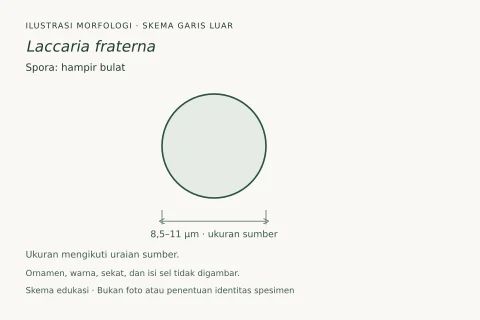
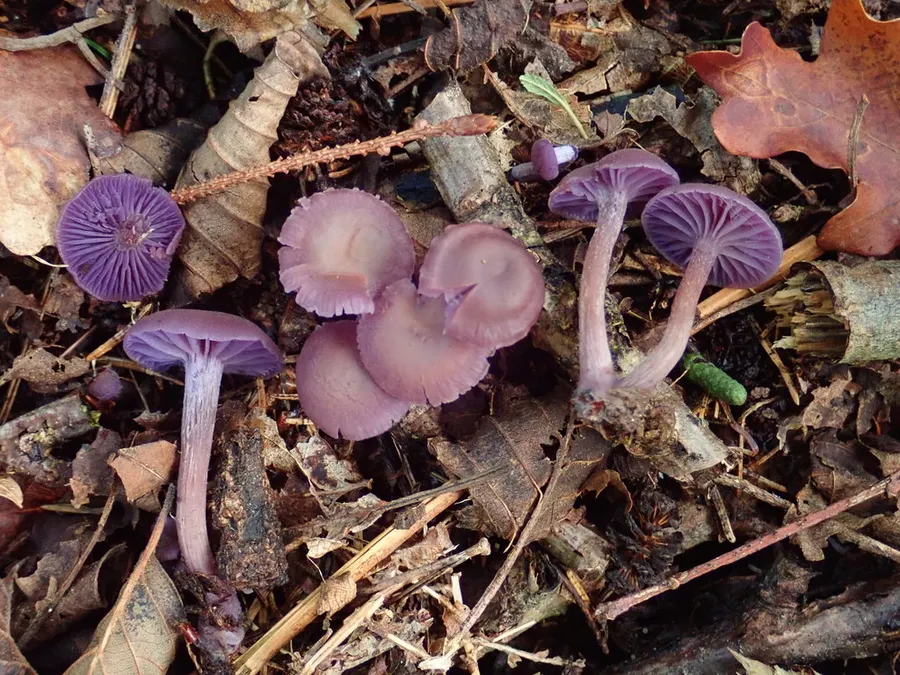
The cap is up to 6 cm in diameter, and is initially convex, later flattening, typically with a central depression (navel). and has pale striations at the margin. The stem is the same colour as the cap, and has whitish fibrils at the base, which become mealy at the top. It is fibrous, hollow, fairly tough when rolled in the fingers, with dimensions of 0.6 to 7 cm long by 0.1 to 0.7 cm thick. The flesh is without a distinctive taste or smell, and is thin, with pale lilac coloration. The gills are colored as the cap, often quite distantly spaced, and are dusted by the white spores; their attachment to the stem is sinuate—having a concave indentation before attaching to the stem. The spores are spherical and hyaline, and bear pointed spines (echinulate) that are long relative to the size of the spore; they typically have dimensions of 7–10 by 7–10 μm. The basidia, the spore-bearing cells, are club-shaped and hyaline, and are 30–64.5 by 8.5–14 μm.
Habitat dan peran ekologis
The species is common in most temperate zones of Europe (June–December), the congeneric species Laccaria bicolor is also an ammonia fungus.
- Habitat atau konteks temuan
- Informasi belum tersedia pada sumber rilis ini.
- Substrat
- Informasi belum tersedia pada sumber rilis ini.
- Peran atau konteks
- Belum dikategorikan pada rilis ini.
Reproduksi
The cap is up to 6 cm in diameter, and is initially convex, later flattening, typically with a central depression (navel). and has pale striations at the margin. The stem is the same colour as the cap, and has whitish fibrils at the base, which become mealy at the top. It is fibrous, hollow, fairly tough when rolled in the fingers, with dimensions of 0.6 to 7 cm long by 0.1 to 0.7 cm thick. The flesh is without a distinctive taste or smell, and is thin, with pale lilac coloration. The gills are colored as the cap, often quite distantly spaced, and are dusted by the white spores; their attachment to the stem is sinuate—having a concave indentation before attaching to the stem. The spores are spherical and hyaline, and bear pointed spines (echinulate) that are long relative to the size of the spore; they typically have dimensions of 7–10 by 7–10 μm.
Catatan identitas dan cakupan
- Nama diterima mengikuti Catalogue of Life Base2026-09-11; uraian mempertahankan konsep dan nama sumber aslinya.
- Original geographic, specimen and life-cycle scope retained; source import awaits individual editorial review.
- Impor dan terjemahan otomatis belum diperiksa editorial per profil. Struktur reproduktif yang disebutkan tidak membuktikan seluruh siklus hidup diketahui.
- Pengukuran pada uraian mengikuti spesimen, kultur, dan metode sumber; angka tidak diperluas ke semua populasi.
Catatan distribusi dalam narasi mengikuti sumbernya. Dokumentasi spesimen atau foto mengikuti catatan sumber. Bukti wilayah Indonesia dan penilaian konservasi tidak disimpulkan dari gambar.
Melihat dengan konteks
Dokumentasi Laccaria amethystina menurut asosiasi foto pada record takson iNaturalist. Kredit: Christian Berg. Identitas mengikuti sumber; bukan penentuan spesimen independen.
- Jenis
- Fotografi
- Kredit
- (c) Christian Berg, some rights reserved (CC BY), uploaded by Christian Berg
- Lisensi
- CC BY 4.0
- Sumber media
- Buka entri sumber
Dokumentasi tambahan
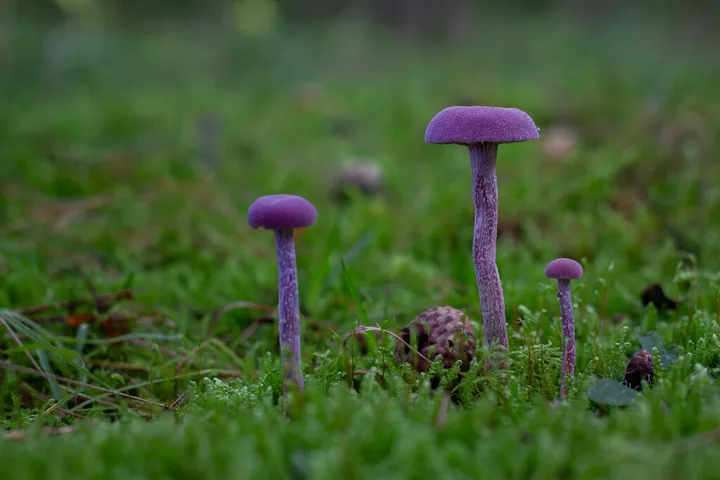
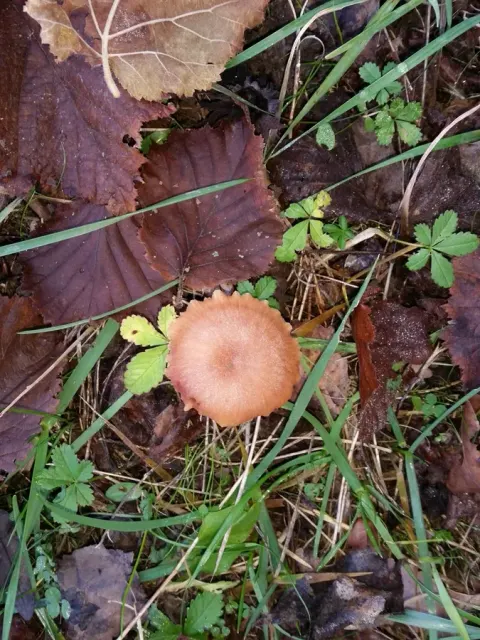
Foto yang diasosiasikan dengan Laccaria amethystina pada iNaturalist. Identifikasi mengikuti sumber; bukan penentuan spesimen independen.
Kredit dan penggunaan
(c) Wolfgang Wollschweber, some rights reserved (CC BY)
Ukuran dan format gambar disesuaikan tanpa pemotongan, retus, atau penambahan skala. Lisensi sumber dipertahankan.
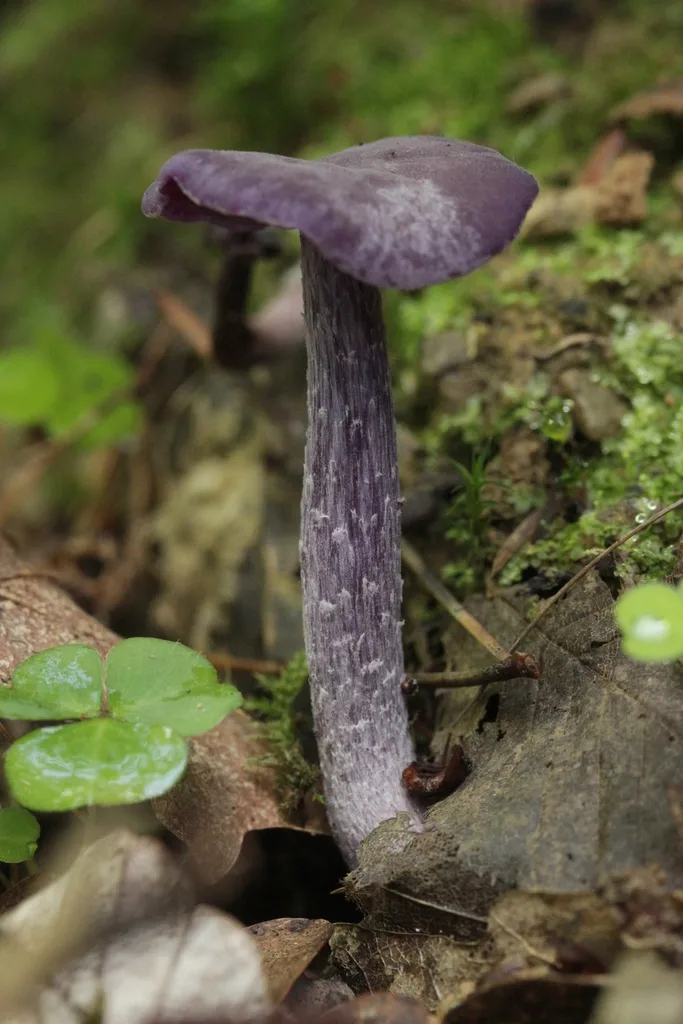
Foto yang diasosiasikan dengan Laccaria amethystina pada iNaturalist. Identifikasi mengikuti sumber; bukan penentuan spesimen independen.
Kredit dan penggunaan
(c) Björn S..., some rights reserved (CC BY-SA)
Ukuran dan format gambar disesuaikan tanpa pemotongan, retus, atau penambahan skala. Lisensi sumber dipertahankan.
Sumber profil
- [1] Laccaria amethystina — Wikipedia (en)
- [2] Catalogue of Life Base2026-09-11 — Laccaria amethystina
- [3] Dokumentasi visual — Laccaria amethystina
- [4] Dokumentasi visual — Laccaria amethystina
- [5] Dokumentasi visual — Laccaria amethystina
Rujukan halaman ini
Fungi. Laccaria amethystina. Rilis data fungi-2026-10-12-expansion-2. https://fungi-atlas.mgadib.chatgpt.site/jamur/laccaria-amethystina/.
Status: impor sumber; pemeriksaan editorial per profil belum selesai. Untuk klaim biologis, gunakan rujukan pada bagian terkait dan periksa konteks sumber aslinya.