Ciri dan struktur
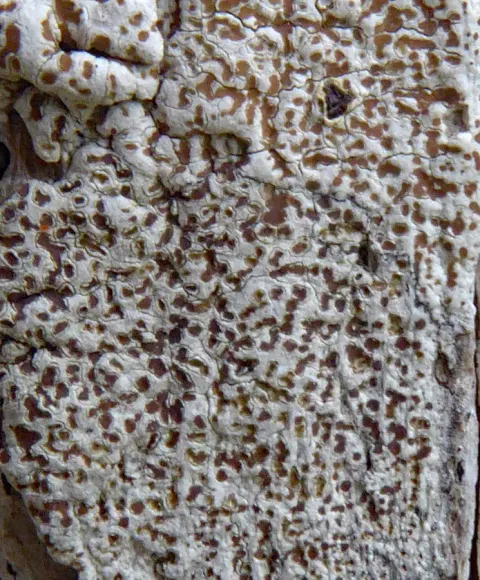
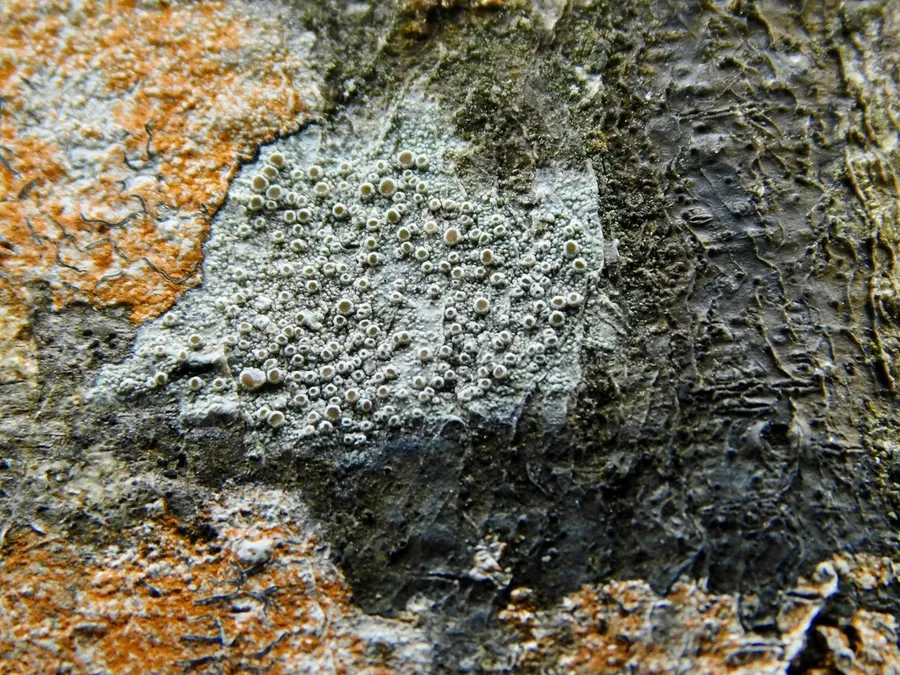
Lecanora cinereofusca has a thallus (the main body of the lichen) that is continuous or irregularly cracked (), varying from pale to medium grey in colour with a smooth to warted surface. The (the initial fungal growth area) is either absent or appears black. The reproductive structures (apothecia) measure 0.7–1.5 mm in diameter and are initially immersed in the thallus, sometimes becoming (attached directly to the surface) as they mature. The (the rim around the apothecium derived from the thallus) is well-developed and persistent, with a coarsely scalloped to almost toothed edge that becomes wavy with age. This margin is white or a paler grey than the surrounding thallus and contains very large crystals that do not dissolve in potassium hydroxide solution (K). The of the apothecium is flat to slightly convex and orange-brown or red-brown in colour. The (the uppermost layer of the apothecium) is red-brown, containing coarse that are also present on the surface. These granules do not dissolve in K but turn orange when treated with para-phenylenediamine (Pd+), forming crystals in the process. The hymenium (the spore-producing layer) is 60–85 μm tall. The paraphyses (sterile filaments among the reproductive cells) are 2–3 μm in diameter, sparsely branched and interconnected, with tips that are not or only slightly swollen. (sexual spores produced in asci) made by L. cinereofusca are broadly ellipsoidal, typically measuring 10–14.5 by 7–8.5 μm. The conidia (asexual spores) are cylindrical and 10–14 μm long. When subjected to chemical spot tests, the thallus is C−, K+ (yellow), Pd−, and fluoresces mauve-purple under ultraviolet light (UV+).
Habitat dan peran ekologis
In the United Kingdom, where it is considered very rare, Lecanora cinereofusca grows on birch and willow trees. It was recorded for the first time in the Czech Republic in 2014, although it is considered extinct there as it is known only from a single historical collection from an old-growth beech forest. In the Alps, the lichen has been recorded growing on various hosts: Acer pseudoplatanus, Abies alba, Alnus, and Salix.
- Habitat atau konteks temuan
- hutan
- Substrat
- Informasi belum tersedia pada sumber rilis ini.
- Peran atau konteks
- Pembentuk liken
Reproduksi
The reproductive structures (apothecia) measure 0.7–1.5 mm in diameter and are initially immersed in the thallus, sometimes becoming (attached directly to the surface) as they mature. The (the rim around the apothecium derived from the thallus) is well-developed and persistent, with a coarsely scalloped to almost toothed edge that becomes wavy with age. This margin is white or a paler grey than the surrounding thallus and contains very large crystals that do not dissolve in potassium hydroxide solution (K). The hymenium (the spore-producing layer) is 60–85 μm tall. The paraphyses (sterile filaments among the reproductive cells) are 2–3 μm in diameter, sparsely branched and interconnected, with tips that are not or only slightly swollen. (sexual spores produced in asci) made by L. cinereofusca are broadly ellipsoidal, typically measuring 10–14.5 by 7–8.5 μm.
Catatan identitas dan cakupan
- Nama diterima mengikuti Catalogue of Life Base2026-09-11; uraian mempertahankan konsep dan nama sumber aslinya.
- Original geographic, specimen and life-cycle scope retained; source import awaits individual editorial review.
- Impor dan terjemahan otomatis belum diperiksa editorial per profil. Struktur reproduktif yang disebutkan tidak membuktikan seluruh siklus hidup diketahui.
- Pengukuran pada uraian mengikuti spesimen, kultur, dan metode sumber; angka tidak diperluas ke semua populasi.
Catatan distribusi dalam narasi mengikuti sumbernya. Dokumentasi spesimen atau foto mengikuti catatan sumber. Bukti wilayah Indonesia dan penilaian konservasi tidak disimpulkan dari gambar.
Melihat dengan konteks
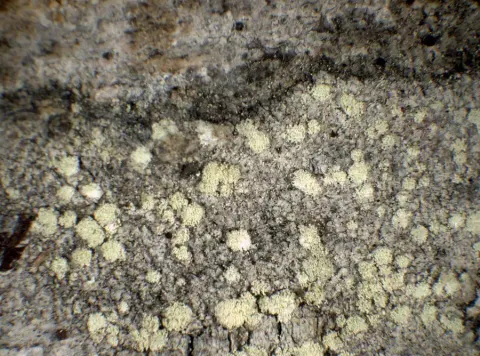
Dokumentasi Lecanora cinereofusca menurut asosiasi foto pada record takson iNaturalist. Kredit: Michael J. Papay. Identitas mengikuti sumber; bukan penentuan spesimen independen.
- Jenis
- Fotografi
- Kredit
- (c) Michael J. Papay, some rights reserved (CC BY), uploaded by Michael J. Papay
- Lisensi
- CC BY 4.0
- Sumber media
- Buka entri sumber
Dokumentasi tambahan
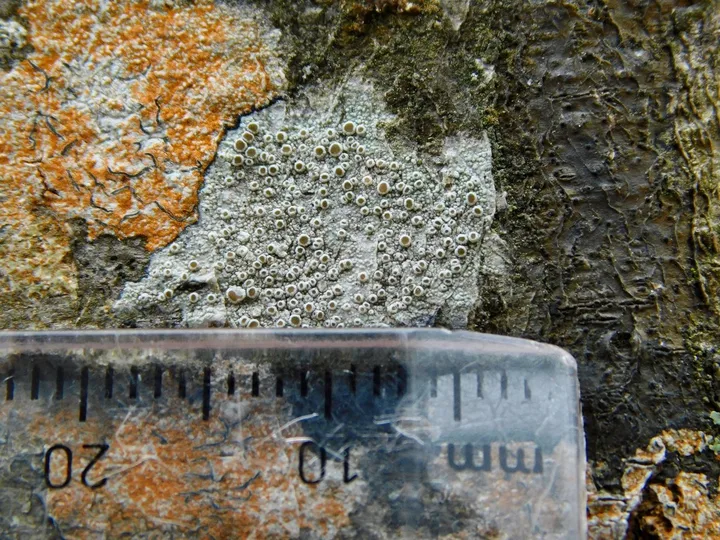
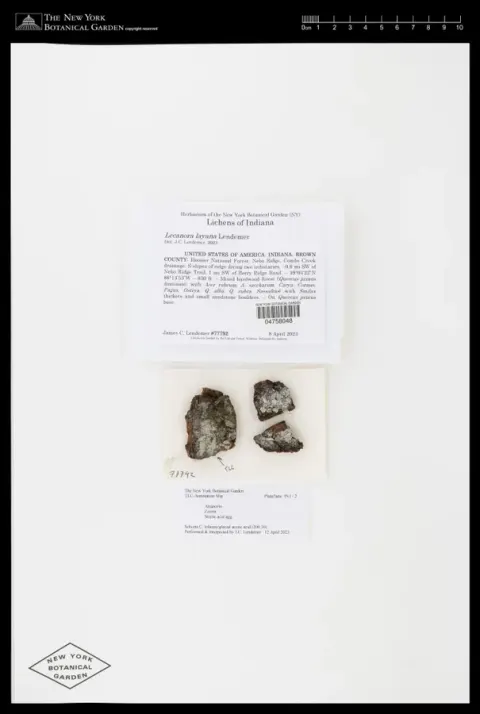
Foto yang diasosiasikan dengan Lecanora cinereofusca pada iNaturalist. Identifikasi mengikuti sumber; bukan penentuan spesimen independen.
Kredit dan penggunaan
(c) Michael J. Papay, some rights reserved (CC BY), uploaded by Michael J. Papay
Ukuran dan format gambar disesuaikan tanpa pemotongan, retus, atau penambahan skala. Lisensi sumber dipertahankan.

Foto yang diasosiasikan dengan Lecanora cinereofusca pada iNaturalist. Identifikasi mengikuti sumber; bukan penentuan spesimen independen.
Kredit dan penggunaan
(c) Scott Morris, some rights reserved (CC BY), uploaded by Scott Morris
Ukuran dan format gambar disesuaikan tanpa pemotongan, retus, atau penambahan skala. Lisensi sumber dipertahankan.
Sumber profil
- [1] Lecanora cinereofusca — Wikipedia (en)
- [2] Catalogue of Life Base2026-09-11 — Lecanora cinereofusca
- [3] Dokumentasi visual — Lecanora cinereofusca
- [4] Dokumentasi visual — Lecanora cinereofusca
- [5] Dokumentasi visual — Lecanora cinereofusca
Rujukan halaman ini
Fungi. Lecanora cinereofusca. Rilis data fungi-2026-10-12-expansion-2. https://fungi-atlas.mgadib.chatgpt.site/jamur/lecanora-cinereofusca/.
Status: impor sumber; pemeriksaan editorial per profil belum selesai. Untuk klaim biologis, gunakan rujukan pada bagian terkait dan periksa konteks sumber aslinya.