Ciri dan struktur
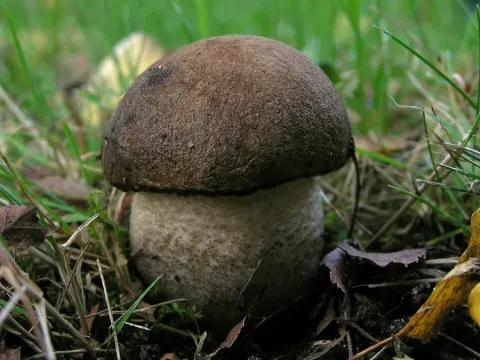
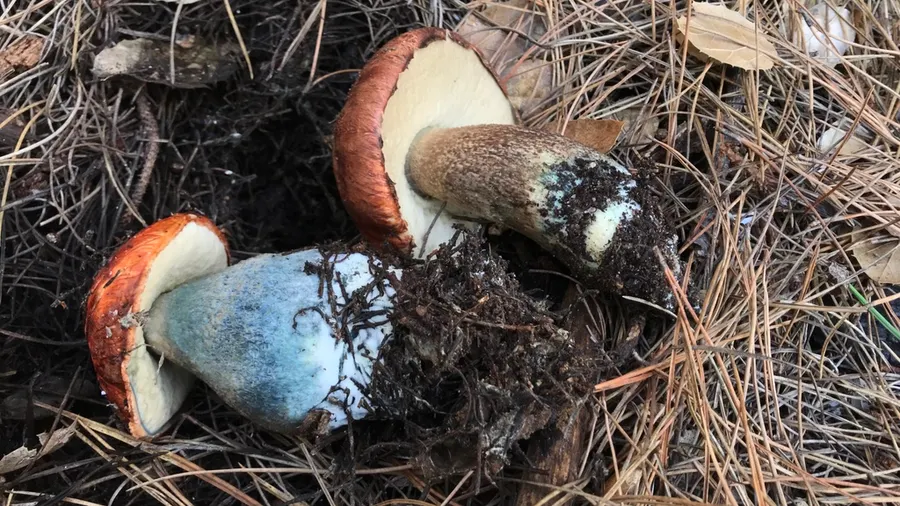
The fruit bodies of Leccinum manzanitae are sometimes massive, occasionally reaching weights of several pounds. The cap is 7–20 cm in diameter, spherical to convex when young, and broadly convex to flattened or cushion-shaped (pulvinate). The surface of the cap is often shallowly to deeply pitted or reticulate, sticky, and covered with pressed-down hairs that are more conspicuous toward the edge of the cap. Its color is dark red during all stages of development. The cap's flesh is 2–4 cm thick, white when first exposed, but slowly and irregularly changing to dark brownish-gray with no reddish intermediate state. The change in color upon bruising or injury is often more pronounced in young specimens. The tubes comprising the hymenophore are 1–2.5 cm long, with an adnate attachment to the stipe; their color is pale olive when young and darkens when bruised. Pores are up to 1 mm in diameter, angular, and the same color as the tubes. The stipe is 8–18 cm long, and 1.5–4 cm thick at the apex, and either club-shaped or swollen in the middle. It is solid (i.e., not hollow), with a dry surface, and covered with small, stiff, granular projections called scabers. The scabers are usually whitish when young, but eventually turn dark brownish-grey with age. The stipe flesh stains a bluish color when bruised, although this reaction is variable and sometimes slow to occur. It has no distinctive taste or odor. Leccinum manzanitae mushroom produce a cinnamon-brown spore print. Spores are 13–17 by 4–5.5 μm, somewhat elliptical to cylindrical, and tapered on each end (fusoid); their walls are smooth and moderately thick.
Habitat dan peran ekologis
Leccinum manzanitae adalah spesies mikoriza. Tubuh buahnya tumbuh secara tunggal hingga tersebar di tanah di bawah madrone dan manzanita. Known to hanya terjadi di Amerika Utara, biasanya ditemukan dari tengah California to selatan Oregon,
- Habitat atau konteks temuan
- Informasi belum tersedia pada sumber rilis ini.
- Substrat
- tanah
- Peran atau konteks
- Mitra tumbuhan
Reproduksi
Leccinum manzanitae mushroom produce a cinnamon-brown spore print. Spores are 13–17 by 4–5.5 μm, somewhat elliptical to cylindrical, and tapered on each end (fusoid); their walls are smooth and moderately thick. The spore-bearing cells, the basidia, are 27–32 by 6–9 μm, club-shaped to pear-shaped (pyriform) and four-spored. The cystidia are 23–32 by 4–6 μm, fusoid to club-shaped with narrow, elongated apices. Caulocystidia (found on the stipe surface) are thin-walled, club-shaped to somewhat fusoid, and sometimes end in a sharp point; they measure 35–45 by 9–14 μm. Clamp connections are absent in the hyphae of Leccinum manzanitae. The hyphae of the cap cuticle are arranged in the form of a trichoderm (wherein the outermost hyphae emerge roughly parallel, perpendicular to the cap surface).
Catatan identitas dan cakupan
- Nama diterima mengikuti Catalogue of Life Base2026-09-11; uraian mempertahankan konsep dan nama sumber aslinya.
- Original geographic, specimen and life-cycle scope retained; source import awaits individual editorial review.
- Impor dan terjemahan otomatis belum diperiksa editorial per profil. Struktur reproduktif yang disebutkan tidak membuktikan seluruh siklus hidup diketahui.
- Pengukuran pada uraian mengikuti spesimen, kultur, dan metode sumber; angka tidak diperluas ke semua populasi.
Catatan distribusi dalam narasi mengikuti sumbernya. Dokumentasi spesimen atau foto mengikuti catatan sumber. Bukti wilayah Indonesia dan penilaian konservasi tidak disimpulkan dari gambar.
Melihat dengan konteks
Dokumentasi Leccinum manzanitae menurut asosiasi foto pada record takson iNaturalist. Kredit: debk. Identitas mengikuti sumber; bukan penentuan spesimen independen.
- Jenis
- Fotografi
- Kredit
- (c) debk, some rights reserved (CC BY-SA)
- Lisensi
- CC BY-SA 4.0
- Sumber media
- Buka entri sumber
Dokumentasi tambahan
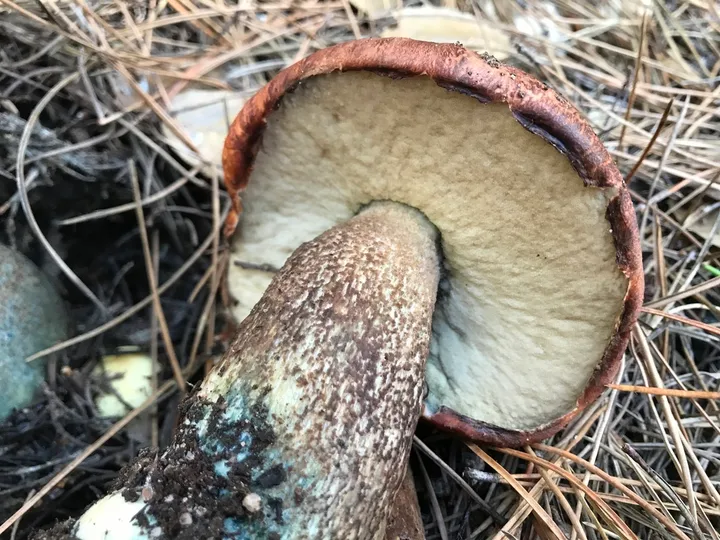
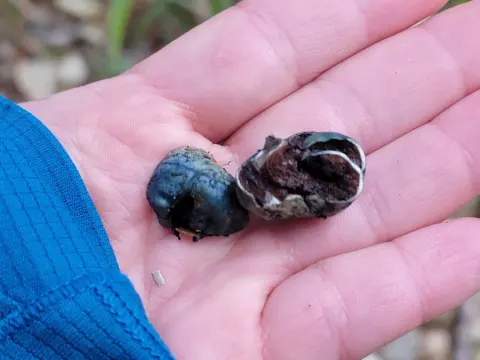
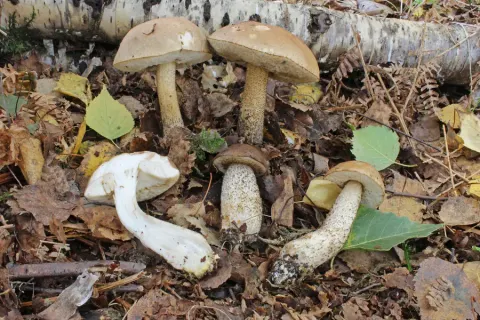
Foto yang diasosiasikan dengan Leccinum manzanitae pada iNaturalist. Identifikasi mengikuti sumber; bukan penentuan spesimen independen.
Kredit dan penggunaan
(c) debk, some rights reserved (CC BY-SA)
Ukuran dan format gambar disesuaikan tanpa pemotongan, retus, atau penambahan skala. Lisensi sumber dipertahankan.
Sumber profil
- [1] Leccinum manzanitae — Wikipedia (en)
- [2] Catalogue of Life Base2026-09-11 — Leccinum manzanitae
- [3] Dokumentasi visual — Leccinum manzanitae
- [4] Dokumentasi visual — Leccinum manzanitae
Rujukan halaman ini
Fungi. Leccinum manzanitae. Rilis data fungi-2026-10-12-expansion-2. https://fungi-atlas.mgadib.chatgpt.site/jamur/leccinum-manzanitae/.
Status: impor sumber; pemeriksaan editorial per profil belum selesai. Untuk klaim biologis, gunakan rujukan pada bagian terkait dan periksa konteks sumber aslinya.