Ciri dan struktur
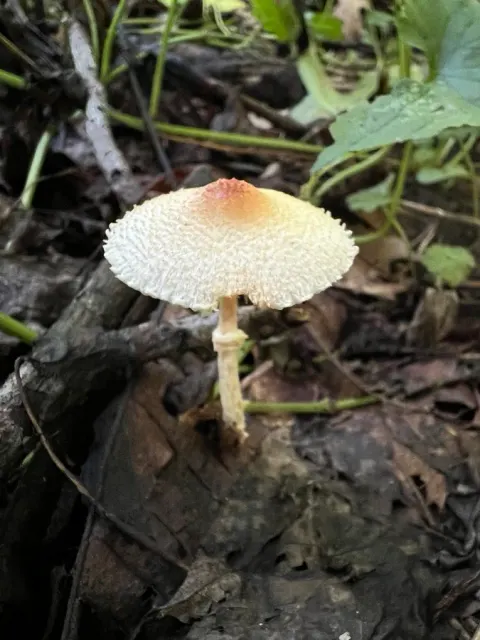
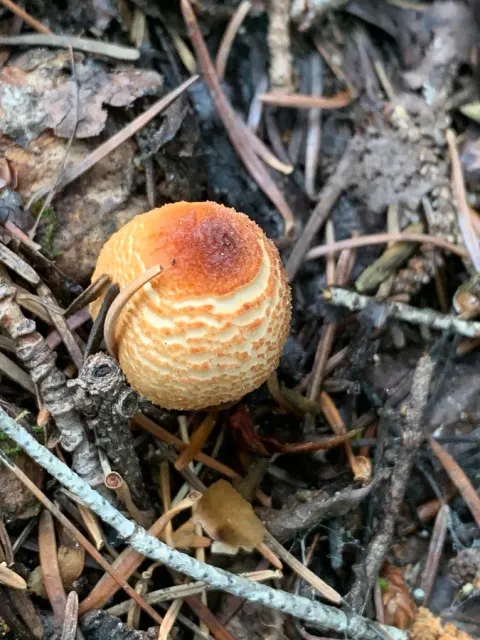
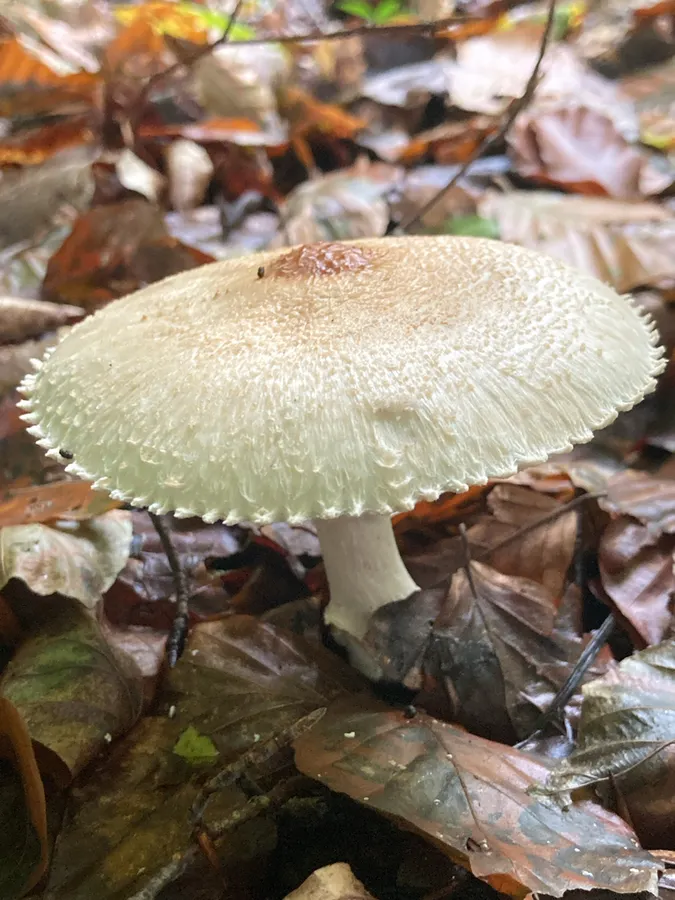
The cap is between 4 and 10 cm in diameter. It is convex, later flat, and with a raised central boss (umbo). The centre of the cap is reddish brown, or orange-brown, breaking into small scales, which are fewer, and lighter towards the margin. The best identification aid is the orange (somewhat indented) ring, which is low on the white, slightly bulbous to club-shaped stem, which often has an orange flush at its base. The gills are white to cream, giving a white spore print. They are free of the stem, and are fairly crowded together. The flesh is white throughout, and has an unpleasant chemical smell, similar to that which is produced when cutting metal; the odor has also been compared to rubber. L. ignivolvata has an unpleasant, rancid taste. The spores are spindle (fusiform) or almond (amygdaloid) in shape, with dimensions of 9–13 to 5–7; μm. The similar species Lepiota ventriosospora and Lepiota cristata lack the orange colouring on the ring. Lepiota ignivolvata belongs to the section Fusisporae within genus Lepiota, whose members are characterized by long spindle-shaped spores and a fluffy stem beneath the ring.
Habitat dan peran ekologis
Lepiota ignivolvata tersebar di seluruh Eropa, bentengnya berada di Eropa tengah sampai selatan. Di Britain it jarang terjadi, dan tinggal di British Red Data list. It appears in deciduous, and coniferous woods, in autumn, and seems to favour beech.
- Habitat atau konteks temuan
- Informasi belum tersedia pada sumber rilis ini.
- Substrat
- Informasi belum tersedia pada sumber rilis ini.
- Peran atau konteks
- Belum dikategorikan pada rilis ini.
Reproduksi
The gills are white to cream, giving a white spore print. They are free of the stem, and are fairly crowded together. The flesh is white throughout, and has an unpleasant chemical smell, similar to that which is produced when cutting metal; the odor has also been compared to rubber. L. ignivolvata has an unpleasant, rancid taste. The spores are spindle (fusiform) or almond (amygdaloid) in shape, with dimensions of 9–13 to 5–7; μm. Lepiota ignivolvata belongs to the section Fusisporae within genus Lepiota, whose members are characterized by long spindle-shaped spores and a fluffy stem beneath the ring.
Catatan identitas dan cakupan
- Nama diterima mengikuti Catalogue of Life Base2026-09-11; uraian mempertahankan konsep dan nama sumber aslinya.
- Original geographic, specimen and life-cycle scope retained; source import awaits individual editorial review.
- Impor dan terjemahan otomatis belum diperiksa editorial per profil. Struktur reproduktif yang disebutkan tidak membuktikan seluruh siklus hidup diketahui.
- Pengukuran pada uraian mengikuti spesimen, kultur, dan metode sumber; angka tidak diperluas ke semua populasi.
Catatan distribusi dalam narasi mengikuti sumbernya. Dokumentasi spesimen atau foto mengikuti catatan sumber. Bukti wilayah Indonesia dan penilaian konservasi tidak disimpulkan dari gambar.
Melihat dengan konteks
Dokumentasi Lepiota ignivolvata menurut asosiasi foto pada record takson iNaturalist. Kredit: norgram. Identitas mengikuti sumber; bukan penentuan spesimen independen.
- Jenis
- Fotografi
- Kredit
- (c) norgram, some rights reserved (CC BY)
- Lisensi
- CC BY 4.0
- Sumber media
- Buka entri sumber
Dokumentasi tambahan
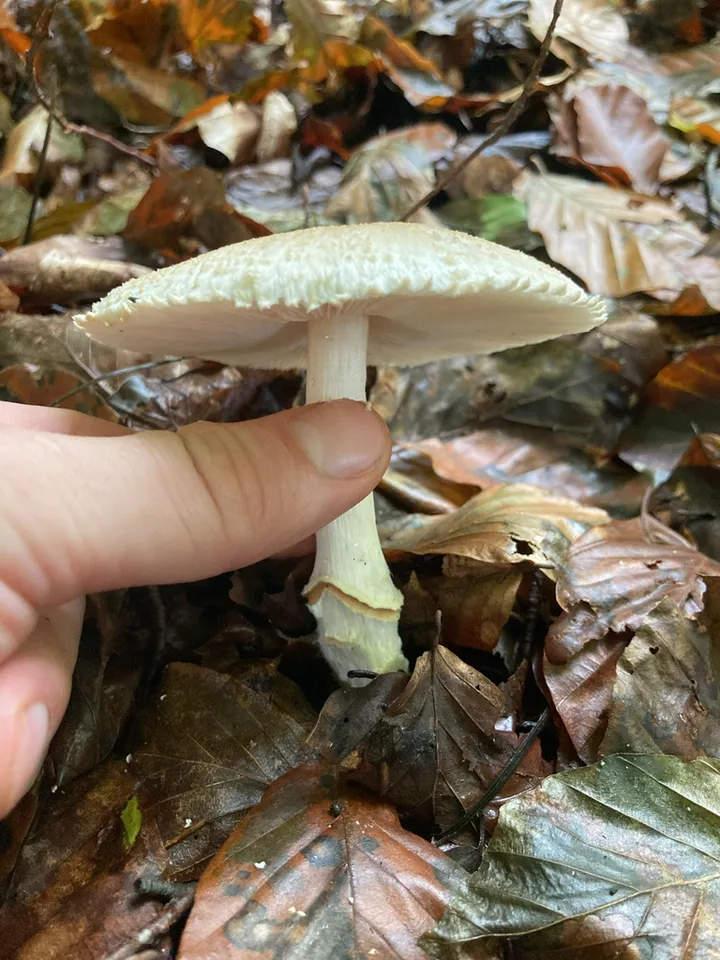
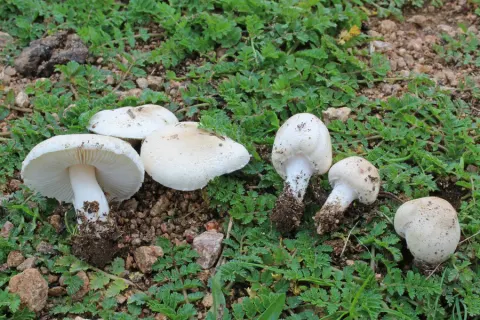
Foto yang diasosiasikan dengan Lepiota ignivolvata pada iNaturalist. Identifikasi mengikuti sumber; bukan penentuan spesimen independen.
Kredit dan penggunaan
(c) norgram, some rights reserved (CC BY)
Ukuran dan format gambar disesuaikan tanpa pemotongan, retus, atau penambahan skala. Lisensi sumber dipertahankan.
Sumber profil
- [1] Lepiota ignivolvata — Wikipedia (en)
- [2] Catalogue of Life Base2026-09-11 — Lepiota ignivolvata
- [3] Dokumentasi visual — Lepiota ignivolvata
- [4] Dokumentasi visual — Lepiota ignivolvata
Rujukan halaman ini
Fungi. Lepiota ignivolvata. Rilis data fungi-2026-10-12-expansion-2. https://fungi-atlas.mgadib.chatgpt.site/jamur/lepiota-ignivolvata/.
Status: impor sumber; pemeriksaan editorial per profil belum selesai. Untuk klaim biologis, gunakan rujukan pada bagian terkait dan periksa konteks sumber aslinya.