Ciri dan struktur
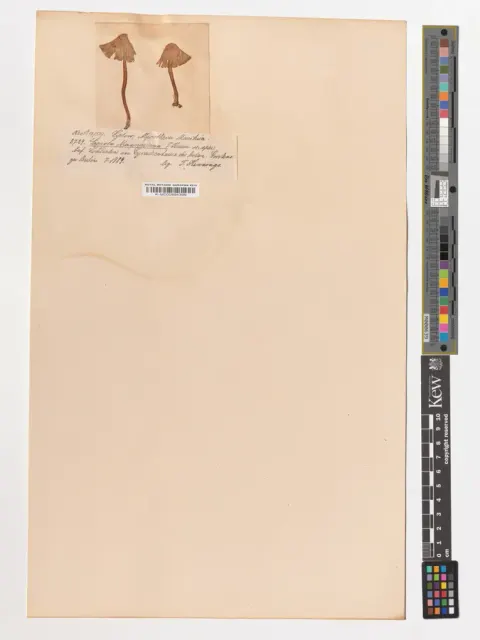
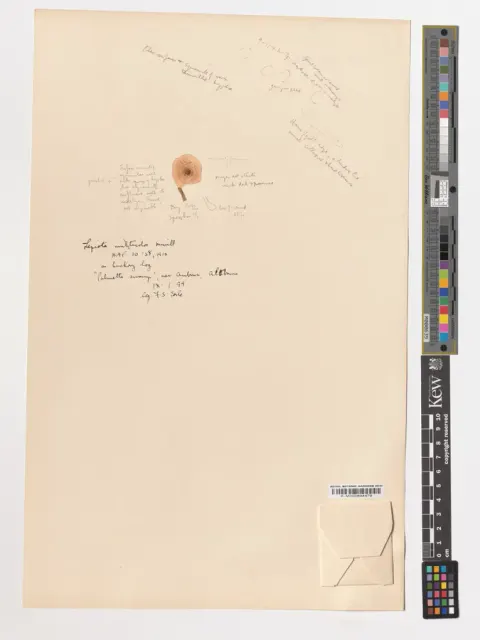
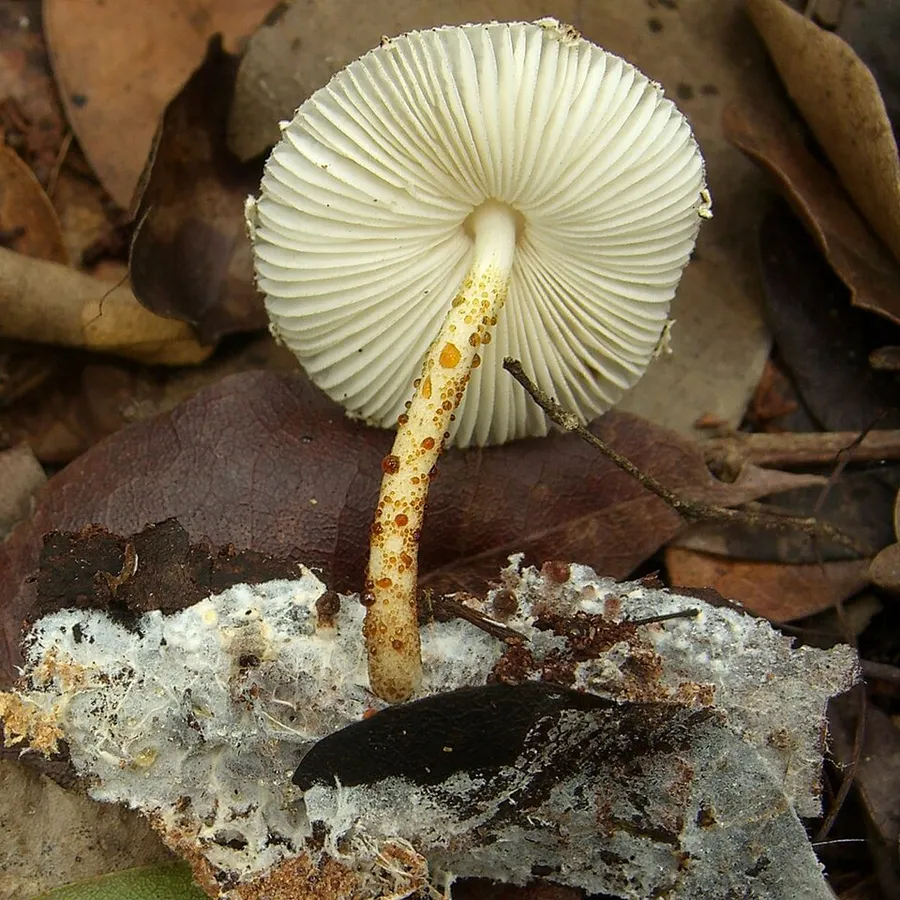
Leucocoprinus longistriatus is a small dapperling mushroom with thin (2-6mm thick) white flesh. Cap: 4.3–8 cm wide, convex or flat with the cap edges sometimes lifting upwards with age. The umbo can be distinct or not present when mature and the cap margins have finely striate or plicate grooves running almost to the centre when mature. The surface is pale yellow, white or grayish and is covered in fine scales that are easily removed whilst the centre is brown to dark red surrounding the umbo. Stem: 4–8.3 cm long and 3.6mm thick tapering up from a bulbous base of 6-12mm when mature. The surface is pale yellow or white and smooth but stains a dull ochre colour when young stems are handled, the interior flesh is hollow. The small, ascending stem ring has pale brown edges and is located below the middle of the stem and is often just above the base (inferior to basal) however it may disappear. Gills: Yellowish white, becoming darker with maturity or when dry. Crowded and free with slight tufts on the edges. Spores: Elliptical or ovate lacking a distinct pore. Non-dextrinoid. 6–8 x 4.5-5 μm.
Habitat dan peran ekologis
Peck described the species as growing in gardens in Alabama July with specimens also found in Cuba in gardens and amongst grass and in Jamaican woodland. In a 1907 study the American mycologist Andrew Price Morgan documented the species growing in 'rich soil in gardens' in Alabama. In 1937 Johannes Rick documented the species in Brazil but cited the name as Lepiota longestriata Peck. He stated that it grew in gardens and forests.' The 1982 study examined specimens found growing in tufts or scattered on wood chips and on soil under sweet gum and live oak trees. They were found in Jackson county, Mississippi.
- Habitat atau konteks temuan
- hutan
- Substrat
- kayu; tanah
- Peran atau konteks
- Belum dikategorikan pada rilis ini.
Reproduksi
Cap: 4.3–8 cm wide, convex or flat with the cap edges sometimes lifting upwards with age. The umbo can be distinct or not present when mature and the cap margins have finely striate or plicate grooves running almost to the centre when mature. The surface is pale yellow, white or grayish and is covered in fine scales that are easily removed whilst the centre is brown to dark red surrounding the umbo. Stem: 4–8.3 cm long and 3.6mm thick tapering up from a bulbous base of 6-12mm when mature. The surface is pale yellow or white and smooth but stains a dull ochre colour when young stems are handled, the interior flesh is hollow. The small, ascending stem ring has pale brown edges and is located below the middle of the stem and is often just above the base (inferior to basal) however it may disappear.
Catatan identitas dan cakupan
- Nama diterima mengikuti Catalogue of Life Base2026-09-11; uraian mempertahankan konsep dan nama sumber aslinya.
- Original geographic, specimen and life-cycle scope retained; source import awaits individual editorial review.
- Impor dan terjemahan otomatis belum diperiksa editorial per profil. Struktur reproduktif yang disebutkan tidak membuktikan seluruh siklus hidup diketahui.
- Pengukuran pada uraian mengikuti spesimen, kultur, dan metode sumber; angka tidak diperluas ke semua populasi.
Catatan distribusi dalam narasi mengikuti sumbernya. Dokumentasi spesimen atau foto mengikuti catatan sumber. Bukti wilayah Indonesia dan penilaian konservasi tidak disimpulkan dari gambar.
Melihat dengan konteks
Dokumentasi Leucocoprinus longistriatus dari Wikimedia Commons. Scientific Name: Leucocoprinus longistriatus Common Name: parasol Certainty: could be ( notes ) Location: Florida Keys; Key Largo; Dove Creek Hammock Date: 20071221 Neat bleeding stem. Darvin IDed this for me from "A Field Guide to Southern Mushrooms". Identifikasi mengikuti record berkas sumber.
- Jenis
- Fotografi
- Kredit
- Jason Hollinger
- Lisensi
- CC BY 2.0
- Sumber media
- Buka entri sumber
Sumber profil
- [1] Leucocoprinus longistriatus — Wikipedia (en)
- [2] Catalogue of Life Base2026-09-11 — Leucocoprinus longistriatus
- [3] Dokumentasi visual — Leucocoprinus longistriatus
Rujukan halaman ini
Fungi. Leucocoprinus longistriatus. Rilis data fungi-2026-10-12-expansion-2. https://fungi-atlas.mgadib.chatgpt.site/jamur/leucocoprinus-longistriatus/.
Status: impor sumber; pemeriksaan editorial per profil belum selesai. Untuk klaim biologis, gunakan rujukan pada bagian terkait dan periksa konteks sumber aslinya.