Ciri dan struktur
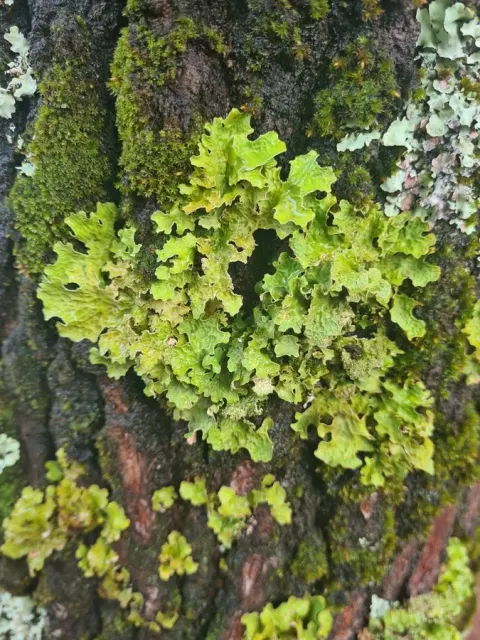
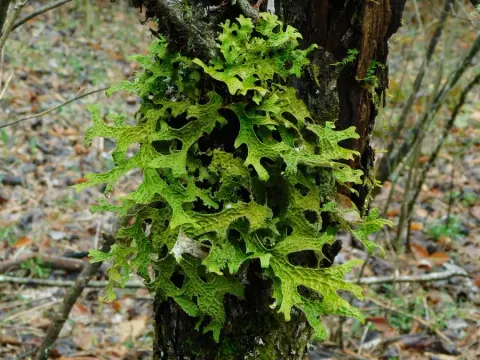
The thallus of Lobaria anomala is medium to dark brown and features ridges and depressions that are punctuated by white or grey soredia, and sometimes rounded to irregular soralia between the ridges. Individual , which are rounded or angular, measure 1 – 3 cm wide. Apothecia are rare in this species. It contains stictic acid and triterpenes as lichen products. The expected results for standard chemical spot tests are: medulla PD+ (orange), K+ (yellow), KC−, and C−. Lobaria anthraspis, which shares a similar distribution in northwestern North America, closely resembles L. anomala in appearance. However, these species can be distinguished by their reproductive strategies and ecological preferences. Unlike L. anomala, L. anthraspis lacks soredia and frequently produces apothecia. Ecologically, L. anthraspis is less common and tends to favor riparian habitats, whereas L. anomala has a broader ecological range.
Habitat dan peran ekologis
Lobaria anomala occurs in western North America, along the Pacific coast of the United States and Canada. It grows on both deciduous and coniferous trees on humid locales, particularly in the Interior Cedar Hemlock zone and in low-elevation coastal forests. Its range extends north from Alaska, through British Columbia, south to California. It was expected to occur on Cypress Island (Washington), but was not found during an extensive survey of the lichen flora on the island.
- Habitat atau konteks temuan
- hutan
- Substrat
- Informasi belum tersedia pada sumber rilis ini.
- Peran atau konteks
- Pembentuk liken
Reproduksi
The thallus of Lobaria anomala is medium to dark brown and features ridges and depressions that are punctuated by white or grey soredia, and sometimes rounded to irregular soralia between the ridges. Individual , which are rounded or angular, measure 1 – 3 cm wide. Apothecia are rare in this species. It contains stictic acid and triterpenes as lichen products. The expected results for standard chemical spot tests are: medulla PD+ (orange), K+ (yellow), KC−, and C−. Lobaria anthraspis, which shares a similar distribution in northwestern North America, closely resembles L. anomala in appearance. However, these species can be distinguished by their reproductive strategies and ecological preferences.
Catatan identitas dan cakupan
- Nama diterima mengikuti Catalogue of Life Base2026-09-11; uraian mempertahankan konsep dan nama sumber aslinya.
- Original geographic, specimen and life-cycle scope retained; source import awaits individual editorial review.
- Impor dan terjemahan otomatis belum diperiksa editorial per profil. Struktur reproduktif yang disebutkan tidak membuktikan seluruh siklus hidup diketahui.
- Pengukuran pada uraian mengikuti spesimen, kultur, dan metode sumber; angka tidak diperluas ke semua populasi.
Catatan distribusi dalam narasi mengikuti sumbernya. Dokumentasi spesimen atau foto mengikuti catatan sumber. Bukti wilayah Indonesia dan penilaian konservasi tidak disimpulkan dari gambar.
Melihat dengan konteks
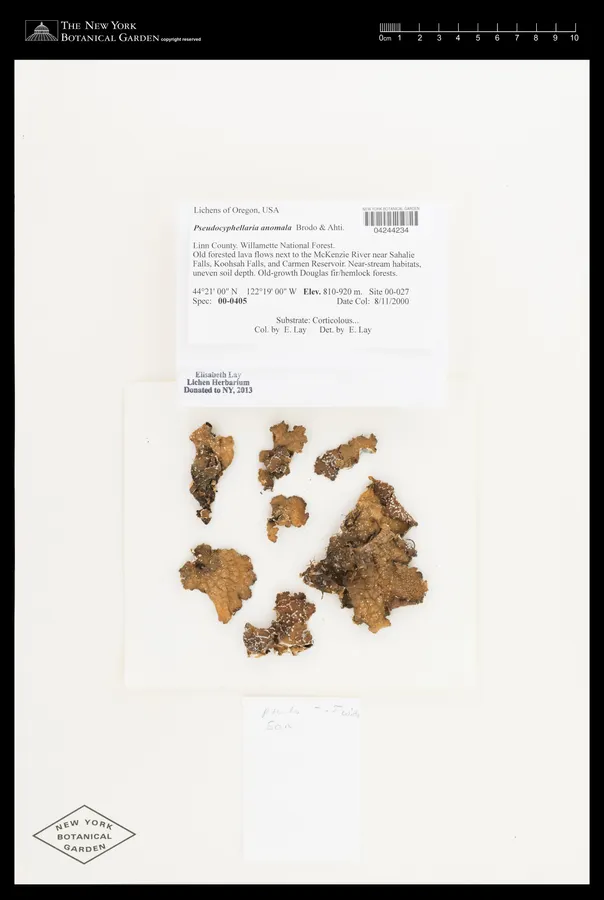
Voucher herbarium Pseudocyphellaria anomala (04244234), The New York Botanical Garden. Identifikasi mengikuti record spesimen sumber. Foto bahan, kemasan, atau label herbarium sebagaimana tersedia pada record institusi; bukan foto lapangan atau penentuan spesimen independen.
- Jenis
- Voucher herbarium
- Kredit
- The New York Botanical Garden
- Lisensi
- CC BY 4.0
- Sumber media
- Buka entri sumber
Sumber profil
- [1] Lobaria anomala — Wikipedia (en)
- [2] Catalogue of Life Base2026-09-11 — Lobaria anomala
- [3] Dokumentasi visual — Pseudocyphellaria anomala
Rujukan halaman ini
Fungi. Lobaria anomala. Rilis data fungi-2026-10-12-expansion-2. https://fungi-atlas.mgadib.chatgpt.site/jamur/lobaria-anomala/.
Status: impor sumber; pemeriksaan editorial per profil belum selesai. Untuk klaim biologis, gunakan rujukan pada bagian terkait dan periksa konteks sumber aslinya.