01 / Morfologi

Ciri dan struktur

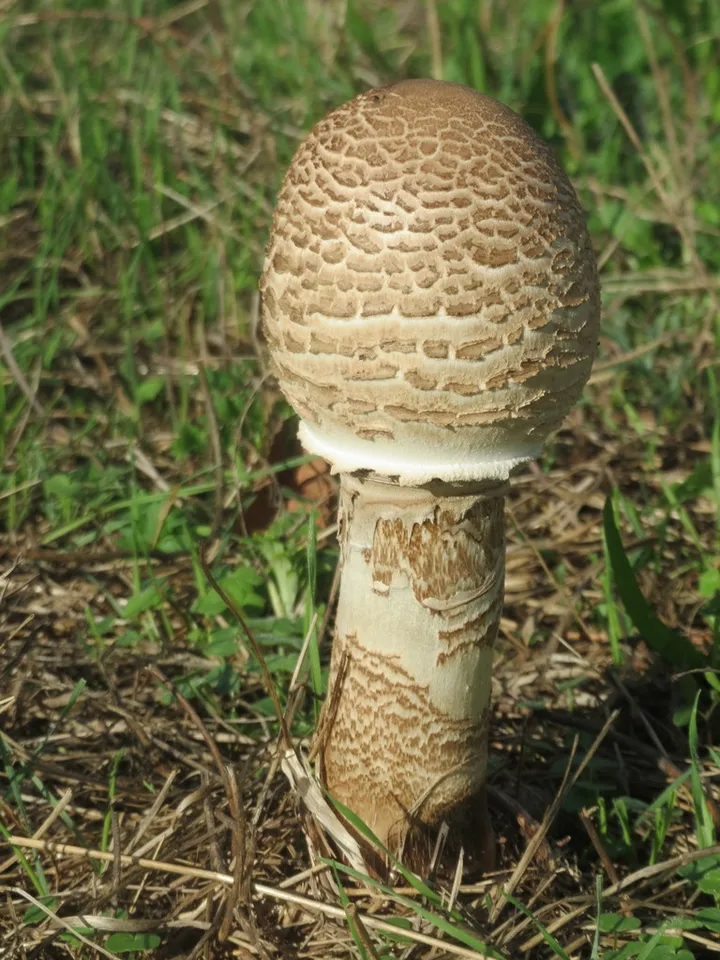
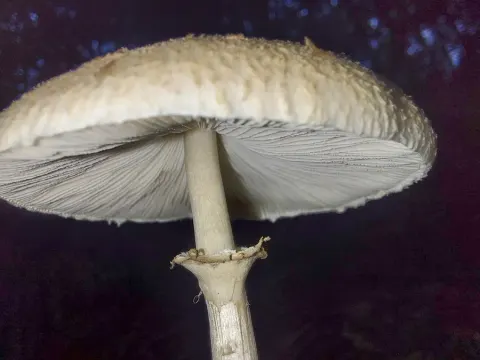
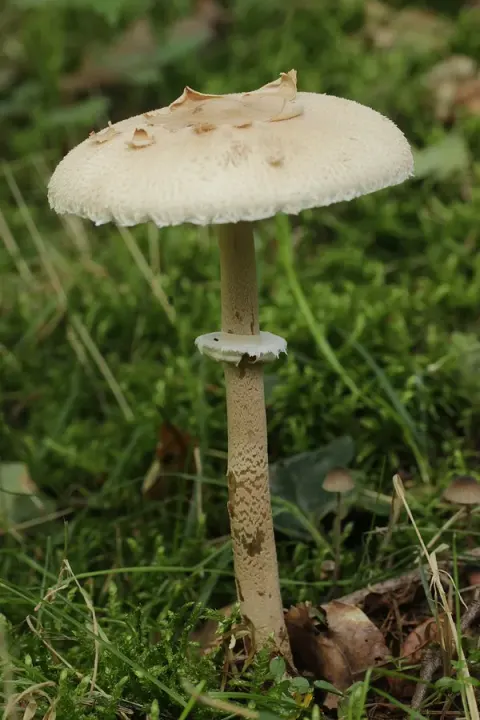
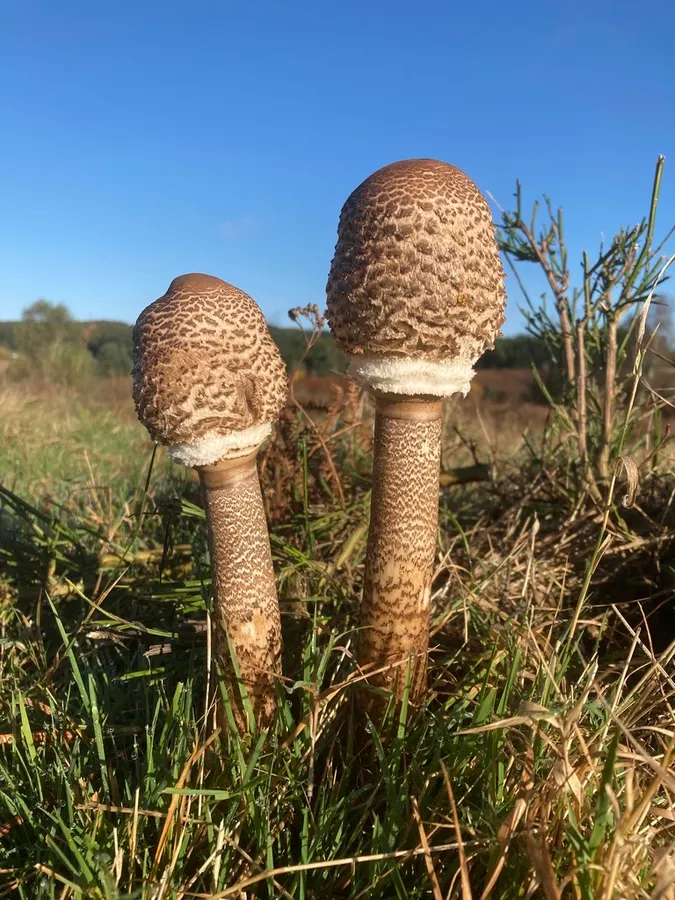
The immature cap is compact and egg-shaped, At full maturity, the cap is more or less flat, with a smooth, dark umbo in the centre. reaching its full height before the cap expands. Below the ring, the stem has scaly growths, The gills are crowded, free, and white or pale pink in age. The spore print is white. The whitish flesh may have a pale pink hue but does not stain when cut. It has a pleasant nutty smell.

Sebagian uraian ditampilkan dalam bahasa sumber; terjemahannya belum tersedia atau belum lolos pemeriksaan.

Rujukan: [1]

Pengukuran mengikuti objek, spesimen atau kultur, dan metode yang disebutkan sumber. Baca uraian asli untuk konteks lengkap.

02 / Kehidupan

Habitat dan peran ekologis

Macrolepiota procera is a fairly common species on well-drained soils. It is found solitary or in groups and fairy rings in pastures and occasionally in woodland. It is widespread in temperate regions of Eurasia and possibly North America. Further research is needed to confirm whether specimens found in North America are the same species.

Sebagian uraian ditampilkan dalam bahasa sumber; terjemahannya belum tersedia atau belum lolos pemeriksaan.

Rujukan: [1]

Habitat atau konteks temuan
hutan
Substrat
Informasi belum tersedia pada sumber rilis ini.
Peran atau konteks
Belum dikategorikan pada rilis ini.
Temukan hubungan serupa
03 / Siklus hidup

Reproduksi

The immature cap is compact and egg-shaped, At full maturity, the cap is more or less flat, with a smooth, dark umbo in the centre. reaching its full height before the cap expands. Below the ring, the stem has scaly growths, The gills are crowded, free, and white or pale pink in age. The spore print is white. The whitish flesh may have a pale pink hue but does not stain when cut. It has a pleasant nutty smell.

Sebagian uraian ditampilkan dalam bahasa sumber; terjemahannya belum tersedia atau belum lolos pemeriksaan.

Rujukan: [1]

Sinonim menurut acuan taksonomi rilis: Agaricus annulatus; Agaricus annulatus var. excoriatus; Agaricus antiquatus; Agaricus colubrinus var. concentricus; Agaricus colubrinus var. pantherinus; Agaricus concentricus; Agaricus procerus; Agaricus procerus var. fuscomarginatus; Agaricus procerus var. squamosus; Amanita procera; Lepiota procera; Lepiota procera f. rubescens; Lepiota procera var. angustata; Lepiota procera var. umbrosa; Lepiota procera var. vezo; Lepiota procera var. vulpina; Leucocoprinus procerus; Macrolepiota olivascens f. pseudo-olivascens; Macrolepiota procera f. crassipes; Macrolepiota procera f. macrolepis; Macrolepiota procera f. multisquamulosa; Macrolepiota procera var. exigua; Macrolepiota procera var. mediterranea; Macrolepiota procera var. pallida; Macrolepiota procera var. patentosquamosa; Macrolepiota procera var. pseudo-olivascens
04 / Batas informasi

Catatan identitas dan cakupan

  • Nama diterima mengikuti Catalogue of Life Base2026-09-11; uraian mempertahankan konsep dan nama sumber aslinya.
  • Original geographic, specimen and life-cycle scope retained; source import awaits individual editorial review.
  • Impor dan terjemahan otomatis belum diperiksa editorial per profil. Struktur reproduktif yang disebutkan tidak membuktikan seluruh siklus hidup diketahui.
  • Pengukuran pada uraian mengikuti spesimen, kultur, dan metode sumber; angka tidak diperluas ke semua populasi.

Catatan distribusi dalam narasi mengikuti sumbernya. Dokumentasi spesimen atau foto mengikuti catatan sumber. Bukti wilayah Indonesia dan penilaian konservasi tidak disimpulkan dari gambar.

05 / Dokumentasi

Melihat dengan konteks

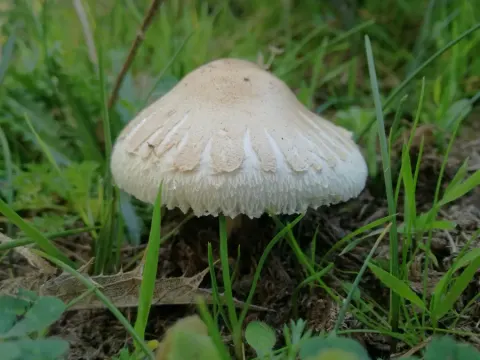
Dokumentasi Macrolepiota procera menurut asosiasi foto pada record takson iNaturalist. Kredit: Lucian Clanet. Identitas mengikuti sumber; bukan penentuan spesimen independen.

Jenis
Fotografi
Kredit
(c) Lucian Clanet, some rights reserved (CC BY), uploaded by Lucian Clanet
Lisensi
CC BY 4.0
Sumber media
Buka entri sumber

Gambar menunjukkan objek menurut identifikasi sumber, bukan verifikasi independen spesimen oleh Fungi. Tidak ada skala baru yang ditambahkan.

Dokumentasi tambahan

06 / Rujukan

Sumber profil

  1. [1] Macrolepiota procera — Wikipedia (en)Bagian sumber: Frozen revision 1369058659
    Tanggal penghimpunan sumber: 2026-10-12
    Teks sumber: CC BY-SA4.0 · Wikipedia contributors
  2. [2] Catalogue of Life Base2026-09-11 — Macrolepiota proceraBagian sumber: ColDP NameUsage.tsv ID 3X5NV; accepted species; source 2073
    Tanggal penghimpunan sumber: 2026-10-12
  3. [3] Dokumentasi visual — Macrolepiota proceraBagian sumber: Identitas mengikuti sumber dokumentasi; bukan penentuan spesimen independen.
    Tanggal penghimpunan sumber: 2026-10-17
    Media sumber: CC BY 4.0 · (c) Lucian Clanet, some rights reserved (CC BY), uploaded by Lucian Clanet
  4. [4] Dokumentasi visual — Macrolepiota proceraBagian sumber: Identitas mengikuti sumber dokumentasi; bukan penentuan spesimen independen.
    Tanggal penghimpunan sumber: 2026-10-17
    Teks sumber: CC BY-SA 4.0 · (c) Andreas Rockstein, some rights reserved (CC BY-SA)

Adaptasi teks: CC BY-SA 4.0. Wikipedia contributors — Macrolepiota procera — Wikipedia (en)

Uraian asli dan riwayat sumber

Riwayat atau halaman sumber

Ringkasan sumber

Macrolepiota procera, the parasol mushroom, is a basidiomycete fungus with a large, prominent fruiting body resembling a parasol. It resembles some toxic species. It is a fairly common species on well-drained soils. It is found solitary or in groups and fairy rings in pastures and occasionally in woodland. It is widespread in temperate regions of Eurasia and possibly North America. It is a well-regarded edible mushroom.

Revisi sumber

Morfologi sumber

The immature cap is compact and egg-shaped, At full maturity, the cap is more or less flat, with a smooth, dark umbo in the centre. reaching its full height before the cap expands. Below the ring, the stem has scaly growths, The gills are crowded, free, and white or pale pink in age. The spore print is white. The whitish flesh may have a pale pink hue but does not stain when cut. It has a pleasant nutty smell.

Revisi sumber

Ekologi sumber

Macrolepiota procera is a fairly common species on well-drained soils. It is found solitary or in groups and fairy rings in pastures and occasionally in woodland. It is widespread in temperate regions of Eurasia and possibly North America. Further research is needed to confirm whether specimens found in North America are the same species.

Revisi sumber

Struktur reproduksi sumber

The immature cap is compact and egg-shaped, At full maturity, the cap is more or less flat, with a smooth, dark umbo in the centre. reaching its full height before the cap expands. Below the ring, the stem has scaly growths, The gills are crowded, free, and white or pale pink in age. The spore print is white. The whitish flesh may have a pale pink hue but does not stain when cut. It has a pleasant nutty smell.

Revisi sumber

Rujukan halaman ini

Fungi. Macrolepiota procera. Rilis data fungi-2026-10-12-expansion-2. https://fungi-atlas.mgadib.chatgpt.site/jamur/macrolepiota-procera/.

Status: impor sumber; pemeriksaan editorial per profil belum selesai. Untuk klaim biologis, gunakan rujukan pada bagian terkait dan periksa konteks sumber aslinya.