Ciri dan struktur
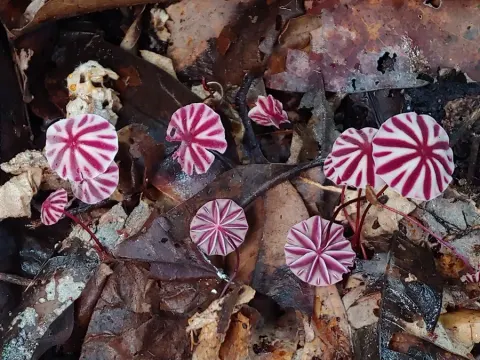
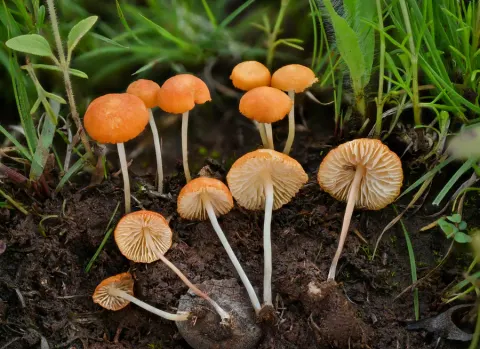
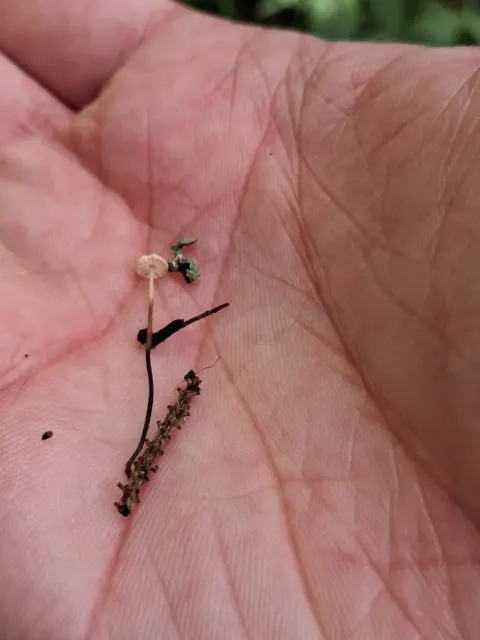
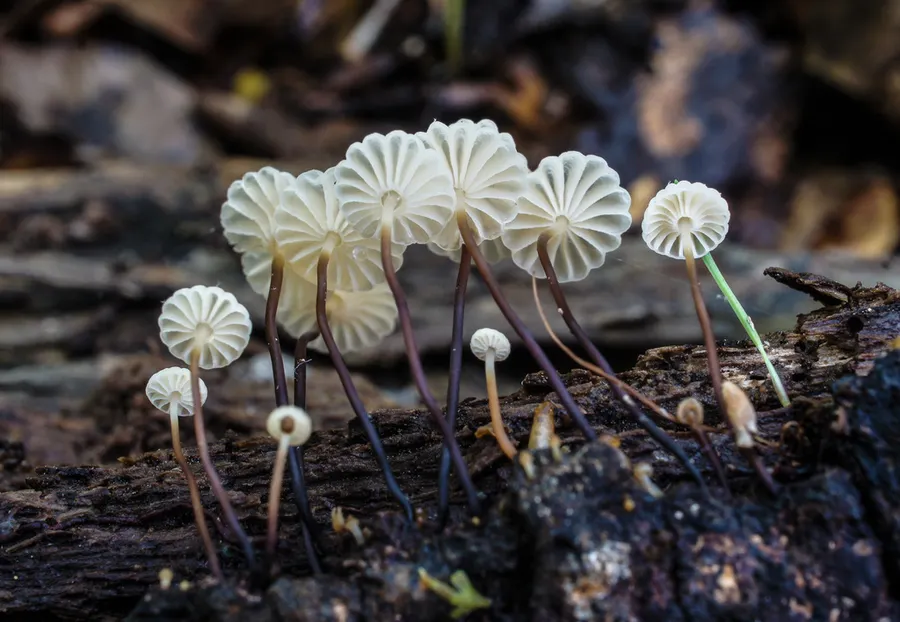
The cap of the fruit body is thin and membranous, measuring 3 to 20 mm in diameter. It has a convex shape slightly depressed in the center, conspicuous furrows in an outline of the gills, and scalloped edges. Young, unexpanded caps are yellowish brown; as the cap expands, the color lightens to whitish or light pinkish-white, often with a darker, sometimes brown center. The variety fusca has brown caps. The white or slightly yellowish flesh is very thin, reaching about 0.25–1.5 mm thick in the central part of the cap, and even thinner at the margin. Gills are attached to a collar, never to the stem, although some specimens have the collar pressed close enough to it that this characteristic may be less obvious. Widely spaced, they have the same whitish to pale yellow color as the flesh, and typically number between 16 and 22. They are initially narrow, but thicken downward to about 1–3 mm at the exposed edge. The stem is 1.2 to 8 cm long and up to 0.15 cm thick, with a smooth, sometimes shiny surface. It is tough, hollow, and either straight or with some curving. The color is blackish-brown up to a lighter, almost translucent apex. The base of the stem may be connected to dark brown or black root-like rhizomorphs 0.1–0.3 mm thick. Mature specimens display no veil. Details of the fruit bodies' appearance, color in particular, are somewhat variable and dependent on growing conditions. For example, specimens growing on logs in oak and hickory forests in the spring tend to have more yellowish-white, depressed caps than those found in the same location in autumn, which are light yellow brown and more convex in shape.
Habitat dan peran ekologis
Marasmius rotula grows in deciduous forests and fruits in groups or clusters on dead wood (especially beech), woody debris such as twigs or sticks, and occasionally on rotting leaves. The fruit bodies, which are easily overlooked because of their diminutive size, are often present in abundance after rains. Jamur ini tersebar luas dan umum di habitat favoritnya di Amerika Utara, Eropa, dan Asia utara. Although far kurang umum di daerah selatan, koleksi terpencil telah dilaporkan dari Afrika (Congo, Nigeria, Sierra Leone, dan Tanzania) dan Asia Selatan (India). Di Amerika Utara M. rotula paling umum di bagian timur benua. Marasmius rotula adalah spesies saprobik dan sebagai demikian mendapatkan nutrisi dengan membusuk materi organik mati. Spesies ini relatif tidak toleran terhadap potensi air rendah, dan akan tumbuh buruk atau sama sekali tidak dalam kondisi tekanan air. Ia tidak dapat meredamkan sampah daun sampai menjadi lebih terpecah dan lebih kompak sehingga kapasitas menahan air meningkat di lapisan tanah yang lebih dalam. Magnolia warbler telah dicatat untuk melengkungkan sarangnya dengan batang tubuh buah. Di 1975 American mycologist Martina S. Gilliam investigated periodikitas pelepasan spora di M. rotula dan menyimpulkan bahwa pelepasan spora tidak mengikuti ritme sirkadian yang teratur, seperti yang khas dari jamur agaric dan bolete, tetapi lebih tergantung pada hujan.
- Habitat atau konteks temuan
- hutan
- Substrat
- kayu
- Peran atau konteks
- Pengurai
Reproduksi
Details of the fruit bodies' appearance, color in particular, are somewhat variable and dependent on growing conditions. For example, specimens growing on logs in oak and hickory forests in the spring tend to have more yellowish-white, depressed caps than those found in the same location in autumn, which are light yellow brown and more convex in shape. The fruit body development of M. rotula is hemiangiocarpous, with an hymenium that is only partially enclosed by basidiocarp tissues. Robert Kühner showed that a cortina-like tissue covers the young gills before the expanding cap breaks away from the stem. In unfavorable weather conditions, the mushrooms may fail to develop normally and instead produce semi-gasteroid basidiocarps.
Catatan identitas dan cakupan
- Nama diterima mengikuti Catalogue of Life Base2026-09-11; uraian mempertahankan konsep dan nama sumber aslinya.
- Original geographic, specimen and life-cycle scope retained; source import awaits individual editorial review.
- Impor dan terjemahan otomatis belum diperiksa editorial per profil. Struktur reproduktif yang disebutkan tidak membuktikan seluruh siklus hidup diketahui.
- Pengukuran pada uraian mengikuti spesimen, kultur, dan metode sumber; angka tidak diperluas ke semua populasi.
Catatan distribusi dalam narasi mengikuti sumbernya. Dokumentasi spesimen atau foto mengikuti catatan sumber. Bukti wilayah Indonesia dan penilaian konservasi tidak disimpulkan dari gambar.
Melihat dengan konteks
Dokumentasi Marasmius rotula menurut asosiasi foto pada record takson iNaturalist. Kredit: Bill Sheehan. Identitas mengikuti sumber; bukan penentuan spesimen independen.
- Jenis
- Fotografi
- Kredit
- (c) Bill Sheehan, some rights reserved (CC BY-SA), uploaded by Bill Sheehan
- Lisensi
- CC BY-SA 4.0
- Sumber media
- Buka entri sumber
Dokumentasi tambahan
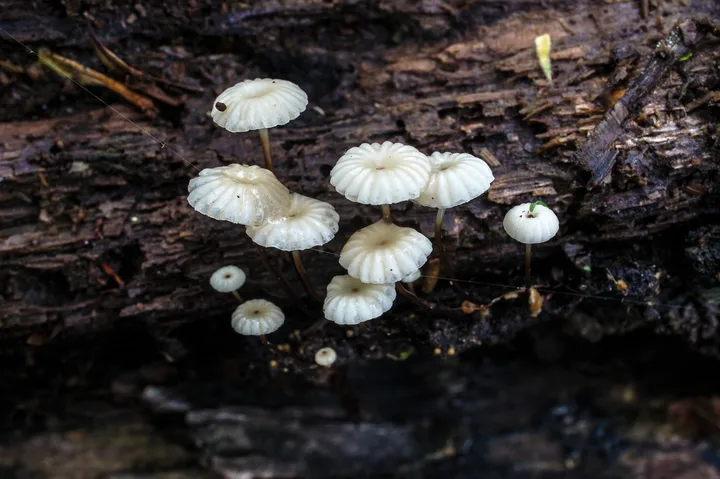
Foto yang diasosiasikan dengan Marasmius rotula pada iNaturalist. Identifikasi mengikuti sumber; bukan penentuan spesimen independen.
Kredit dan penggunaan
(c) Bill Sheehan, some rights reserved (CC BY-SA), uploaded by Bill Sheehan
Ukuran dan format gambar disesuaikan tanpa pemotongan, retus, atau penambahan skala. Lisensi sumber dipertahankan.
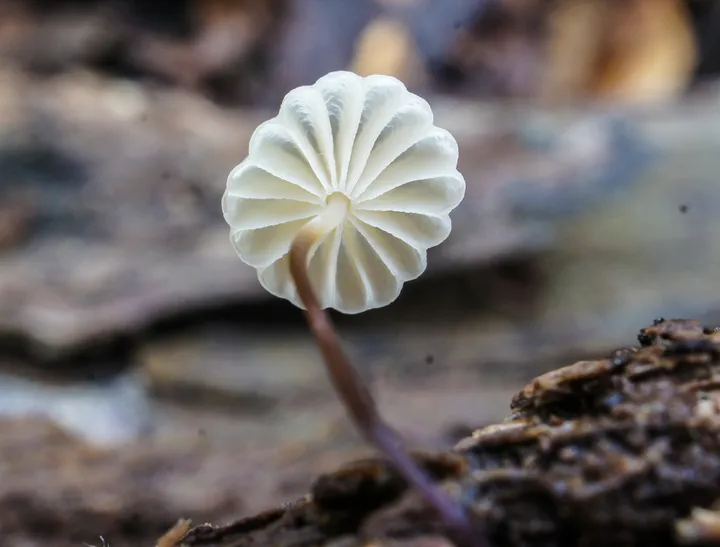
Foto yang diasosiasikan dengan Marasmius rotula pada iNaturalist. Identifikasi mengikuti sumber; bukan penentuan spesimen independen.
Kredit dan penggunaan
(c) Bill Sheehan, some rights reserved (CC BY-SA), uploaded by Bill Sheehan
Ukuran dan format gambar disesuaikan tanpa pemotongan, retus, atau penambahan skala. Lisensi sumber dipertahankan.
Sumber profil
- [1] Marasmius rotula — Wikipedia (en)
- [2] Catalogue of Life Base2026-09-11 — Marasmius rotula
- [3] Dokumentasi visual — Marasmius rotula
- [4] Dokumentasi visual — Marasmius rotula
- [5] Dokumentasi visual — Marasmius rotula
Rujukan halaman ini
Fungi. Marasmius rotula. Rilis data fungi-2026-10-12-expansion-2. https://fungi-atlas.mgadib.chatgpt.site/jamur/marasmius-rotula/.
Status: impor sumber; pemeriksaan editorial per profil belum selesai. Untuk klaim biologis, gunakan rujukan pada bagian terkait dan periksa konteks sumber aslinya.