Ciri dan struktur
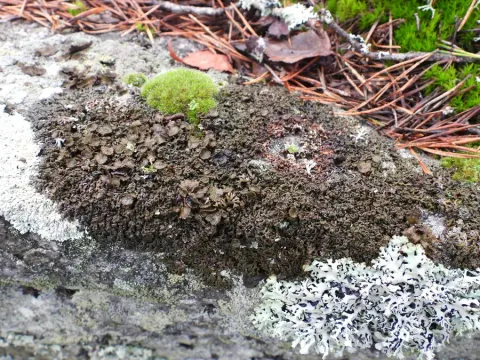
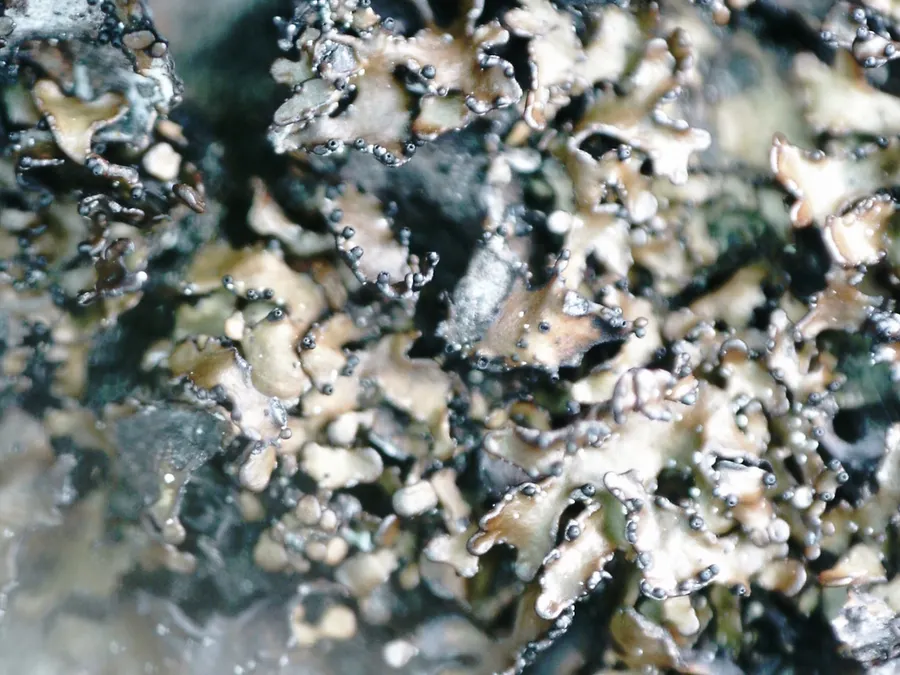
Melanelia hepatizon has a dark brown, often shiny thallus. It is usually closely attached () to its . The thallus measures up to 3 cm in diameter, and features narrow , usually between 0.4 and 1.5 mm in width, occasionally reaching up to 2.5 mm. The edges of the lobes are distinctly thickened. This species lacks both soredia and isidia. A distinguishing characteristic of Melanelia hepatizon is the presence of conspicuous white pseudocyphellae (pores for gas exchange) along the lobe margins, especially around the margins of the apothecia (fruiting bodies). The lower surface of Melanelia hepatizon is black at the centre, transitioning to dark brown towards the edges. Rhizines are sparse and primarily located at the margins. The pycnidia (asexual fruiting bodies) are black, cylindrical structures that are usually conspicuous on or near the lobe margins. Apothecia are common in this species. They are in form, with a red-brown to brown that can reach up to 5 mm in diameter. The conidia are dumbbell-shaped and measure between 4 and 6 μm in length.
Habitat dan peran ekologis
A circumpolar species, Melanelia hepatizon has a wide ecological amplitude, growing in diverse environments ranging from arctic sea-level stands to alpine belts in meridional zones, and from oceanic to continental sites. In the Himalayas, it has been recorded at elevations of 3600 m and 4500 m. The lichen colonises siliceous rocks, occasionally wood and mosses, in various lowland and mountain tundra communities, as well as in open, exposed alpine vegetation. Its range includes China, Iceland, and Greenland. It is widespread in Europe, having been reported from 23 countries there, and is also widely distributed in the Russian Arctic. Its range in North America includes the Pacific Northwest and the Rocky Mountains extending north to Alaska and other arctic regions in the west, and the Appalachians and Great Lakes regions in the east. Melanelia hepatizon is typically found in sun-exposed habitats in boreal, alpine, and Arctic zones. It is predicted to respond negatively to climate change due to its preference for cooler, stable environments. As temperatures rise and habitats shift, this species may face a decline in abundance and distribution.
- Habitat atau konteks temuan
- Informasi belum tersedia pada sumber rilis ini.
- Substrat
- Informasi belum tersedia pada sumber rilis ini.
- Peran atau konteks
- Pembentuk liken
Reproduksi
Melanelia hepatizon has a dark brown, often shiny thallus. It is usually closely attached () to its . The thallus measures up to 3 cm in diameter, and features narrow , usually between 0.4 and 1.5 mm in width, occasionally reaching up to 2.5 mm. The edges of the lobes are distinctly thickened. This species lacks both soredia and isidia. A distinguishing characteristic of Melanelia hepatizon is the presence of conspicuous white pseudocyphellae (pores for gas exchange) along the lobe margins, especially around the margins of the apothecia (fruiting bodies). The lower surface of Melanelia hepatizon is black at the centre, transitioning to dark brown towards the edges. Rhizines are sparse and primarily located at the margins.
Catatan identitas dan cakupan
- Nama diterima mengikuti Catalogue of Life Base2026-09-11; uraian mempertahankan konsep dan nama sumber aslinya.
- Original geographic, specimen and life-cycle scope retained; source import awaits individual editorial review.
- Impor dan terjemahan otomatis belum diperiksa editorial per profil. Struktur reproduktif yang disebutkan tidak membuktikan seluruh siklus hidup diketahui.
- Pengukuran pada uraian mengikuti spesimen, kultur, dan metode sumber; angka tidak diperluas ke semua populasi.
Catatan distribusi dalam narasi mengikuti sumbernya. Dokumentasi spesimen atau foto mengikuti catatan sumber. Bukti wilayah Indonesia dan penilaian konservasi tidak disimpulkan dari gambar.
Melihat dengan konteks
Dokumentasi Melanelia hepatizon menurut asosiasi foto pada record takson iNaturalist. Kredit: Vesa Oikonen. Identitas mengikuti sumber; bukan penentuan spesimen independen.
- Jenis
- Fotografi
- Kredit
- no rights reserved, uploaded by Vesa Oikonen
- Lisensi
- CC0 1.0
- Sumber media
- Buka entri sumber
Dokumentasi tambahan
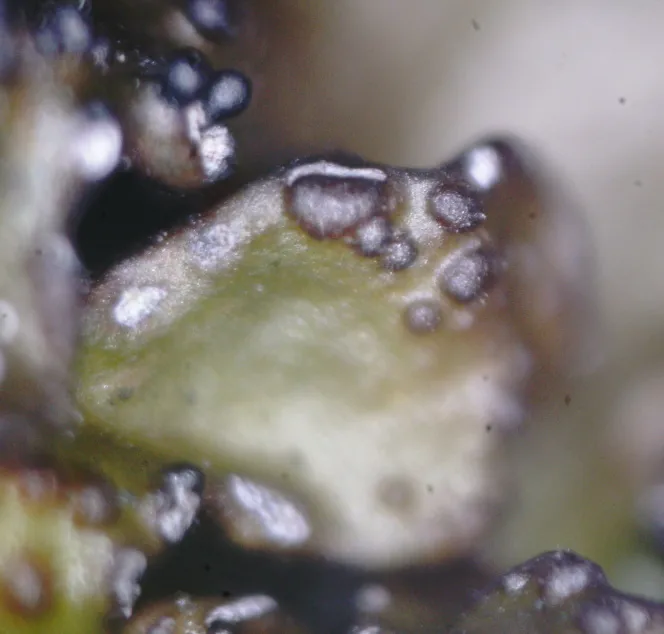
Foto yang diasosiasikan dengan Melanelia hepatizon pada iNaturalist. Identifikasi mengikuti sumber; bukan penentuan spesimen independen.
Kredit dan penggunaan
no rights reserved, uploaded by Vesa Oikonen
Ukuran dan format gambar disesuaikan tanpa pemotongan, retus, atau penambahan skala. Lisensi sumber dipertahankan.
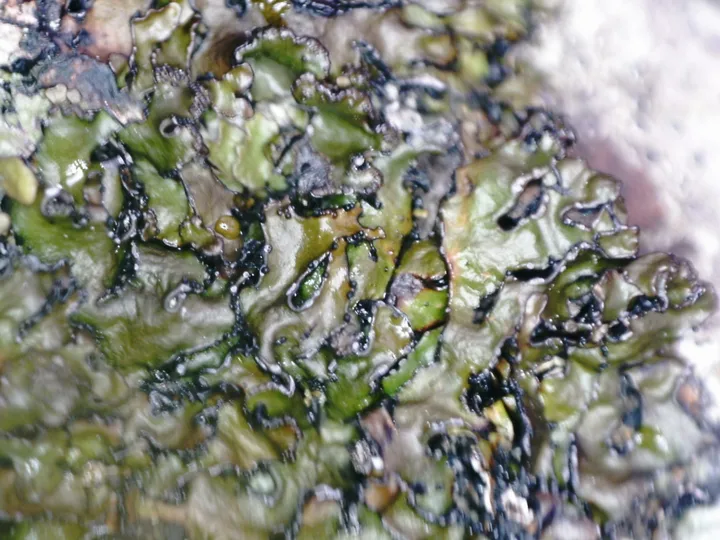
Foto yang diasosiasikan dengan Melanelia hepatizon pada iNaturalist. Identifikasi mengikuti sumber; bukan penentuan spesimen independen.
Kredit dan penggunaan
no rights reserved, uploaded by Vesa Oikonen
Ukuran dan format gambar disesuaikan tanpa pemotongan, retus, atau penambahan skala. Lisensi sumber dipertahankan.
Sumber profil
- [1] Melanelia hepatizon — Wikipedia (en)
- [2] Catalogue of Life Base2026-09-11 — Melanelia hepatizon
- [3] Dokumentasi visual — Melanelia hepatizon
- [4] Dokumentasi visual — Melanelia hepatizon
- [5] Dokumentasi visual — Melanelia hepatizon
Rujukan halaman ini
Fungi. Melanelia hepatizon. Rilis data fungi-2026-10-12-expansion-2. https://fungi-atlas.mgadib.chatgpt.site/jamur/melanelia-hepatizon/.
Status: impor sumber; pemeriksaan editorial per profil belum selesai. Untuk klaim biologis, gunakan rujukan pada bagian terkait dan periksa konteks sumber aslinya.