Ciri dan struktur
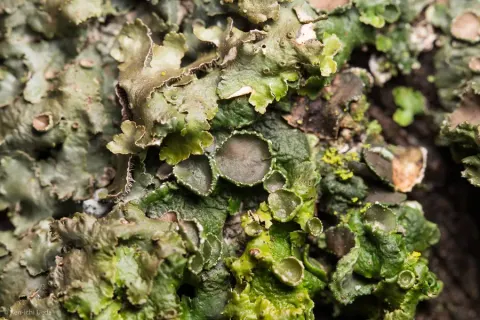
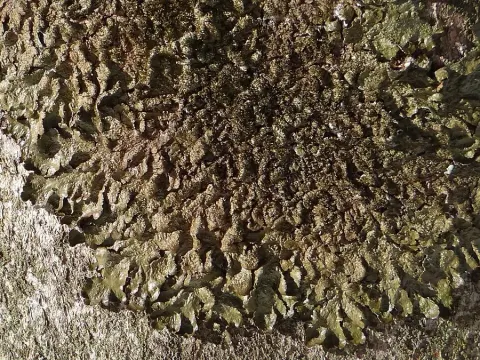
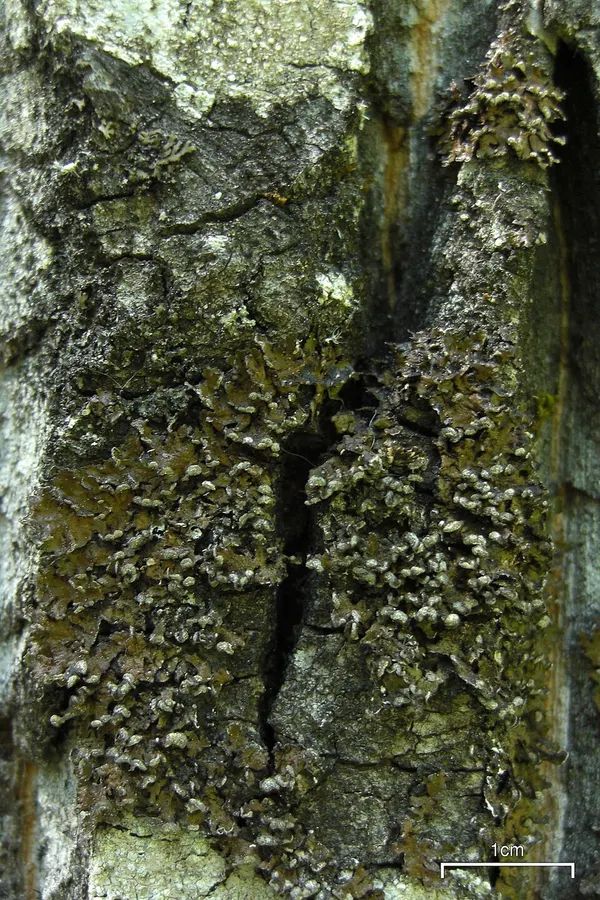
Melanelixia albertana loosely attaches to tree bark, forming a thallus (lichen body) that is 4 – 10 cm wide. The colour of the thallus surface ranges from dark greenish-brown to red-brown. The are rounded at the tips, 3–4 mm wide, and have irregular, (scalloped) edges with ascending lobes (lobes covered with powdery reproductive propagules). The upper surface is typically wrinkled, dull to somewhat shiny near the lobe ends, and lacks pseudocyphellae (tiny pores). The lower surface is black with a smooth brown marginal rim, and features rhizines (root-like structures) that are the same colour. Soralia (clusters of soredia) are numerous, (lip-shaped), and contain coarsely soredia that are partly white and partly dark brown. The lobes are 180–240 μm thick, with an upper cortex (outer layer) of 5–15 μm, an of 45–60 μm, a medulla (middle layer) of 120–150 μm, and a lower of 10–15 μm. Apothecia (fruiting bodies) and pycnidia (asexual reproductive structures) have not been observed to occur in this species. Chemical spot tests show that the medulla reacts C+ (red) and contains lecanoric acid.
Habitat dan peran ekologis
Melanelixia albertana is an epiphyte that grows in river valley and ravine systems, as well as aspen parkland. It occasionally appears in boreal regions, particularly in mature mixed to deciduous forests. Favoured tree species in North America include deciduous trees and shrubs, particularly Salix and Populus. In Mongolia, it favours the native Siberian elm (Ulmus pumila) and the shrub Spiraea aquilegifolia. The global distribution of Melanelixia albertana mirrors the climatic and vegetative similarities between the northern edge of the interior prairies of North America and the forest steppe and ultracontinental taiga forests found in northern Mongolia, Transbaikal, and Yakutia. The particular distribution type of this lichen has been called the "Interior Eurasian-interior North American" distribution, defined as "continental species of the arid inner parts of continents in vicinity to steppes or not". In addition to its namesake Alberta, the lichen has also been recorded in the southern parts of the provinces of Saskatchewan and Manitoba. It is rare in Ontario, with a local distribution limited largely to the Rainy River district. In the United States, it has been found in Minnesota and Arizona.
- Habitat atau konteks temuan
- hutan
- Substrat
- Informasi belum tersedia pada sumber rilis ini.
- Peran atau konteks
- Pembentuk liken
Reproduksi
Melanelixia albertana loosely attaches to tree bark, forming a thallus (lichen body) that is 4 – 10 cm wide. The colour of the thallus surface ranges from dark greenish-brown to red-brown. The are rounded at the tips, 3–4 mm wide, and have irregular, (scalloped) edges with ascending lobes (lobes covered with powdery reproductive propagules). The upper surface is typically wrinkled, dull to somewhat shiny near the lobe ends, and lacks pseudocyphellae (tiny pores). The lower surface is black with a smooth brown marginal rim, and features rhizines (root-like structures) that are the same colour. Soralia (clusters of soredia) are numerous, (lip-shaped), and contain coarsely soredia that are partly white and partly dark brown.
Catatan identitas dan cakupan
- Nama diterima mengikuti Catalogue of Life Base2026-09-11; uraian mempertahankan konsep dan nama sumber aslinya.
- Original geographic, specimen and life-cycle scope retained; source import awaits individual editorial review.
- Impor dan terjemahan otomatis belum diperiksa editorial per profil. Struktur reproduktif yang disebutkan tidak membuktikan seluruh siklus hidup diketahui.
- Pengukuran pada uraian mengikuti spesimen, kultur, dan metode sumber; angka tidak diperluas ke semua populasi.
Catatan distribusi dalam narasi mengikuti sumbernya. Dokumentasi spesimen atau foto mengikuti catatan sumber. Bukti wilayah Indonesia dan penilaian konservasi tidak disimpulkan dari gambar.
Melihat dengan konteks
Dokumentasi Melanelixia albertana dari Wikimedia Commons. The lichen Melanelixia albertana , photographed in Dunvegan Crossing, Peace River, Alberta, Canada. Identifikasi mengikuti record berkas sumber.
- Jenis
- Fotografi
- Kredit
- Jason Hollinger
- Lisensi
- CC BY-SA 3.0
- Sumber media
- Buka entri sumber
Sumber profil
- [1] Melanelixia albertana — Wikipedia (en)
- [2] Catalogue of Life Base2026-09-11 — Melanelixia albertana
- [3] Dokumentasi visual — Melanelixia albertana
Rujukan halaman ini
Fungi. Melanelixia albertana. Rilis data fungi-2026-10-12-expansion-2. https://fungi-atlas.mgadib.chatgpt.site/jamur/melanelixia-albertana/.
Status: impor sumber; pemeriksaan editorial per profil belum selesai. Untuk klaim biologis, gunakan rujukan pada bagian terkait dan periksa konteks sumber aslinya.