Ciri dan struktur
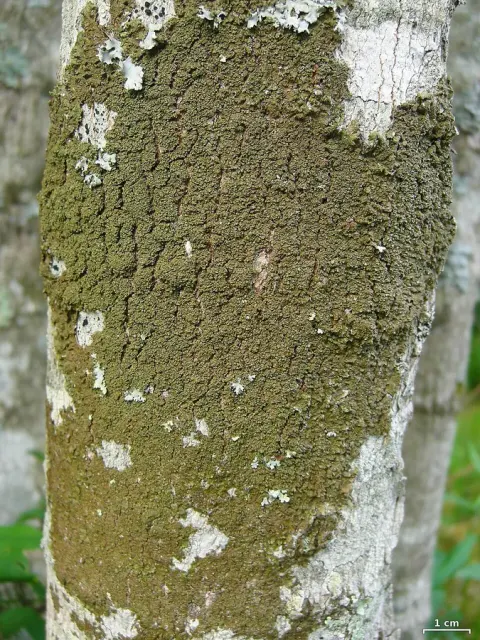
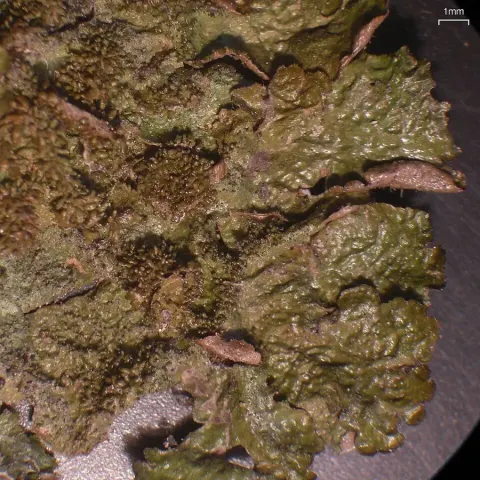
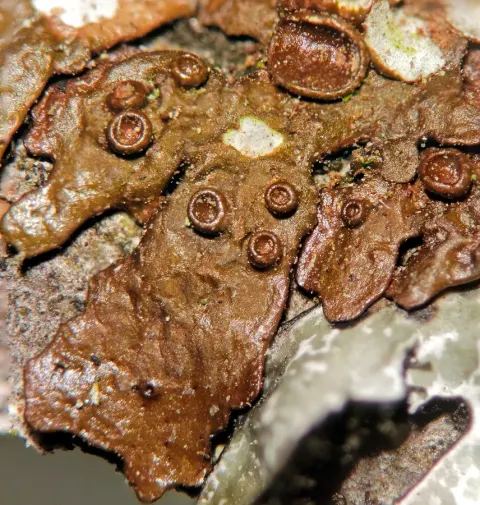
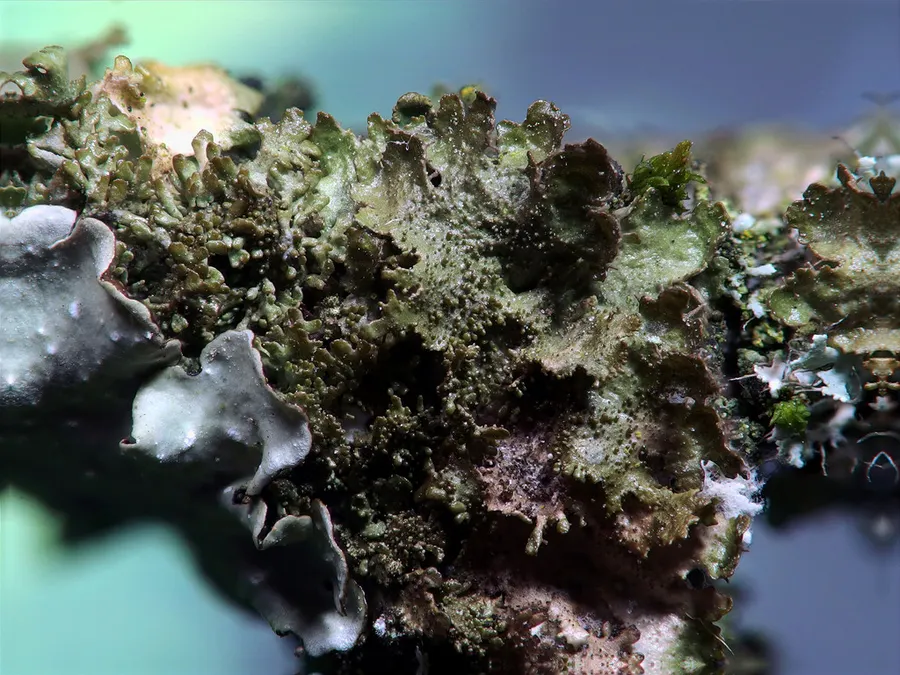
Melanohalea exasperatula is a foliose lichen with a thallus (the main body of the lichen) that can grow up to 5 cm in diameter. The thallus is generally closely (flattened and pressed closely to the ) in the centre and is relatively thin. The marginal , which are the leaf-like structures around the edge of the thallus, can be up to 5 mm broad and are often raised at the margins and wavy with irregularly incised (cut or notched) edges. The shiny upper surface of the thallus varies in colour from pale olive-green to dark olive-brown or red-brown and becomes somewhat transparent when wet. This species is , meaning it has isidia, which are small outgrowths on the surface. The isidia of Melanohalea exasperatula are unbranched, swollen, and hollow, often becoming club-shaped () or spoon-shaped (). Eventually, they develop into divided (small lobes) and often lie flat (), oriented in all directions. The isidia are very dense towards the centre of the thallus. Up to 2 mm long, they are roughly spherical when young but become flatter with age. They develop from cylindrical (small, rounded growths) on the thallus surface. The lower surface of the thallus ranges from pale tan to pale brown or may be the same colour as the upper surface, with the central part being dark brown. The rhizines (root-like structures) are scattered and pale. Apothecia, the fruiting bodies of the lichen, are rare in this species and measure 2–3 mm in diameter. The of the apothecia is concave and pale red-brown, with an uneven, isidiate margin. The (reproductive spores) are ellipsoidal and measure 8–10 by 3.5–8 μm.
Habitat dan peran ekologis
Melanohalea exasperatula has a widespread global distribution, and occurs in Africa, Asia, Europe, and North America. It is widely distributed in Europe, having been recorded in 38 countries there. In North America, M. exasperatula range extends north to Alaska and Arctic regions, and includes the Great Lakes area, the Pacific Northwest, the Rocky Mountains, and extends south to the southwestern United States. It does not occur in Mexico. It is suspected of having a circumpolar distribution, although its presence in Asia is not well known. It is also known from Macaronesia and from Central America. Melanohalea exasperatula typically grows on the trunks and branches of nutrient-rich, broad-leaved trees, particularly sycamore (Acer pseudoplatanus). It can also be found on open hillsides, occasionally growing on rocks (saxicolous), walls, and wooden fence rails under trees. This lichen is often found in relatively polluted areas and appears to be increasing in such environments. Additionally, it can grow directly on leaves (foliicolous), with young lobules establishing on spruce needles. Melanohalea exasperatula may have a high requirement for nitrogen or phosphate. In Greenland, it occurs on the bark of dwarf shrubs and the wood of Picea, and on both siliceous and basaltic rocks, usually in nutrient-enriched habitats.
- Habitat atau konteks temuan
- Informasi belum tersedia pada sumber rilis ini.
- Substrat
- Informasi belum tersedia pada sumber rilis ini.
- Peran atau konteks
- Pembentuk liken
Reproduksi
The shiny upper surface of the thallus varies in colour from pale olive-green to dark olive-brown or red-brown and becomes somewhat transparent when wet. This species is , meaning it has isidia, which are small outgrowths on the surface. The isidia of Melanohalea exasperatula are unbranched, swollen, and hollow, often becoming club-shaped () or spoon-shaped (). Eventually, they develop into divided (small lobes) and often lie flat (), oriented in all directions. The isidia are very dense towards the centre of the thallus. Up to 2 mm long, they are roughly spherical when young but become flatter with age. They develop from cylindrical (small, rounded growths) on the thallus surface. Apothecia, the fruiting bodies of the lichen, are rare in this species and measure 2–3 mm in diameter.
Catatan identitas dan cakupan
- Nama diterima mengikuti Catalogue of Life Base2026-09-11; uraian mempertahankan konsep dan nama sumber aslinya.
- Original geographic, specimen and life-cycle scope retained; source import awaits individual editorial review.
- Impor dan terjemahan otomatis belum diperiksa editorial per profil. Struktur reproduktif yang disebutkan tidak membuktikan seluruh siklus hidup diketahui.
- Pengukuran pada uraian mengikuti spesimen, kultur, dan metode sumber; angka tidak diperluas ke semua populasi.
Catatan distribusi dalam narasi mengikuti sumbernya. Dokumentasi spesimen atau foto mengikuti catatan sumber. Bukti wilayah Indonesia dan penilaian konservasi tidak disimpulkan dari gambar.
Melihat dengan konteks
Dokumentasi Melanohalea exasperatula menurut asosiasi foto pada record takson iNaturalist. Kredit: armand_39. Identitas mengikuti sumber; bukan penentuan spesimen independen.
- Jenis
- Fotografi
- Kredit
- (c) armand_39, some rights reserved (CC BY), uploaded by armand_39
- Lisensi
- CC BY 4.0
- Sumber media
- Buka entri sumber
Sumber profil
- [1] Melanohalea exasperatula — Wikipedia (en)
- [2] Catalogue of Life Base2026-09-11 — Melanohalea exasperatula
- [3] Dokumentasi visual — Melanohalea exasperatula
Rujukan halaman ini
Fungi. Melanohalea exasperatula. Rilis data fungi-2026-10-12-expansion-2. https://fungi-atlas.mgadib.chatgpt.site/jamur/melanohalea-exasperatula/.
Status: impor sumber; pemeriksaan editorial per profil belum selesai. Untuk klaim biologis, gunakan rujukan pada bagian terkait dan periksa konteks sumber aslinya.