Ciri dan struktur
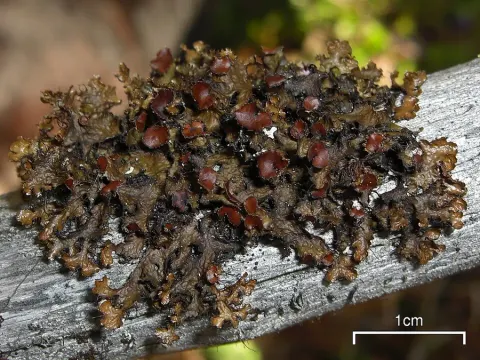
Kaernefeltia merrillii forms a small, dark thallus usually less than 2 cm across. The color ranges from dark greenish-black to dark olive or black. The are somewhat , that is, short, narrow, and somewhat bushy, and are typically finely divided to under 1 mm wide, though occasional lobes exceed 1 mm. The surface lacks vegetative propagules: both soredia and isidia are absent. Sexual structures (apothecia) are common and match the thallus in color. Standard spot test reactions are negative. In the field the species can be mistaken for other dark olive-black species, but the combination of a very small thallus, finely dissected narrow lobes, absence of soredia and isidia, and negative spot tests is diagnostic.
Habitat dan peran ekologis
The geographical range of Kaernefeltia merrillii spans western North America, from southeastern Alaska and the Yukon southward through British Columbia to California, and reaches inland as far as western Montana. The species is most abundant in the region between the Cascade Range crest and the Continental Divide, with particularly robust populations occurring in the Siskiyou Mountains of southern Oregon and northern California. It does not occur along the immediate Pacific coastline. It has also been reported from northern Mexico and, disjunctly, from the central highlands of Spain, where it grows on the twigs of Cistus ladanifer. The lichen colonizes bark and wood substrates, especially the twigs of conifers such as whitebark pine (Pinus albicaulis), lodgepole pine (P. contorta), ponderosa pine (P. ponderosa), and western larch (Larix occidentalis); it also occurs on shrubs, particularly manzanita (Arctostaphylos). It favors well-lit branches in forests and exposed trees, including P. albicaulis on rocky ridges, and can also be found high in the canopies of moist, low-elevation forests. Across its range it is present at all forested elevations, from near sea level to about 2200 m.
- Habitat atau konteks temuan
- hutan
- Substrat
- Informasi belum tersedia pada sumber rilis ini.
- Peran atau konteks
- Pembentuk liken
Reproduksi
Kaernefeltia merrillii forms a small, dark thallus usually less than 2 cm across. The color ranges from dark greenish-black to dark olive or black. The are somewhat , that is, short, narrow, and somewhat bushy, and are typically finely divided to under 1 mm wide, though occasional lobes exceed 1 mm. The surface lacks vegetative propagules: both soredia and isidia are absent. Sexual structures (apothecia) are common and match the thallus in color. Standard spot test reactions are negative. In the field the species can be mistaken for other dark olive-black species, but the combination of a very small thallus, finely dissected narrow lobes, absence of soredia and isidia, and negative spot tests is diagnostic.
Catatan identitas dan cakupan
- Nama diterima mengikuti Catalogue of Life Base2026-09-11; uraian mempertahankan konsep dan nama sumber aslinya.
- Original geographic, specimen and life-cycle scope retained; source import awaits individual editorial review.
- Impor dan terjemahan otomatis belum diperiksa editorial per profil. Struktur reproduktif yang disebutkan tidak membuktikan seluruh siklus hidup diketahui.
- Pengukuran pada uraian mengikuti spesimen, kultur, dan metode sumber; angka tidak diperluas ke semua populasi.
Catatan distribusi dalam narasi mengikuti sumbernya. Dokumentasi spesimen atau foto mengikuti catatan sumber. Bukti wilayah Indonesia dan penilaian konservasi tidak disimpulkan dari gambar.
Melihat dengan konteks
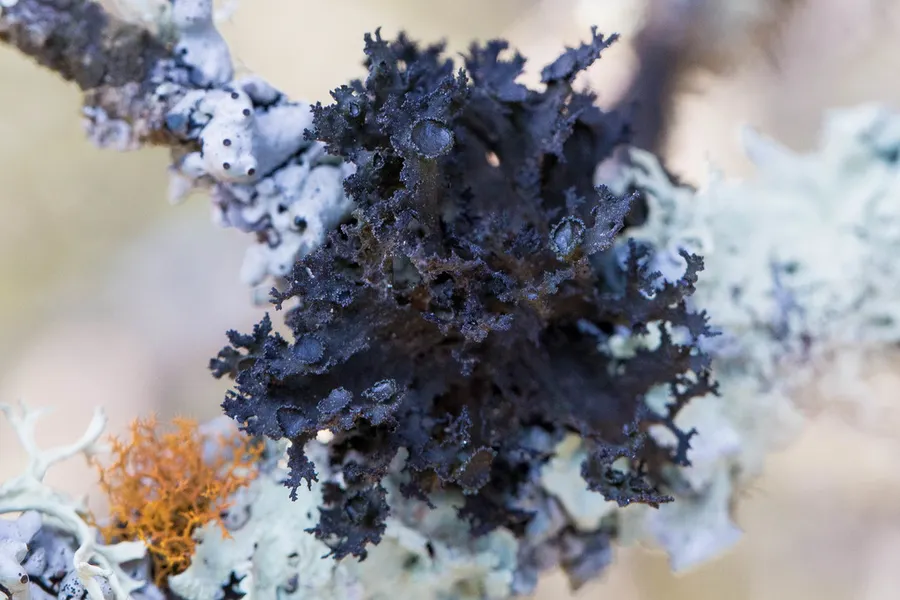
Dokumentasi Kaernefeltia merrillii menurut asosiasi foto pada record takson iNaturalist. Kredit: Ken-ichi Ueda. Identitas mengikuti sumber; bukan penentuan spesimen independen.
- Jenis
- Fotografi
- Kredit
- (c) Ken-ichi Ueda, some rights reserved (CC BY), uploaded by Ken-ichi Ueda
- Lisensi
- CC BY 4.0
- Sumber media
- Buka entri sumber
Dokumentasi tambahan
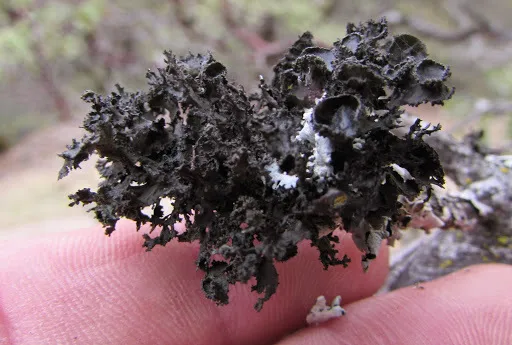
Foto yang diasosiasikan dengan Nephromopsis merrillii pada iNaturalist. Identifikasi mengikuti sumber; bukan penentuan spesimen independen.
Kredit dan penggunaan
(c) 101595408250610106310, some rights reserved (CC BY), uploaded by 101595408250610106310
Ukuran dan format gambar disesuaikan tanpa pemotongan, retus, atau penambahan skala. Lisensi sumber dipertahankan.
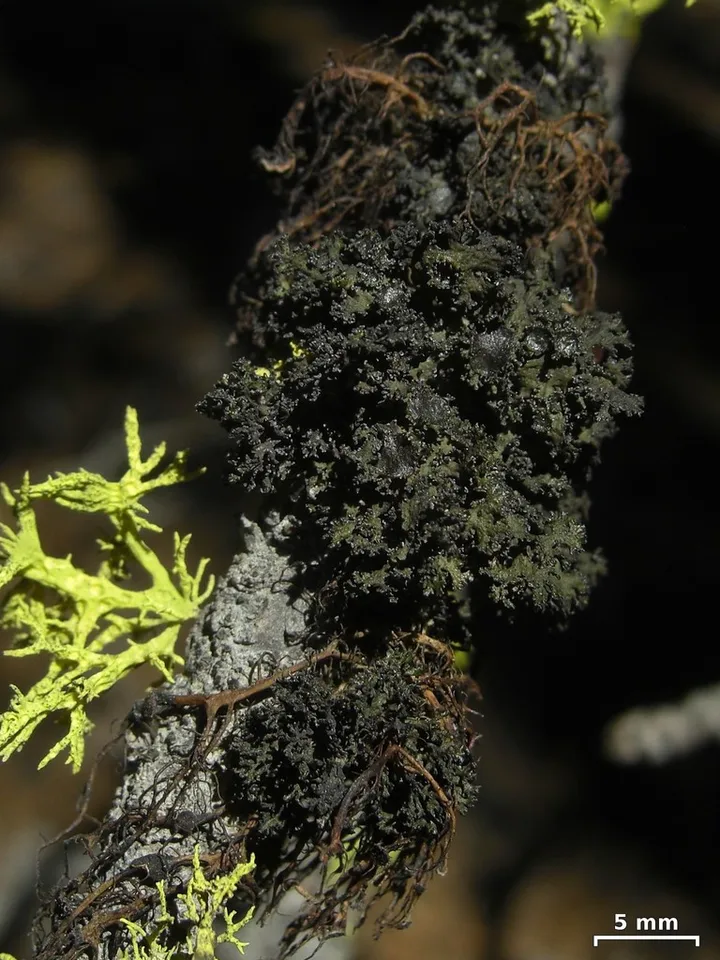
Foto yang diasosiasikan dengan Nephromopsis merrillii pada iNaturalist. Identifikasi mengikuti sumber; bukan penentuan spesimen independen.
Kredit dan penggunaan
(c) Jason Hollinger, some rights reserved (CC BY)
Ukuran dan format gambar disesuaikan tanpa pemotongan, retus, atau penambahan skala. Lisensi sumber dipertahankan.
Sumber profil
- [1] Kaernefeltia merrillii — Wikipedia (en)
- [2] Catalogue of Life Base2026-09-11 — Nephromopsis merrillii
- [3] Dokumentasi visual — Nephromopsis merrillii
- [4] Dokumentasi visual — Nephromopsis merrillii
- [5] Dokumentasi visual — Nephromopsis merrillii
Rujukan halaman ini
Fungi. Nephromopsis merrillii. Rilis data fungi-2026-10-12-expansion-2. https://fungi-atlas.mgadib.chatgpt.site/jamur/nephromopsis-merrillii/.
Status: impor sumber; pemeriksaan editorial per profil belum selesai. Untuk klaim biologis, gunakan rujukan pada bagian terkait dan periksa konteks sumber aslinya.