01 / Morfologi

Ciri dan struktur

Paracoccidioides brasiliensis is a nonphotosynthetic eukaryote with a rigid cell wall and organelles very similar to those of higher eukaryotes. Being a dimorphic fungus, it has the ability to grow an oval yeast-like form at 37 °C and an elongated mycelial form produced at room temperature. The mycelial and yeast phases differ in their morphology, biochemistry, and ultrastructure. The yeast form contains large amounts of α-(1,3)-linked glucan. The chitin content of the mycelial form is greater than that of the yeast form, but the lipid content of both phases is comparable. The yeast reproduces by asexual budding, where daughter cells are borne asynchronously at multiple, random positions across the cell surface. Buds begin by layers of cell wall increasing in optical density at a point that eventually gives rise to the daughter cell. Once the bud has expanded, a cleavage plane develops between the nascent cell and the mother cell. Following dehiscence, the bud scar disappears. In tissue, budding occurs inside the granulomatous center of the disease lesion, as visualized by hematoxylin and eosin (H&E) staining of histologic sections. Nonbudding cells measure 5–15 μm in diameter, whereas those with multiple spherical buds measure from 10–20 μm in diameter. In electron microscopy, cells with multiple buds have been found to have peripherally located nuclei and cytoplasm surrounding a large central vacuole. In the tissue form of P. brasiliensis, yeast cells are larger with thinner walls and a narrower bud base than those of the related dimorphic fungus, Blastomyces dermatitidis.

Sebagian uraian ditampilkan dalam bahasa sumber; terjemahannya belum tersedia atau belum lolos pemeriksaan.

Rujukan: [1]

Pengukuran mengikuti objek, spesimen atau kultur, dan metode yang disebutkan sumber. Baca uraian asli untuk konteks lengkap.

02 / Kehidupan

Habitat dan peran ekologis

Although the habitat P. brasiliensis tetap tidak diketahui, biasanya dikaitkan dengan tanah di mana kopi dibudidayakan. Penyakit yang disebabkan oleh P. brasiliensis sebagian besar terbatas secara geografis pada bahasa Latin American countries seperti Brasil, Kolombia, dan Venezuela, dengan jumlah kasus terbesar yang terlihat di Brasil. Keberadaan siklus seksual di P. brasiliensis, didukung oleh data molekuler dan morfologis. Analisis genom komparatif dengan jamur lain yang telah diteliti dengan baik menunjukkan adanya gen yang terkait dengan jenis kelamin di kedua fase ragi dan micelial P. brasiliensis. Also crosses dari isolate dari jenis kawin yang berbeda menyebabkan pembentukan askocarps muda (struktur seksual) dengan terbungkus menyengat hifa terkait dengan tahap awal kawin.

Rujukan: [1]

Habitat atau konteks temuan
Informasi belum tersedia pada sumber rilis ini.
Substrat
Informasi belum tersedia pada sumber rilis ini.
Peran atau konteks
Belum dikategorikan pada rilis ini.
Temukan hubungan serupa
03 / Siklus hidup

Reproduksi

Paracoccidioides brasiliensis is a dimorphic fungus and one of the two species that cause paracoccidioidomycosis (the other being Paracoccidioides lutzii). The fungus has been affiliated with the family Ajellomycetaceae (division Ascomycota) although a sexual state or teleomorph has not yet been found. The yeast reproduces by asexual budding, where daughter cells are borne asynchronously at multiple, random positions across the cell surface. Buds begin by layers of cell wall increasing in optical density at a point that eventually gives rise to the daughter cell. Once the bud has expanded, a cleavage plane develops between the nascent cell and the mother cell. Following dehiscence, the bud scar disappears.

Sebagian uraian ditampilkan dalam bahasa sumber; terjemahannya belum tersedia atau belum lolos pemeriksaan.

Rujukan: [1]

Sinonim menurut acuan taksonomi rilis: Aleurisma brasiliense; Blastomyces brasiliensis; Coccidioides brasiliensis; Mycoderma brasiliense; Zymonema brasiliense
04 / Batas informasi

Catatan identitas dan cakupan

  • Nama diterima mengikuti Catalogue of Life Base2026-09-11; uraian mempertahankan konsep dan nama sumber aslinya.
  • Original geographic, specimen and life-cycle scope retained; source import awaits individual editorial review.
  • Impor dan terjemahan otomatis belum diperiksa editorial per profil. Struktur reproduktif yang disebutkan tidak membuktikan seluruh siklus hidup diketahui.
  • Pengukuran pada uraian mengikuti spesimen, kultur, dan metode sumber; angka tidak diperluas ke semua populasi.

Catatan distribusi dalam narasi mengikuti sumbernya. Dokumentasi spesimen atau foto mengikuti catatan sumber. Bukti wilayah Indonesia dan penilaian konservasi tidak disimpulkan dari gambar.

05 / Dokumentasi

Melihat dengan konteks

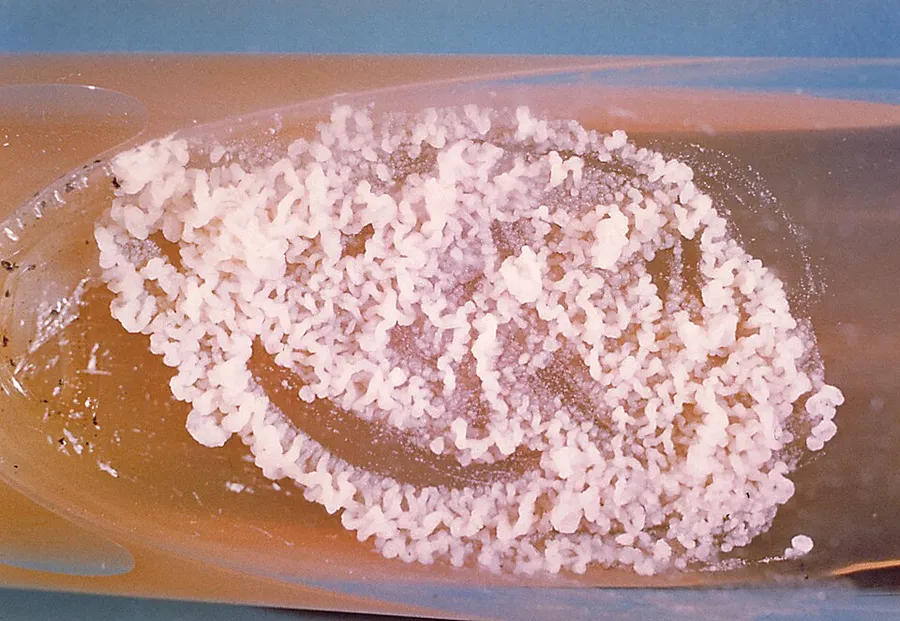
Dokumentasi Paracoccidioides brasiliensis dari Wikimedia Commons. A slant culture growing the fungus Paracoccidioides brasiliensis during its yeast phase. Identifikasi mengikuti record berkas sumber.

Jenis
Fotografi
Kredit
CDC
Sumber media
Buka entri sumber

Gambar menunjukkan objek menurut identifikasi sumber, bukan verifikasi independen spesimen oleh Fungi. Tidak ada skala baru yang ditambahkan.

06 / Rujukan

Sumber profil

  1. [1] Paracoccidioides brasiliensis — Wikipedia (en)Bagian sumber: Frozen revision 1375978273
    Tanggal penghimpunan sumber: 2026-10-12
    Teks sumber: CC BY-SA4.0 · Wikipedia contributors
  2. [2] Catalogue of Life Base2026-09-11 — Paracoccidioides brasiliensisBagian sumber: ColDP NameUsage.tsv ID 4CQP8; accepted species; source 2073
    Tanggal penghimpunan sumber: 2026-10-12
  3. [3] Dokumentasi visual — Paracoccidioides brasiliensisBagian sumber: Individual media record; identification follows the source, not independent determination
    Tanggal penghimpunan sumber: 2026-10-12
    Media sumber: Public domain · CDC

Adaptasi teks: CC BY-SA 4.0. Wikipedia contributors — Paracoccidioides brasiliensis — Wikipedia (en)

Uraian asli dan riwayat sumber

Riwayat atau halaman sumber

Ringkasan sumber

Paracoccidioides brasiliensis is a nonphotosynthetic eukaryote with a rigid cell wall and organelles very similar to those of higher eukaryotes. Being a dimorphic fungus, it has the ability to grow an oval yeast-like form at 37 °C and an elongated mycelial form produced at room temperature. The mycelial and yeast phases differ in their morphology, biochemistry, and ultrastructure. The yeast form contains large amounts of α-(1,3)-linked glucan. The chitin content of the mycelial form is greater than that of the yeast form, but the lipid content of both phases is comparable.

Revisi sumber

Morfologi sumber

Paracoccidioides brasiliensis is a nonphotosynthetic eukaryote with a rigid cell wall and organelles very similar to those of higher eukaryotes. Being a dimorphic fungus, it has the ability to grow an oval yeast-like form at 37 °C and an elongated mycelial form produced at room temperature. The mycelial and yeast phases differ in their morphology, biochemistry, and ultrastructure. The yeast form contains large amounts of α-(1,3)-linked glucan. The chitin content of the mycelial form is greater than that of the yeast form, but the lipid content of both phases is comparable. The yeast reproduces by asexual budding, where daughter cells are borne asynchronously at multiple, random positions across the cell surface. Buds begin by layers of cell wall increasing in optical density at a point that eventually gives rise to the daughter cell. Once the bud has expanded, a cleavage plane develops between the nascent cell and the mother cell. Following dehiscence, the bud scar disappears. In tissue, budding occurs inside the granulomatous center of the disease lesion, as visualized by hematoxylin and eosin (H&E) staining of histologic sections. Nonbudding cells measure 5–15 μm in diameter, whereas those with multiple spherical buds measure from 10–20 μm in diameter. In electron microscopy, cells with multiple buds have been found to have peripherally located nuclei and cytoplasm surrounding a large central vacuole. In the tissue form of P. brasiliensis, yeast cells are larger with thinner walls and a narrower bud base than those of the related dimorphic fungus, Blastomyces dermatitidis.

Revisi sumber

Ekologi sumber

Although the habitat of P. brasiliensis remains unknown, it is commonly associated with soils in which coffee is cultivated. The disease caused by P. brasiliensis is mostly geographically restricted to Latin American countries such as Brazil, Colombia, and Venezuela, with the greatest number of cases seen in Brazil. The existence of a sexual cycle in P. brasiliensis, is supported by both molecular and morphological data. A comparative genome analysis with other well-studied fungi demonstrated the presence of sex-related genes in both the yeast and mycelial phases of P. brasiliensis. Also crosses of isolates of different mating types led to the formation of young ascocarps (sexual structures) with constricted coiled hyphae related to the initial stage of mating.

Revisi sumber

Struktur reproduksi sumber

Paracoccidioides brasiliensis is a dimorphic fungus and one of the two species that cause paracoccidioidomycosis (the other being Paracoccidioides lutzii). The fungus has been affiliated with the family Ajellomycetaceae (division Ascomycota) although a sexual state or teleomorph has not yet been found. The yeast reproduces by asexual budding, where daughter cells are borne asynchronously at multiple, random positions across the cell surface. Buds begin by layers of cell wall increasing in optical density at a point that eventually gives rise to the daughter cell. Once the bud has expanded, a cleavage plane develops between the nascent cell and the mother cell. Following dehiscence, the bud scar disappears.

Revisi sumber

Rujukan halaman ini

Fungi. Paracoccidioides brasiliensis. Rilis data fungi-2026-10-12-expansion-2. https://fungi-atlas.mgadib.chatgpt.site/jamur/paracoccidioides-brasiliensis/.

Status: impor sumber; pemeriksaan editorial per profil belum selesai. Untuk klaim biologis, gunakan rujukan pada bagian terkait dan periksa konteks sumber aslinya.