Ciri dan struktur
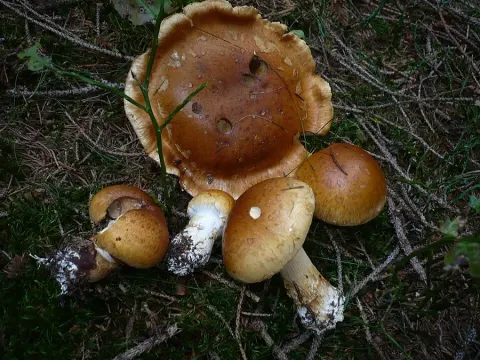
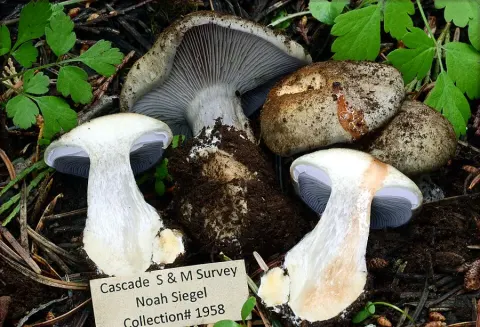
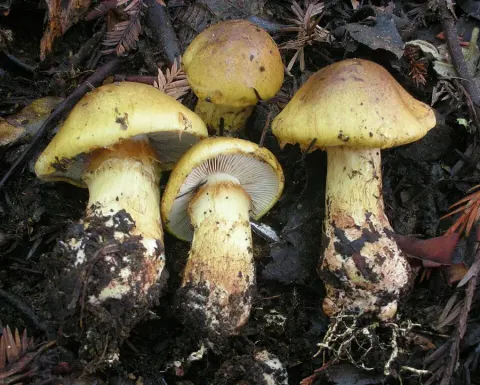
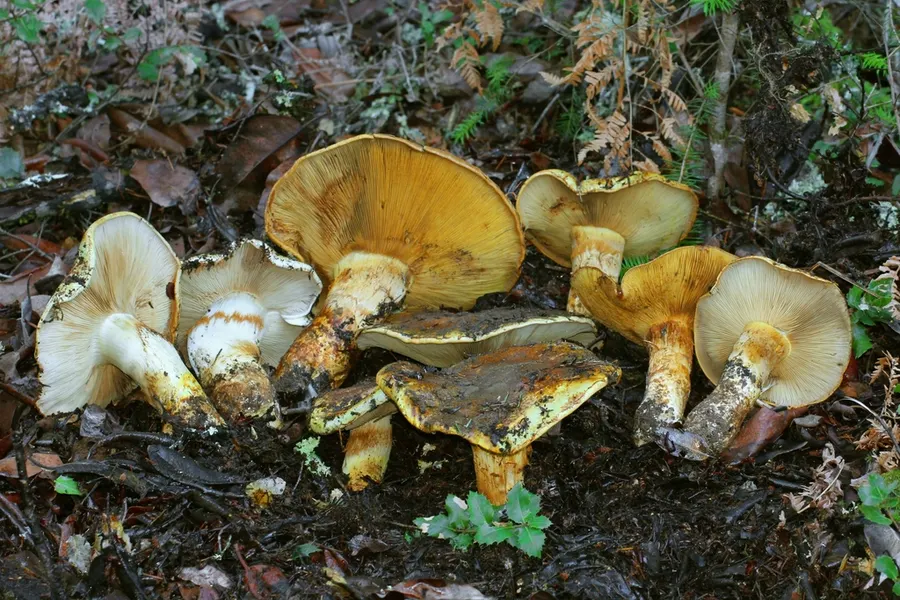
This mushroom is one of the largest mushrooms in the family Cortinariaceae, with a convex cap that ranges from 10–30 cm and becomes plane in age. It often has an olive metallic tinge, and the surface is viscid, often with small rusty brown scales. The margin is ocher and remains inrolled until the mushroom is fully mature. The flesh of the mushroom is yellow-white, thick and firm, with a mild to sour odor. The gills are rusty brown, adnate and slightly decurrent. The stalk is 8-20 cm thick, 4–10 cm wide, and bulbous at the base. It has a slimy yellow universal veil, and the cortina leaves a rusty brown hairy area on the upper stalk. The spores are brown and elliptical. Its edibility is unknown, but it is not recommended due to its similarity to deadly poisonous species.
Habitat dan peran ekologis
Smith observed the mushrooms growing under Pinus ponderosa and Quercus (Oak) species near Cave City in Oregon and under Spruce trees near Crescent City, California.
- Habitat atau konteks temuan
- Informasi belum tersedia pada sumber rilis ini.
- Substrat
- Informasi belum tersedia pada sumber rilis ini.
- Peran atau konteks
- Belum dikategorikan pada rilis ini.
Reproduksi
This mushroom is one of the largest mushrooms in the family Cortinariaceae, with a convex cap that ranges from 10–30 cm and becomes plane in age. It often has an olive metallic tinge, and the surface is viscid, often with small rusty brown scales. The margin is ocher and remains inrolled until the mushroom is fully mature. The flesh of the mushroom is yellow-white, thick and firm, with a mild to sour odor. The gills are rusty brown, adnate and slightly decurrent. The stalk is 8-20 cm thick, 4–10 cm wide, and bulbous at the base. It has a slimy yellow universal veil, and the cortina leaves a rusty brown hairy area on the upper stalk. The spores are brown and elliptical.
Catatan identitas dan cakupan
- Nama diterima mengikuti Catalogue of Life Base2026-09-11; uraian mempertahankan konsep dan nama sumber aslinya.
- Original geographic, specimen and life-cycle scope retained; source import awaits individual editorial review.
- Impor dan terjemahan otomatis belum diperiksa editorial per profil. Struktur reproduktif yang disebutkan tidak membuktikan seluruh siklus hidup diketahui.
- Pengukuran pada uraian mengikuti spesimen, kultur, dan metode sumber; angka tidak diperluas ke semua populasi.
Catatan distribusi dalam narasi mengikuti sumbernya. Dokumentasi spesimen atau foto mengikuti catatan sumber. Bukti wilayah Indonesia dan penilaian konservasi tidak disimpulkan dari gambar.
Melihat dengan konteks
Dokumentasi Phlegmacium ponderosum menurut asosiasi foto pada record takson iNaturalist. Kredit: Alan Rockefeller. Identitas mengikuti sumber; bukan penentuan spesimen independen.
- Jenis
- Fotografi
- Kredit
- (c) Alan Rockefeller, some rights reserved (CC BY), uploaded by Alan Rockefeller
- Lisensi
- CC BY 4.0
- Sumber media
- Buka entri sumber
Dokumentasi tambahan
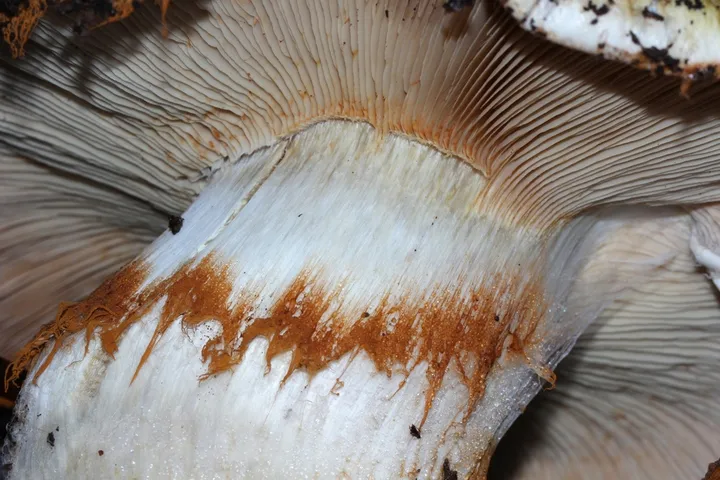
Foto yang diasosiasikan dengan Phlegmacium ponderosum pada iNaturalist. Identifikasi mengikuti sumber; bukan penentuan spesimen independen.
Kredit dan penggunaan
(c) Alan Rockefeller, some rights reserved (CC BY), uploaded by Alan Rockefeller
Ukuran dan format gambar disesuaikan tanpa pemotongan, retus, atau penambahan skala. Lisensi sumber dipertahankan.
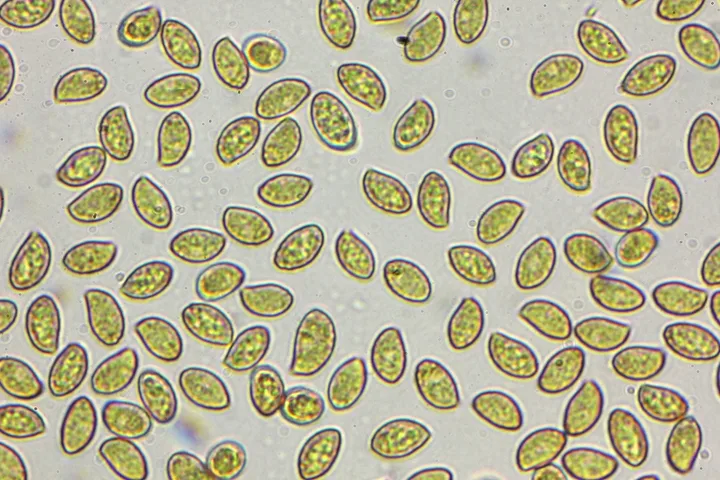
Foto yang diasosiasikan dengan Phlegmacium ponderosum pada iNaturalist. Identifikasi mengikuti sumber; bukan penentuan spesimen independen.
Kredit dan penggunaan
(c) Alan Rockefeller, some rights reserved (CC BY), uploaded by Alan Rockefeller
Ukuran dan format gambar disesuaikan tanpa pemotongan, retus, atau penambahan skala. Lisensi sumber dipertahankan.
Sumber profil
- [1] Phlegmacium ponderosum — Wikipedia (en)
- [2] Catalogue of Life Base2026-09-11 — Phlegmacium ponderosum
- [3] Dokumentasi visual — Phlegmacium ponderosum
- [4] Dokumentasi visual — Phlegmacium ponderosum
- [5] Dokumentasi visual — Phlegmacium ponderosum
Rujukan halaman ini
Fungi. Phlegmacium ponderosum. Rilis data fungi-2026-10-12-expansion-2. https://fungi-atlas.mgadib.chatgpt.site/jamur/phlegmacium-ponderosum/.
Status: impor sumber; pemeriksaan editorial per profil belum selesai. Untuk klaim biologis, gunakan rujukan pada bagian terkait dan periksa konteks sumber aslinya.