01 / Morfologi

Ciri dan struktur

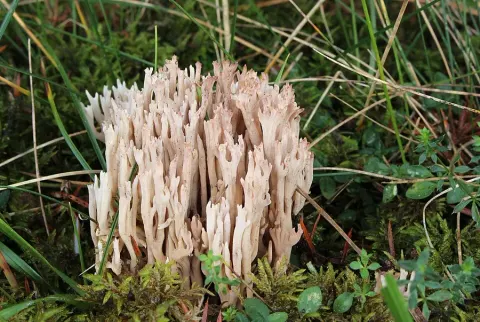
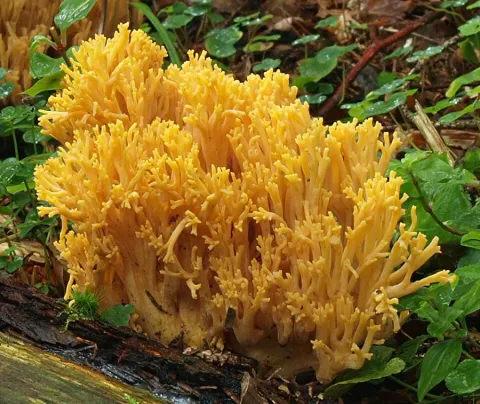
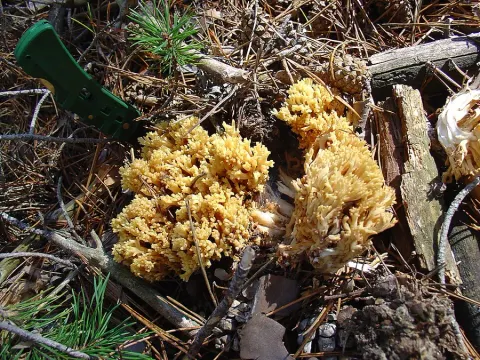
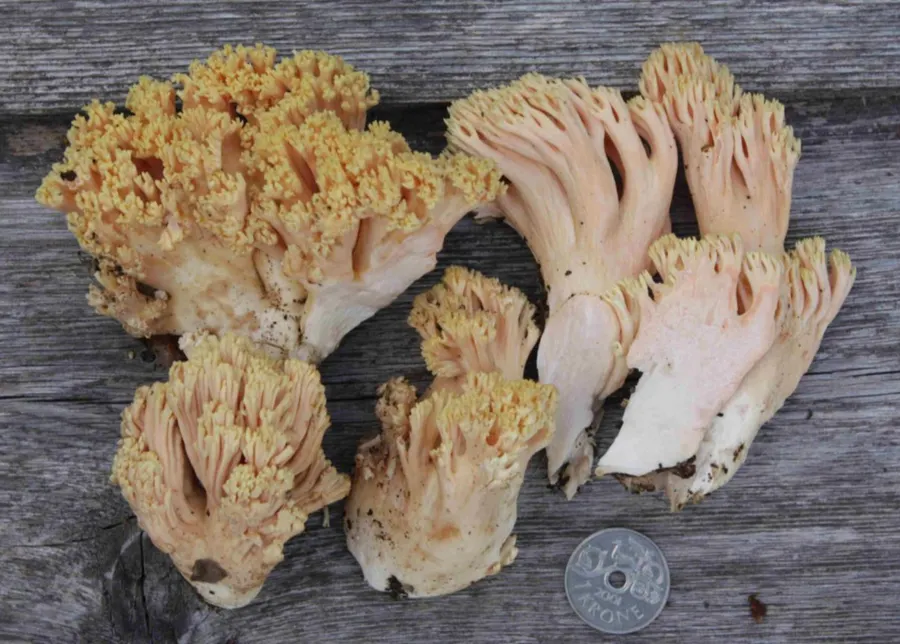
The fruit body grows to a height of 30 cm and width of 15 cm; it is a many-branched coral-like structure, the yellow-tipped pinkish branches arising from a thick base. The terminal branches are less than 0.5 cm in diameter. The flesh is white, with pink in the middle, or pale orange. It may turn wine-coloured or blackish when bruised. Old specimens fade so the original colour is hard to distinguish. The smell is unpleasant and taste bitter. The spores have a cylindrical to elliptical shape and measure 8–15 by 4–6 μm. The spore surface features small warts that are arranged in confluent lines. The basidia (spore-bearing cells) are club-shaped, measuring 40–60 by 7–10 μm Clamp connections are present in the hyphae.

Sebagian uraian ditampilkan dalam bahasa sumber; terjemahannya belum tersedia atau belum lolos pemeriksaan.

Rujukan: [1]

Pengukuran mengikuti objek, spesimen atau kultur, dan metode yang disebutkan sumber. Baca uraian asli untuk konteks lengkap.

02 / Kehidupan

Habitat dan peran ekologis

Fruiting in musim gugur, Ramaria formosa dikaitkan dengan beech dan ditemukan di Eropa. Di Siprus, jamur ini diperkirakan membentuk hubungan mikoriza dengan ek emas (Quercus alnifolia). Similar forms dikumpulkan di Utara America are dianggap mewakili spesies yang berbeda.

Rujukan: [1]

Habitat atau konteks temuan
Informasi belum tersedia pada sumber rilis ini.
Substrat
Informasi belum tersedia pada sumber rilis ini.
Peran atau konteks
Mitra tumbuhan
Temukan hubungan serupa
03 / Siklus hidup

Reproduksi

The spores have a cylindrical to elliptical shape and measure 8–15 by 4–6 μm. The spore surface features small warts that are arranged in confluent lines. The basidia (spore-bearing cells) are club-shaped, measuring 40–60 by 7–10 μm Clamp connections are present in the hyphae.

Sebagian uraian ditampilkan dalam bahasa sumber; terjemahannya belum tersedia atau belum lolos pemeriksaan.

Rujukan: [1]

Sinonim menurut acuan taksonomi rilis: Clavaria coralloides var. purpurea; Clavaria formosa; Clavariella formosa; Corallium formosum; Merisma formosum; Ramaria formosa f. neoformosa; Ramaria formosa var. concolor; Ramaria neoformosa; Ramaria neoformosa var. sinensis
04 / Batas informasi

Catatan identitas dan cakupan

  • Nama diterima mengikuti Catalogue of Life Base2026-09-11; uraian mempertahankan konsep dan nama sumber aslinya.
  • Original geographic, specimen and life-cycle scope retained; source import awaits individual editorial review.
  • Impor dan terjemahan otomatis belum diperiksa editorial per profil. Struktur reproduktif yang disebutkan tidak membuktikan seluruh siklus hidup diketahui.
  • Pengukuran pada uraian mengikuti spesimen, kultur, dan metode sumber; angka tidak diperluas ke semua populasi.

Catatan distribusi dalam narasi mengikuti sumbernya. Dokumentasi spesimen atau foto mengikuti catatan sumber. Bukti wilayah Indonesia dan penilaian konservasi tidak disimpulkan dari gambar.

05 / Dokumentasi

Melihat dengan konteks

Dokumentasi Ramaria formosa dari Wikimedia Commons. Ramaria formosa Identifikasi mengikuti record berkas sumber.

Jenis
Fotografi
Kredit
Kristin Brandrud — Kristin Brandrud
Lisensi
CC BY 4.0
Sumber media
Buka entri sumber

Gambar menunjukkan objek menurut identifikasi sumber, bukan verifikasi independen spesimen oleh Fungi. Tidak ada skala baru yang ditambahkan.

06 / Rujukan

Sumber profil

  1. [1] Ramaria formosa — Wikipedia (en)Bagian sumber: Frozen revision 1296933693
    Tanggal penghimpunan sumber: 2026-10-12
    Teks sumber: CC BY-SA4.0 · Wikipedia contributors
  2. [2] Catalogue of Life Base2026-09-11 — Ramaria formosaBagian sumber: ColDP NameUsage.tsv ID 4RBQN; accepted species; source 2073
    Tanggal penghimpunan sumber: 2026-10-12
  3. [3] Dokumentasi visual — Ramaria formosaBagian sumber: Individual media record; identification follows the source, not independent determination
    Tanggal penghimpunan sumber: 2026-10-12
    Media sumber: CC BY 4.0 · Kristin Brandrud — Kristin Brandrud

Adaptasi teks: CC BY-SA 4.0. Wikipedia contributors — Ramaria formosa — Wikipedia (en)

Uraian asli dan riwayat sumber

Riwayat atau halaman sumber

Ringkasan sumber

The fruit body grows to a height of 30 cm and width of 15 cm; it is a many-branched coral-like structure, the yellow-tipped pinkish branches arising from a thick base. The terminal branches are less than 0.5 cm in diameter. The flesh is white, with pink in the middle, or pale orange. It may turn wine-coloured or blackish when bruised. Old specimens fade so the original colour is hard to distinguish. The smell is unpleasant and taste bitter. The spores have a cylindrical to elliptical shape and measure 8–15 by 4–6 μm.

Revisi sumber

Morfologi sumber

The fruit body grows to a height of 30 cm and width of 15 cm; it is a many-branched coral-like structure, the yellow-tipped pinkish branches arising from a thick base. The terminal branches are less than 0.5 cm in diameter. The flesh is white, with pink in the middle, or pale orange. It may turn wine-coloured or blackish when bruised. Old specimens fade so the original colour is hard to distinguish. The smell is unpleasant and taste bitter. The spores have a cylindrical to elliptical shape and measure 8–15 by 4–6 μm. The spore surface features small warts that are arranged in confluent lines. The basidia (spore-bearing cells) are club-shaped, measuring 40–60 by 7–10 μm Clamp connections are present in the hyphae.

Revisi sumber

Ekologi sumber

Fruiting in autumn, Ramaria formosa is associated with beech and is found in Europe. In Cyprus, the fungus is thought to form mycorrhizal associations with golden oak (Quercus alnifolia). Similar forms collected in North America are considered to represent a different species.

Revisi sumber

Struktur reproduksi sumber

The spores have a cylindrical to elliptical shape and measure 8–15 by 4–6 μm. The spore surface features small warts that are arranged in confluent lines. The basidia (spore-bearing cells) are club-shaped, measuring 40–60 by 7–10 μm Clamp connections are present in the hyphae.

Revisi sumber

Rujukan halaman ini

Fungi. Ramaria formosa. Rilis data fungi-2026-10-12-expansion-2. https://fungi-atlas.mgadib.chatgpt.site/jamur/ramaria-formosa/.

Status: impor sumber; pemeriksaan editorial per profil belum selesai. Untuk klaim biologis, gunakan rujukan pada bagian terkait dan periksa konteks sumber aslinya.