01 / Morfologi

Ciri dan struktur

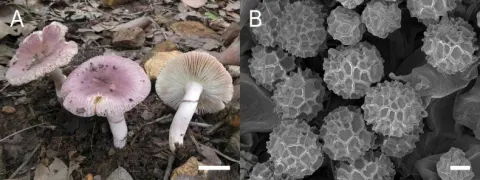
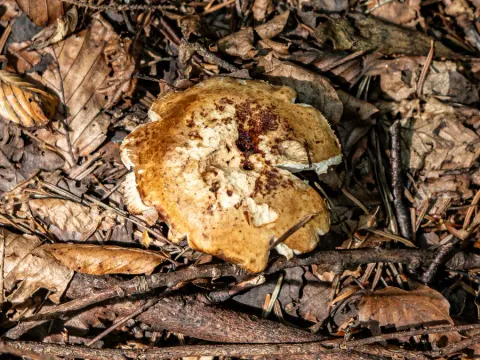
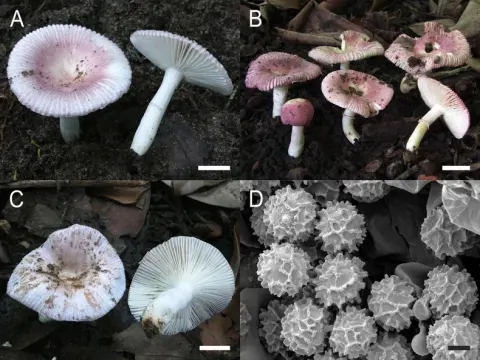
The cap is 5 to 10 cm in diameter. It is known to vary in colour, and can be various shades of green, brown, or ochre. It is initially round, flattening with age, and later develops a depression. The white stem is firm, browning, and gives a salmon reaction when rubbed with ferrous sulfate. The gills are adnexed, and white giving a spore print of the same colour. The spores are the smallest in the genus, and are 5–7 by 4–6 μm, spherical to elliptical, or pear shaped; warts 0.2–0.6 μm high, mostly isolated, but occasionally two or three joined together, or connected by a line.

Sebagian uraian ditampilkan dalam bahasa sumber; terjemahannya belum tersedia atau belum lolos pemeriksaan.

Rujukan: [1]

Pengukuran mengikuti objek, spesimen atau kultur, dan metode yang disebutkan sumber. Baca uraian asli untuk konteks lengkap.

02 / Kehidupan

Habitat dan peran ekologis

Russula heterophylla appears in summer to early autumn, usually growing in small groups. It is occasional in Britain, Europe, and Scandinavia. It grows with several species of broad-leaved trees, on the roots of which it is ectomycorrhizal.

Sebagian uraian ditampilkan dalam bahasa sumber; terjemahannya belum tersedia atau belum lolos pemeriksaan.

Rujukan: [1]

Habitat atau konteks temuan
Informasi belum tersedia pada sumber rilis ini.
Substrat
Informasi belum tersedia pada sumber rilis ini.
Peran atau konteks
Mitra tumbuhan
Temukan hubungan serupa
03 / Siklus hidup

Reproduksi

The cap is 5 to 10 cm in diameter. It is known to vary in colour, and can be various shades of green, brown, or ochre. It is initially round, flattening with age, and later develops a depression. The white stem is firm, browning, and gives a salmon reaction when rubbed with ferrous sulfate. The gills are adnexed, and white giving a spore print of the same colour. The spores are the smallest in the genus, and are 5–7 by 4–6 μm, spherical to elliptical, or pear shaped; warts 0.2–0.6 μm high, mostly isolated, but occasionally two or three joined together, or connected by a line.

Sebagian uraian ditampilkan dalam bahasa sumber; terjemahannya belum tersedia atau belum lolos pemeriksaan.

Rujukan: [1]

Sinonim menurut acuan taksonomi rilis: Agaricus furcatus heterophyllus; Agaricus galochrous; Agaricus vescus; Russula furcata var. heterophylla; Russula galochroa; Russula heterophylla f. galochroa; Russula heterophylla f. laeticolor; Russula heterophylla f. pseudo-ochroleuca; Russula heterophylla galochroa; Russula heterophylla var. avellanae; Russula heterophylla var. chloridicolor; Russula heterophylla var. galochroa; Russula heterophylla var. livescens; Russula heterophylla var. livida; Russula heterophylla var. macrospora; Russula heterophylla var. virginea; Russula livida; Russula livida var. galochroa; Russula livida var. virginea; Russula virginea
04 / Batas informasi

Catatan identitas dan cakupan

  • Nama diterima mengikuti Catalogue of Life Base2026-09-11; uraian mempertahankan konsep dan nama sumber aslinya.
  • Original geographic, specimen and life-cycle scope retained; source import awaits individual editorial review.
  • Impor dan terjemahan otomatis belum diperiksa editorial per profil. Struktur reproduktif yang disebutkan tidak membuktikan seluruh siklus hidup diketahui.
  • Pengukuran pada uraian mengikuti spesimen, kultur, dan metode sumber; angka tidak diperluas ke semua populasi.

Catatan distribusi dalam narasi mengikuti sumbernya. Dokumentasi spesimen atau foto mengikuti catatan sumber. Bukti wilayah Indonesia dan penilaian konservasi tidak disimpulkan dari gambar.

05 / Dokumentasi

Melihat dengan konteks

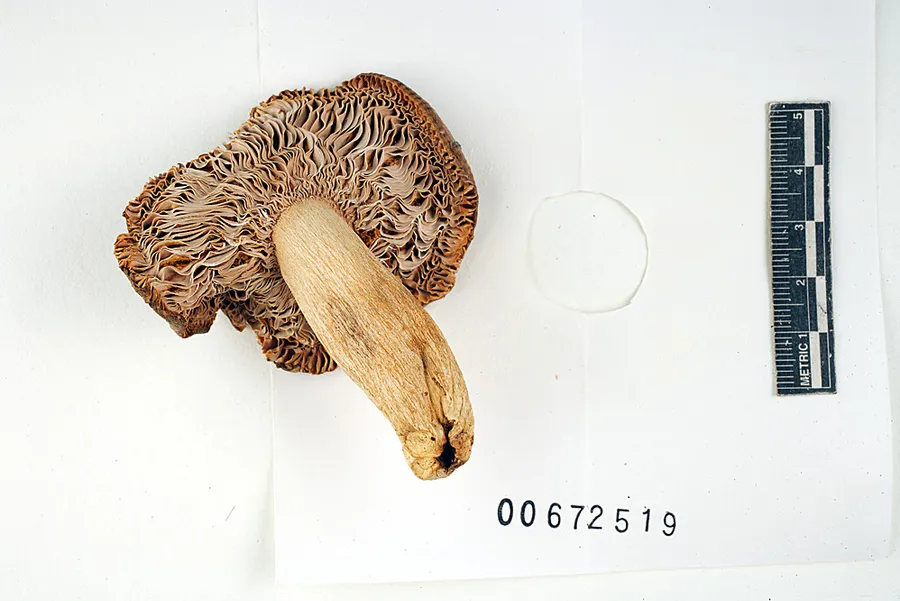
Voucher herbarium Russula heterophylla (672519), The New York Botanical Garden. Identifikasi mengikuti record spesimen sumber. Foto bahan, kemasan, atau label herbarium sebagaimana tersedia pada record institusi; bukan foto lapangan atau penentuan spesimen independen.

Jenis
Voucher herbarium
Kredit
The New York Botanical Garden
Lisensi
CC BY 4.0
Sumber media
Buka entri sumber

Gambar menunjukkan objek menurut identifikasi sumber, bukan verifikasi independen spesimen oleh Fungi. Tidak ada skala baru yang ditambahkan.

06 / Rujukan

Sumber profil

  1. [1] Russula heterophylla — Wikipedia (en)Bagian sumber: Frozen revision 1338808453
    Tanggal penghimpunan sumber: 2026-10-12
    Teks sumber: CC BY-SA4.0 · Wikipedia contributors
  2. [2] Catalogue of Life Base2026-09-11 — Russula heterophyllaBagian sumber: ColDP NameUsage.tsv ID 6X9GX; accepted species; source 2073
    Tanggal penghimpunan sumber: 2026-10-12
  3. [3] Dokumentasi visual — Russula heterophyllaBagian sumber: Individual media record; identification follows the source, not independent determination
    Tanggal penghimpunan sumber: 2026-10-12
    Media sumber: CC BY 4.0 · The New York Botanical Garden

Adaptasi teks: CC BY-SA 4.0. Wikipedia contributors — Russula heterophylla — Wikipedia (en)

Uraian asli dan riwayat sumber

Riwayat atau halaman sumber

Ringkasan sumber

The edible wild mushroom Russula heterophylla, that has lately been given the common name of the greasy green brittlegill is placed in the genus Russula, the members of which are mostly known as brittlegills. It is a variably colored mushroom, found in deciduous forests, and woods in Britain, Europe, and Scandinavia. Appearing with broad-leaved trees in summer to early autumn, it usually has a greenish coloration.

Revisi sumber

Morfologi sumber

The cap is 5 to 10 cm in diameter. It is known to vary in colour, and can be various shades of green, brown, or ochre. It is initially round, flattening with age, and later develops a depression. The white stem is firm, browning, and gives a salmon reaction when rubbed with ferrous sulfate. The gills are adnexed, and white giving a spore print of the same colour. The spores are the smallest in the genus, and are 5–7 by 4–6 μm, spherical to elliptical, or pear shaped; warts 0.2–0.6 μm high, mostly isolated, but occasionally two or three joined together, or connected by a line.

Revisi sumber

Ekologi sumber

Russula heterophylla appears in summer to early autumn, usually growing in small groups. It is occasional in Britain, Europe, and Scandinavia. It grows with several species of broad-leaved trees, on the roots of which it is ectomycorrhizal.

Revisi sumber

Struktur reproduksi sumber

The cap is 5 to 10 cm in diameter. It is known to vary in colour, and can be various shades of green, brown, or ochre. It is initially round, flattening with age, and later develops a depression. The white stem is firm, browning, and gives a salmon reaction when rubbed with ferrous sulfate. The gills are adnexed, and white giving a spore print of the same colour. The spores are the smallest in the genus, and are 5–7 by 4–6 μm, spherical to elliptical, or pear shaped; warts 0.2–0.6 μm high, mostly isolated, but occasionally two or three joined together, or connected by a line.

Revisi sumber

Rujukan halaman ini

Fungi. Russula heterophylla. Rilis data fungi-2026-10-12-expansion-2. https://fungi-atlas.mgadib.chatgpt.site/jamur/russula-heterophylla/.

Status: impor sumber; pemeriksaan editorial per profil belum selesai. Untuk klaim biologis, gunakan rujukan pada bagian terkait dan periksa konteks sumber aslinya.