01 / Morfologi

Ciri dan struktur

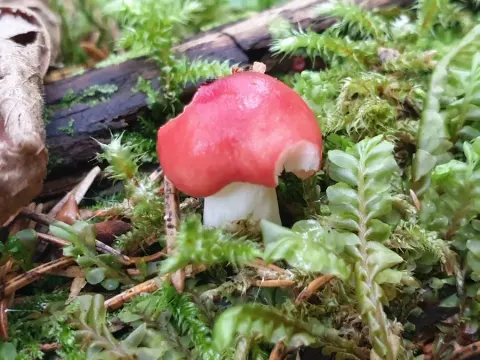
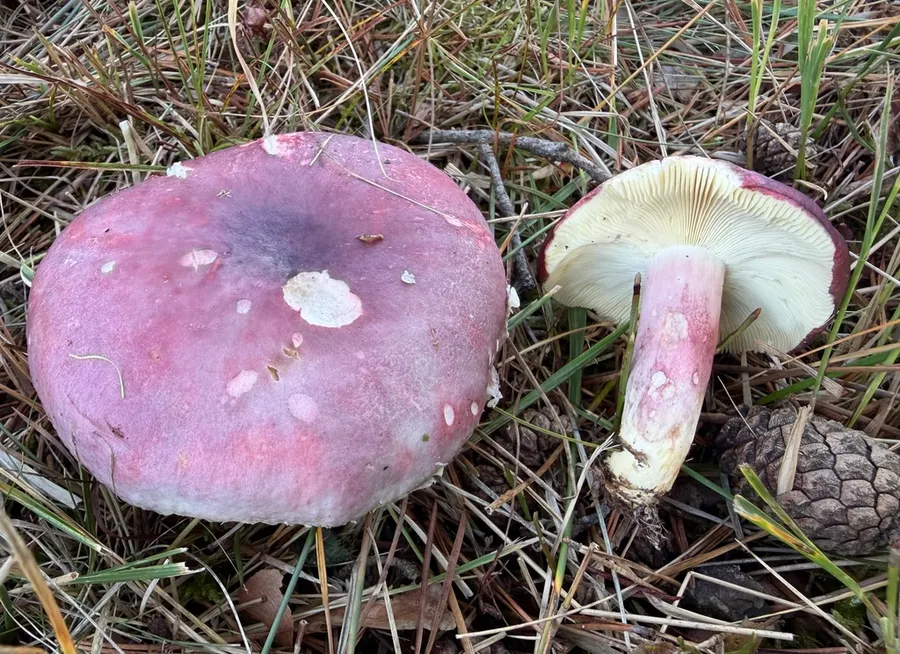
The cap grows to around 10 cm in diameter. It is commonly purplish-red, but brownish, and greenish forms have been recorded. Usually it is darker in colour towards the middle, which is convex when young, but becomes depressed in the centre with age. The stem is occasionally white, but more commonly is flushed with pale purple-red, and has a grape-like; easily removed bloom. It is 3–8 cm tall and 1–1.5 cm in diameter. The adnexed to slightly decurrent gills are pale primrose yellow, and they darken with age. They are narrow, and exude water droplets when young.(see photograph left) They also turn slowly pink when ammonia is dropped onto them. This identifies the mushroom to species level, and is a ‘must do’ test for the rarer colour forms. The spore print is cream. The flesh is firm, and has a very hot taste, making the mushroom inedible.

Sebagian uraian ditampilkan dalam bahasa sumber; terjemahannya belum tersedia atau belum lolos pemeriksaan.

Rujukan: [1]

Pengukuran mengikuti objek, spesimen atau kultur, dan metode yang disebutkan sumber. Baca uraian asli untuk konteks lengkap.

02 / Kehidupan

Habitat dan peran ekologis

Russula sardonia muncul pada akhir musim panas dan musim gugur; tumbuh dengan Pinus (pine) di hutan konifer, di tanah berpasir. Ini adalah jamur umum, dan ditemukan di seluruh Inggris, dan Eropa Utara. Hal ini tidak terjadi di Amerika Utara.

Rujukan: [1]

Habitat atau konteks temuan
hutan
Substrat
Informasi belum tersedia pada sumber rilis ini.
Peran atau konteks
Belum dikategorikan pada rilis ini.
Temukan hubungan serupa
03 / Siklus hidup

Reproduksi

The cap grows to around 10 cm in diameter. It is commonly purplish-red, but brownish, and greenish forms have been recorded. Usually it is darker in colour towards the middle, which is convex when young, but becomes depressed in the centre with age. The stem is occasionally white, but more commonly is flushed with pale purple-red, and has a grape-like; easily removed bloom. It is 3–8 cm tall and 1–1.5 cm in diameter. The adnexed to slightly decurrent gills are pale primrose yellow, and they darken with age. They are narrow, and exude water droplets when young.(see photograph left) They also turn slowly pink when ammonia is dropped onto them. This identifies the mushroom to species level, and is a ‘must do’ test for the rarer colour forms.

Sebagian uraian ditampilkan dalam bahasa sumber; terjemahannya belum tersedia atau belum lolos pemeriksaan.

Rujukan: [1]

Sinonim menurut acuan taksonomi rilis: Russula chrysodacryon; Russula chrysodacryon f. viridis; Russula drimeia; Russula drimeia f. leucopes; Russula drimeia f. mellina; Russula drimeia f. viridis; Russula drimeia var. flavovirens; Russula drimeia var. pseudorhodopoda; Russula emetica var. sardonia; Russula emeticiformis; Russula sardonia f. cremea; Russula sardonia f. leucopes; Russula sardonia f. pseudorhodopoda; Russula sardonia f. pseudorrhodopoda; Russula sardonia f. viridis; Russula sardonia var. citrina; Russula sardonia var. mellina; Russulina sardonia
04 / Batas informasi

Catatan identitas dan cakupan

  • Nama diterima mengikuti Catalogue of Life Base2026-09-11; uraian mempertahankan konsep dan nama sumber aslinya.
  • Original geographic, specimen and life-cycle scope retained; source import awaits individual editorial review.
  • Impor dan terjemahan otomatis belum diperiksa editorial per profil. Struktur reproduktif yang disebutkan tidak membuktikan seluruh siklus hidup diketahui.
  • Pengukuran pada uraian mengikuti spesimen, kultur, dan metode sumber; angka tidak diperluas ke semua populasi.

Catatan distribusi dalam narasi mengikuti sumbernya. Dokumentasi spesimen atau foto mengikuti catatan sumber. Bukti wilayah Indonesia dan penilaian konservasi tidak disimpulkan dari gambar.

05 / Dokumentasi

Melihat dengan konteks

Dokumentasi Russula sardonia menurut asosiasi foto pada record takson iNaturalist. Kredit: Lucian Clanet. Identitas mengikuti sumber; bukan penentuan spesimen independen.

Jenis
Fotografi
Kredit
(c) Lucian Clanet, some rights reserved (CC BY)
Lisensi
CC BY 4.0
Sumber media
Buka entri sumber

Gambar menunjukkan objek menurut identifikasi sumber, bukan verifikasi independen spesimen oleh Fungi. Tidak ada skala baru yang ditambahkan.

06 / Rujukan

Sumber profil

  1. [1] Russula sardonia — Wikipedia (en)Bagian sumber: Frozen revision 1194755048
    Tanggal penghimpunan sumber: 2026-10-12
    Teks sumber: CC BY-SA4.0 · Wikipedia contributors
  2. [2] Catalogue of Life Base2026-09-11 — Russula sardoniaBagian sumber: ColDP NameUsage.tsv ID 4TSMS; accepted species; source 2073
    Tanggal penghimpunan sumber: 2026-10-12
  3. [3] Dokumentasi visual — Russula sardoniaBagian sumber: Individual media record; identification follows the source, not independent determination
    Tanggal penghimpunan sumber: 2026-10-12
    Media sumber: CC BY 4.0 · (c) Lucian Clanet, some rights reserved (CC BY)

Adaptasi teks: CC BY-SA 4.0. Wikipedia contributors — Russula sardonia — Wikipedia (en)

Uraian asli dan riwayat sumber

Riwayat atau halaman sumber

Ringkasan sumber

Russula sardonia, commonly known as the primrose brittlegill, is a mushroom of the genus Russula, which are commonly known as brittlegills. The fruiting body, or mushroom, is a reddish-purple, the colour of blackberry juice, and is found in coniferous woodland in summer and autumn. It is inedible, and like many inedible members of the genus, has a hot, peppery taste.

Revisi sumber

Morfologi sumber

The cap grows to around 10 cm in diameter. It is commonly purplish-red, but brownish, and greenish forms have been recorded. Usually it is darker in colour towards the middle, which is convex when young, but becomes depressed in the centre with age. The stem is occasionally white, but more commonly is flushed with pale purple-red, and has a grape-like; easily removed bloom. It is 3–8 cm tall and 1–1.5 cm in diameter. The adnexed to slightly decurrent gills are pale primrose yellow, and they darken with age. They are narrow, and exude water droplets when young.(see photograph left) They also turn slowly pink when ammonia is dropped onto them. This identifies the mushroom to species level, and is a ‘must do’ test for the rarer colour forms. The spore print is cream. The flesh is firm, and has a very hot taste, making the mushroom inedible.

Revisi sumber

Ekologi sumber

Russula sardonia appears in late summer and autumn; growing with Pinus (pine) in coniferous woodland, on sandy soils. It is a common mushroom, and is found across Britain, and Northern Europe. It does not occur in North America.

Revisi sumber

Struktur reproduksi sumber

The cap grows to around 10 cm in diameter. It is commonly purplish-red, but brownish, and greenish forms have been recorded. Usually it is darker in colour towards the middle, which is convex when young, but becomes depressed in the centre with age. The stem is occasionally white, but more commonly is flushed with pale purple-red, and has a grape-like; easily removed bloom. It is 3–8 cm tall and 1–1.5 cm in diameter. The adnexed to slightly decurrent gills are pale primrose yellow, and they darken with age. They are narrow, and exude water droplets when young.(see photograph left) They also turn slowly pink when ammonia is dropped onto them. This identifies the mushroom to species level, and is a ‘must do’ test for the rarer colour forms.

Revisi sumber

Rujukan halaman ini

Fungi. Russula sardonia. Rilis data fungi-2026-10-12-expansion-2. https://fungi-atlas.mgadib.chatgpt.site/jamur/russula-sardonia/.

Status: impor sumber; pemeriksaan editorial per profil belum selesai. Untuk klaim biologis, gunakan rujukan pada bagian terkait dan periksa konteks sumber aslinya.