Ciri dan struktur
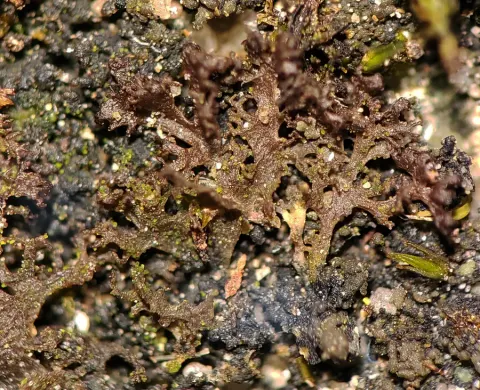
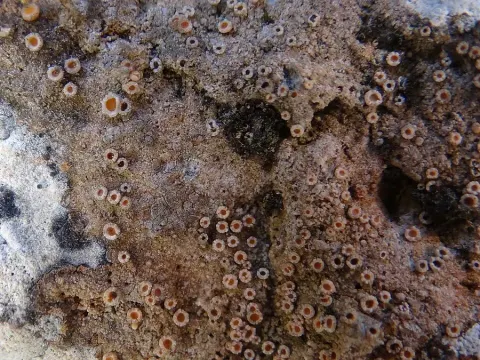
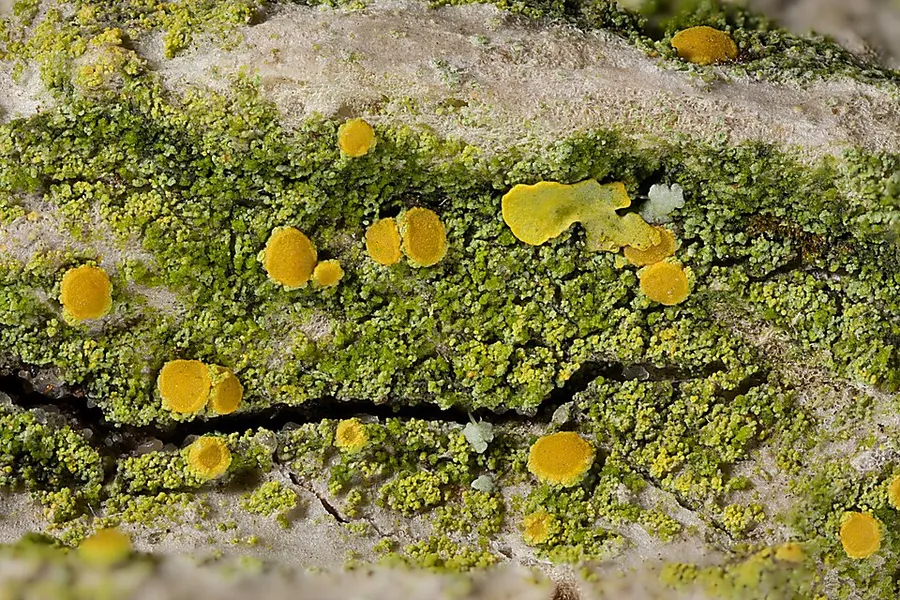
The species forms a thin, crust-like thallus (vegetative body) 0.3–3 cm across, which may be greyish, pale yellow, or yellow. The thallus surface may be broken into small tile-like patches (), embedded within bark or rock, but the areoles are usually almost or completely broken down into powdery reproductive granules (soredia). The soredia are typically thin and loose rather than forming a cracked surface, and the outer layer () is usually poorly developed. The soralia (patches of soredia) begin as small dot-like spots and later merge into a more continuous, mottled sorediate mass. Apothecia (disc-shaped fruiting bodies) are usually present, though often scattered, with yellow to orange-yellow that may carry a thin white powdery coating (pruina). They are in form, meaning they have a visible rim derived from the thallus, with a thalline exciple (outer rim of rounded cells) and a true exciple (inner rim of elongated cells). Scythioria phlogina occurs in two main colour forms. One has yellow soralia coloured by anthraquinones (orange pigments typical of the family), while the other has whitish to pale green soralia that lack anthraquinone pigmentation. Apart from soralia colour, the two forms are very similar in anatomy and other examined , including their apothecia and spores. In the pale form, anthraquinones are still present in the apothecia but are not expressed in the soralia. Chemical analyses showed that pale or grey thalli contain only low amounts of parietin, whereas more strongly coloured thalli and the apothecia contain parietin as the main anthraquinone, together with smaller amounts of fallacinal, emodin, and parietinic acid.
Habitat dan peran ekologis
Scythioria phlogina is almost entirely bark-dwelling (corticolous), growing chiefly on bark and more occasionally on wood. Although recorded from many tree genera, the species shows a strong preference for high-pH, nutrient-rich bark, such as that of Ulmus, Fraxinus, and Acer. Kondratyuk and coauthors summarized the habitat more broadly as bark of broad-leaved trees in forested areas and, in drier steppe habitats, plant debris, soil, and small shrubs, only rarely rock. In steppe habitats it was reported growing together with Caloplaca chlorina and Gallowayella coppinsii. Black Sea populations are strongly maritime and grow mainly on twigs of salt marsh shrubs such as Halocnemum strobilaceum and Limonium suffruticosum, as well as on plant debris and loess soil. The species is widespread but tends to favour maritime regions with a temperate climate. In the Nordic countries the species was recorded mainly from Denmark and southern Sweden, with only single known collections from Norway and Finland; its centre of occurrence is in southern Scandinavia, where it appears to be chiefly inland rather than strongly maritime. The species occurs across large parts of Europe. In the Netherlands, it occurs throughout the country on nutrient-rich bark, particularly on clay soils, and is most common in coastal areas.
- Habitat atau konteks temuan
- Informasi belum tersedia pada sumber rilis ini.
- Substrat
- kayu; kulit kayu
- Peran atau konteks
- Pembentuk liken
Reproduksi
The species forms a thin, crust-like thallus (vegetative body) 0.3–3 cm across, which may be greyish, pale yellow, or yellow. The thallus surface may be broken into small tile-like patches (), embedded within bark or rock, but the areoles are usually almost or completely broken down into powdery reproductive granules (soredia). The soredia are typically thin and loose rather than forming a cracked surface, and the outer layer () is usually poorly developed. The soralia (patches of soredia) begin as small dot-like spots and later merge into a more continuous, mottled sorediate mass. Scythioria phlogina occurs in two main colour forms. One has yellow soralia coloured by anthraquinones (orange pigments typical of the family), while the other has whitish to pale green soralia that lack anthraquinone pigmentation.
Catatan identitas dan cakupan
- Nama diterima mengikuti Catalogue of Life Base2026-09-11; uraian mempertahankan konsep dan nama sumber aslinya.
- Original geographic, specimen and life-cycle scope retained; source import awaits individual editorial review.
- Impor dan terjemahan otomatis belum diperiksa editorial per profil. Struktur reproduktif yang disebutkan tidak membuktikan seluruh siklus hidup diketahui.
- Pengukuran pada uraian mengikuti spesimen, kultur, dan metode sumber; angka tidak diperluas ke semua populasi.
Catatan distribusi dalam narasi mengikuti sumbernya. Dokumentasi spesimen atau foto mengikuti catatan sumber. Bukti wilayah Indonesia dan penilaian konservasi tidak disimpulkan dari gambar.
Melihat dengan konteks
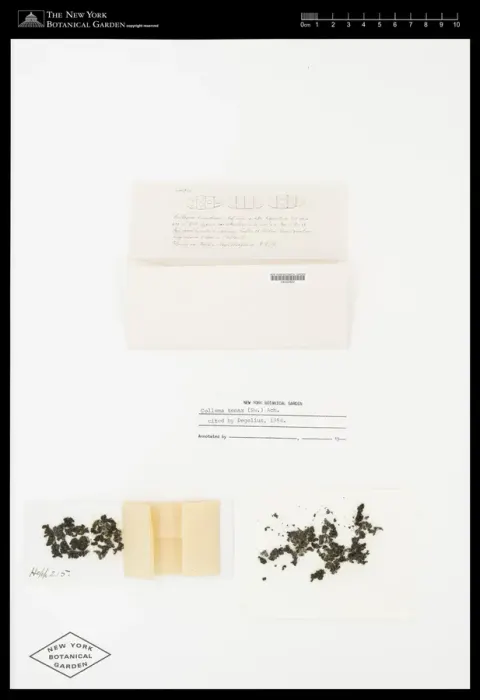
Dokumentasi Scythioria phlogina dari Wikimedia Commons. The crustose lichen species Scythioria phlogina Identifikasi mengikuti record berkas sumber.
- Jenis
- Fotografi
- Kredit
- Ulrich Kirschbaum
- Lisensi
- CC BY-SA 4.0
- Sumber media
- Buka entri sumber
Sumber profil
- [1] Scythioria phlogina — Wikipedia (en)
- [2] Catalogue of Life Base2026-09-11 — Scythioria phlogina
- [3] Dokumentasi visual — Scythioria phlogina
Rujukan halaman ini
Fungi. Scythioria phlogina. Rilis data fungi-2026-10-12-expansion-2. https://fungi-atlas.mgadib.chatgpt.site/jamur/scythioria-phlogina/.
Status: impor sumber; pemeriksaan editorial per profil belum selesai. Untuk klaim biologis, gunakan rujukan pada bagian terkait dan periksa konteks sumber aslinya.