Ciri dan struktur
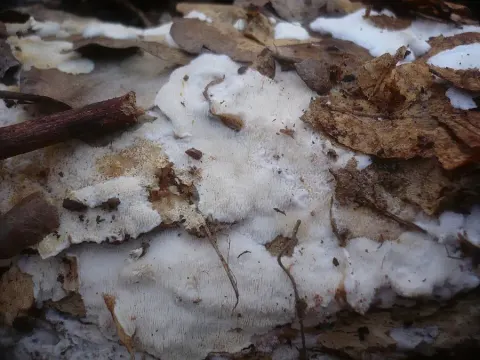
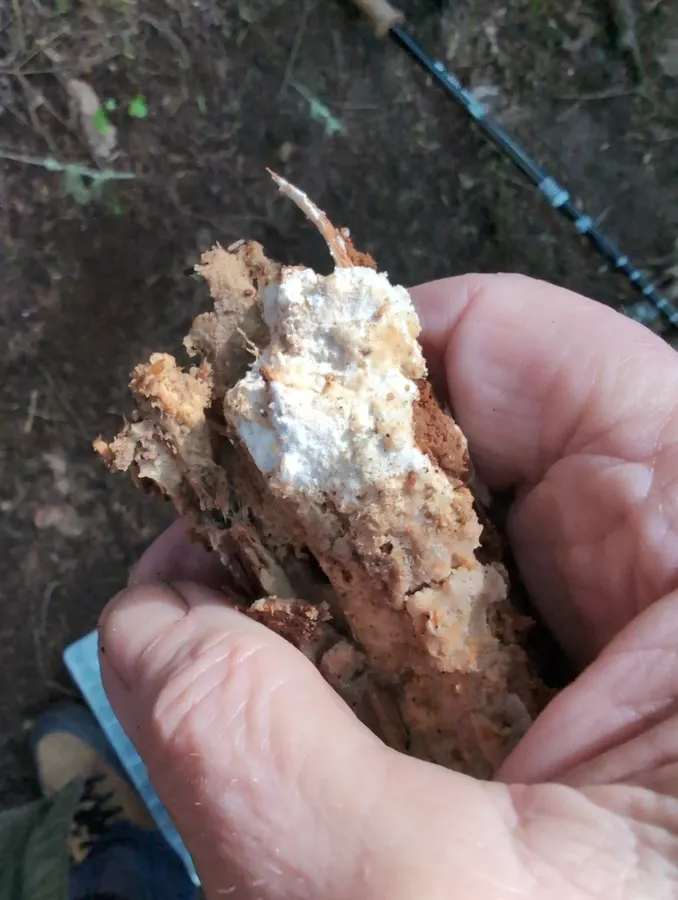
Basidioma —Annual to biennial, resupinate, soft when fresh and rather tough, soft-corky after drying, confluent and widely effused covering extended under-surface of decaying logs, 0.8–2.0 mm thick at the centre; pore surface white to cream when fresh, becoming yellowish to buff when dry; sterile margin indistinct, cottony, white, thinning-out; pores very small, roundish, (5) 6–8 (10) per mm (n = 273/13); dissepiments thin, entire to slightly lacerate; subiculum very thin, cottony, concolorous with the tube layer; tubes concolorous with the poroid surface, up to 2 mm long. Hyphal system dimitic in all parts of the basidioma; generative hyphae smooth, without encrustations, septa with clamp connections; skeletal hyphae not reacting with Cotton Blue, Melzer’s reagent or KOH. Subiculum —Hyphae interwoven, skeletal hyphae dominating, skeletals (1.7) 2–3.5 (4.0) μm in diameter, rosette-like crystal clusters rare to common. Tubes —Hyphae subparallel to moderately interwoven. Generative hyphae, thin to slightly thick-walled, poorly branched, 1.7–3.0 μm in diameter. Skeletal hyphae, thick-walled to subsolid, hyaline, rarely branched, flexuous, 1.7–3.5 μm in diameter, with scattered swellings up to 7 μm. Dissepiment edges with both generative and skeletal hyphae that often bear a swollen, capitate apex, generative hyphae sometimes covered by a mucous droplet, rosette-like crystals frequent in mature basidiomata. Cystidioles seldom to abundant, fusoid, thin-walled, hyaline, basally swollen, with hyphoid neck and mostly obtuse or capitate tip, some bearing crystals at apex (asterocystidia), a few modified as halocystidia were also observed, (9.3) 12.4–19.9 (25.0) × (2.2) 2.8–4.0 (5.3) μm (n = 125/15).
Habitat dan peran ekologis
The species is reported from Mediterranean Europe (e.g. Portugal, Spain, France, Italy, Croatia and Greece), Germany, Slovakia, Poland, Estonia, Sweden, Belarus, Russia, as well as from Armenia, Georgia, Iran, Kazakhstan, China, USA and Canada (Niemelä and Dai 1997; Ghobad-Nejhad 2011; Bernicchia et al. 2020; Liu et al. 2022; this work). It occurs on various broadleaved trees of (Alnus, Eucalyptus, Fagus, Populus, Quercus, Sorbus and Ulmus), as well as on coniferous trees, i.e. Picea, Pinus (P. halepensis, P. nigra ssp. laricio, P. pinaster, P. sylvestris) or Juniperus and on Abies cephalonica (this work).
- Habitat atau konteks temuan
- Informasi belum tersedia pada sumber rilis ini.
- Substrat
- Informasi belum tersedia pada sumber rilis ini.
- Peran atau konteks
- Belum dikategorikan pada rilis ini.
Reproduksi
Basidioma —Annual to biennial, resupinate, soft when fresh and rather tough, soft-corky after drying, confluent and widely effused covering extended under-surface of decaying logs, 0.8–2.0 mm thick at the centre; pore surface white to cream when fresh, becoming yellowish to buff when dry; sterile margin indistinct, cottony, white, thinning-out; pores very small, roundish, (5) 6–8 (10) per mm (n = 273/13); dissepiments thin, entire to slightly lacerate; subiculum very thin, cottony, concolorous with the tube layer; tubes concolorous with the poroid surface, up to 2 mm long. Hyphal system dimitic in all parts of the basidioma; generative hyphae smooth, without encrustations, septa with clamp connections; skeletal hyphae not reacting with Cotton Blue, Melzer’s reagent or KOH.
Catatan identitas dan cakupan
- Nama diterima mengikuti Catalogue of Life Base2026-09-11; uraian mempertahankan konsep dan nama sumber aslinya.
- Preserve original treatment localities, hosts and substrate scope. Materials examined describe documented specimens, not the full global range.
- Impor dan terjemahan otomatis belum diperiksa editorial per profil. Struktur reproduktif yang disebutkan tidak membuktikan seluruh siklus hidup diketahui.
- Pengukuran pada uraian mengikuti spesimen, kultur, dan metode sumber; angka tidak diperluas ke semua populasi.
Catatan distribusi dalam narasi mengikuti sumbernya. Dokumentasi spesimen atau foto mengikuti catatan sumber. Bukti wilayah Indonesia dan penilaian konservasi tidak disimpulkan dari gambar.
Melihat dengan konteks
Dokumentasi Sidera vulgaris menurut asosiasi foto pada record takson iNaturalist. Kredit: Kem Luther. Identitas mengikuti sumber; bukan penentuan spesimen independen.
- Jenis
- Fotografi
- Kredit
- (c) Kem Luther, some rights reserved (CC BY-SA)
- Lisensi
- CC BY-SA 4.0
- Sumber media
- Buka entri sumber
Dokumentasi tambahan
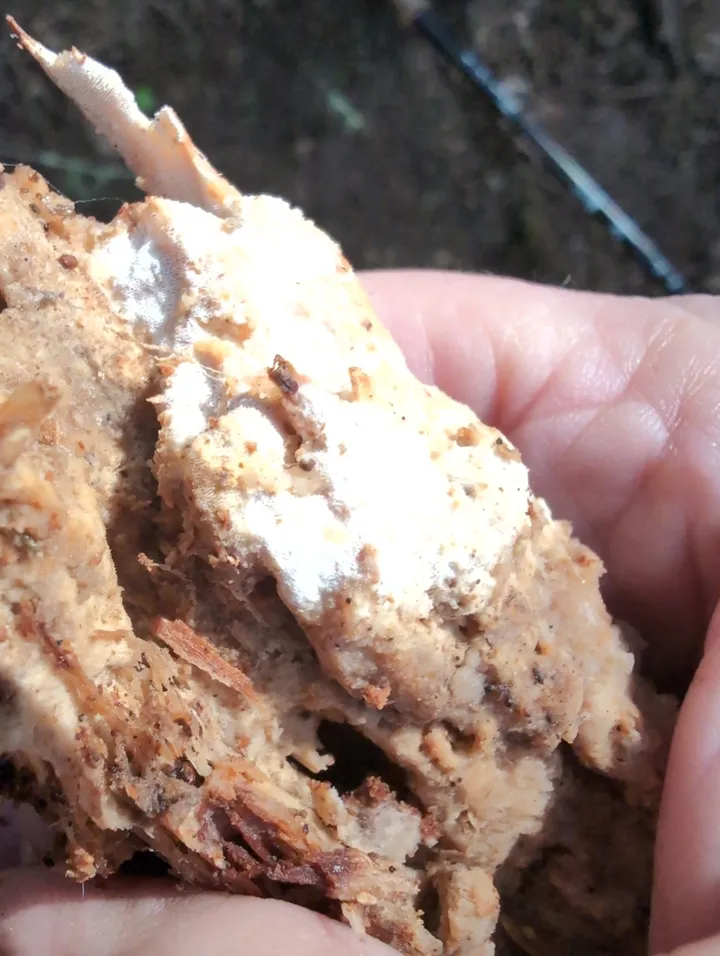
Foto yang diasosiasikan dengan Sidera vulgaris pada iNaturalist. Identifikasi mengikuti sumber; bukan penentuan spesimen independen.
Kredit dan penggunaan
(c) Kem Luther, some rights reserved (CC BY-SA)
Ukuran dan format gambar disesuaikan tanpa pemotongan, retus, atau penambahan skala. Lisensi sumber dipertahankan.
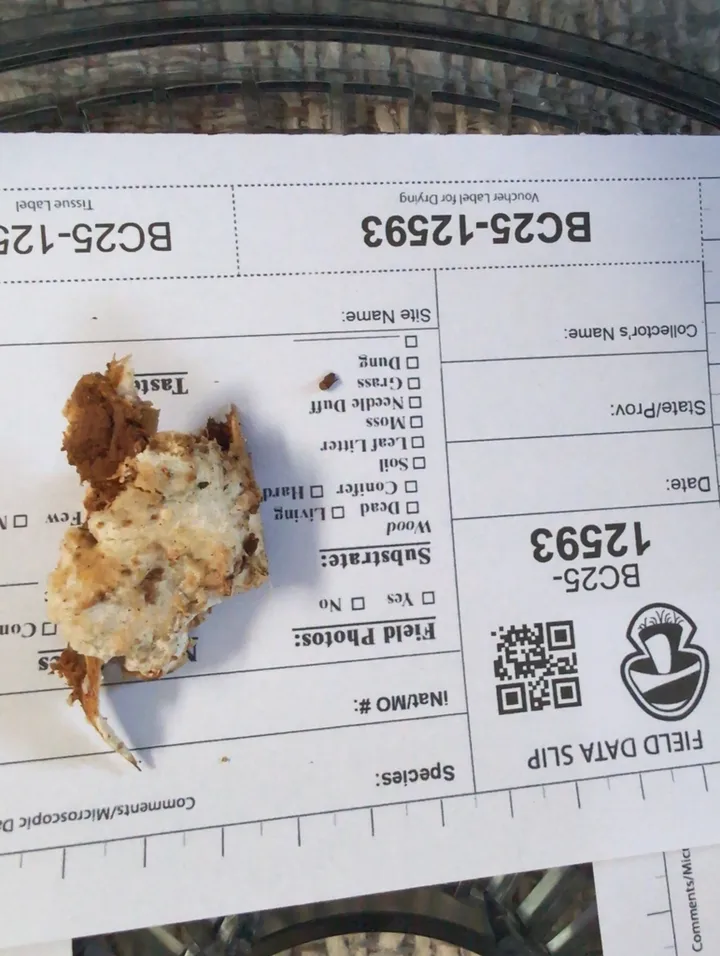
Foto yang diasosiasikan dengan Sidera vulgaris pada iNaturalist. Identifikasi mengikuti sumber; bukan penentuan spesimen independen.
Kredit dan penggunaan
(c) Kem Luther, some rights reserved (CC BY-SA)
Ukuran dan format gambar disesuaikan tanpa pemotongan, retus, atau penambahan skala. Lisensi sumber dipertahankan.
Sumber profil
- [1] Revisiting the phylogeny and taxonomy of the genus Sidera (Hymenochaetales, Basidiomycota) with particular emphasis on S. vulgaris — Sidera vulgaris
- [2] Catalogue of Life Base2026-09-11 — Sidera vulgaris
- [3] Dokumentasi visual — Sidera vulgaris
- [4] Dokumentasi visual — Sidera vulgaris
- [5] Dokumentasi visual — Sidera vulgaris
Rujukan halaman ini
Fungi. Sidera vulgaris. Rilis data fungi-2026-10-12-expansion-2. https://fungi-atlas.mgadib.chatgpt.site/jamur/sidera-vulgaris/.
Status: impor sumber; pemeriksaan editorial per profil belum selesai. Untuk klaim biologis, gunakan rujukan pada bagian terkait dan periksa konteks sumber aslinya.