01 / Morfologi

Ciri dan struktur

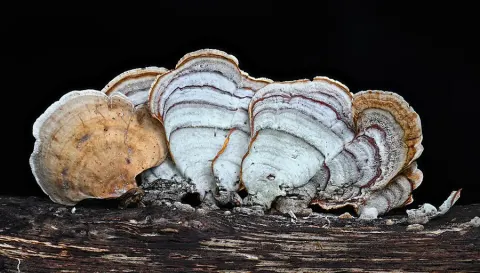
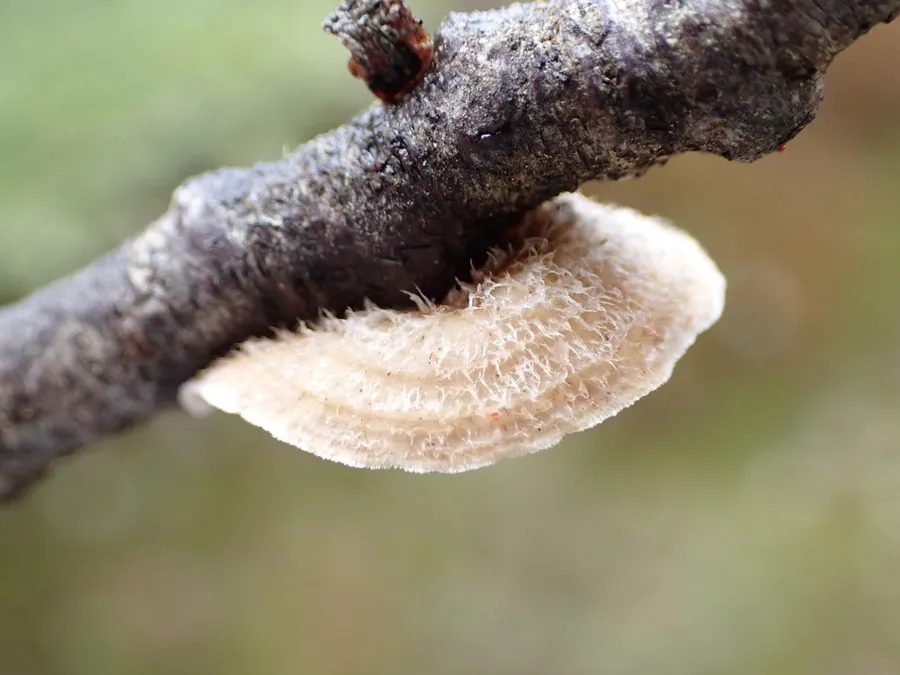
Hymenophore annual, coriaceous, pileate, sessile. Pilei effused-reflexed when dimidiate and usually attached by a broad resupinate base, umbonate or cupulate when attached by a central base, sometimes imbricate when reflexed pilei arise from a common broad resupinate base, 2-25 mm radius, and width, when laterally connate forming linear areas to 15 x 1-2 cm; pileus surface clothed with coarse hairs usually aggregated into strigose tufts, either erect or imbricated, concentrically zoned or not, concolorous or showing occasional bands of darker colour, white or pallid straw colour; margin thinning out, not inturned or complicate, slightly lobed or entire, sometimes torn when old; hymenial surface cream, pallid ochre with flesh tints, or grey, concolorous or lighter peripherally, marked with concentric zones, or raised lines where colonies merge, sometimes dimpled centrally and radially crenate, not creviced. Context white or straw colour, 0.13-0.2 mm thick, a dense layer of parallel hyphae, sometimes with an interrupted colour zone beneath surface hairs; hyphal system dimitic; skeletal hyphae 6-8 µ diameter, lumen almost capillary, hyaline, sparsely septate, rarely branched; generative hyphae 3-4 µ diameter, walls 0.25 µ thick, branched, septate, without clamp connexions. Hymenial layer 30-50 µ deep, a dense palisade of basidia, paraphyses and cystidioid hyphae. Basidia subclavate, 16-22 x 4-5 µ, 4-spored; sterigmata slender, erect, to 5 µ long. Paraphyses subcylindrical, shorter and narrower than the basidia. Cystidioid hyphae penetrating the hymenial layer, scarcely projecting, 6-8 µ diameter, with a narrow lumen save near the apices, contents inconspicuous; crystal masses often embedded in the subhymenium.

Sebagian uraian ditampilkan dalam bahasa sumber; terjemahannya belum tersedia atau belum lolos pemeriksaan.

Rujukan: [1]

Pengukuran mengikuti objek, spesimen atau kultur, dan metode yang disebutkan sumber. Baca uraian asli untuk konteks lengkap.

02 / Kehidupan

Habitat dan peran ekologis

TYPE LOCALITY. Bay of Islands, New Zealand. DISTRIBUTION. New Zealand, Australia, Tasmania. HABITAT. Crowded or scattered on bark or decorticated wood.

Sebagian uraian ditampilkan dalam bahasa sumber; terjemahannya belum tersedia atau belum lolos pemeriksaan.

Rujukan: [1]

Habitat atau konteks temuan
Informasi belum tersedia pada sumber rilis ini.
Substrat
kulit kayu
Peran atau konteks
Belum dikategorikan pada rilis ini.
Temukan hubungan serupa
03 / Siklus hidup

Reproduksi

Hymenophore annual, coriaceous, pileate, sessile. Pilei effused-reflexed when dimidiate and usually attached by a broad resupinate base, umbonate or cupulate when attached by a central base, sometimes imbricate when reflexed pilei arise from a common broad resupinate base, 2-25 mm radius, and width, when laterally connate forming linear areas to 15 x 1-2 cm; pileus surface clothed with coarse hairs usually aggregated into strigose tufts, either erect or imbricated, concentrically zoned or not, concolorous or showing occasional bands of darker colour, white or pallid straw colour; margin thinning out, not inturned or complicate, slightly lobed or entire, sometimes torn when old; hymenial surface cream, pallid ochre with flesh tints, or grey, concolorous or lighter peripherally, marked with concentric zones, or raised lines where colonies merge, sometimes dimpled centrally and radially crenate, not creviced.

Sebagian uraian ditampilkan dalam bahasa sumber; terjemahannya belum tersedia atau belum lolos pemeriksaan.

Rujukan: [1]

Sinonim menurut acuan taksonomi rilis: Crystallocystidium sericeonitens; Crystallocystidium variolosum; Stereum rigidulum; Stereum sericeonitens; Stereum variolosum
04 / Batas informasi

Catatan identitas dan cakupan

  • Nama diterima mengikuti Catalogue of Life Base2026-09-11; uraian mempertahankan konsep dan nama sumber aslinya.
  • Historical description as cited by BiotaNZ. Preserve explicit New Zealand/locality, host and specimen qualifiers. Distribution is the cited source scope, not a current global range.
  • Impor dan terjemahan otomatis belum diperiksa editorial per profil. Struktur reproduktif yang disebutkan tidak membuktikan seluruh siklus hidup diketahui.
  • Pengukuran pada uraian mengikuti spesimen, kultur, dan metode sumber; angka tidak diperluas ke semua populasi.

Catatan distribusi dalam narasi mengikuti sumbernya. Dokumentasi spesimen atau foto mengikuti catatan sumber. Bukti wilayah Indonesia dan penilaian konservasi tidak disimpulkan dari gambar.

05 / Dokumentasi

Melihat dengan konteks

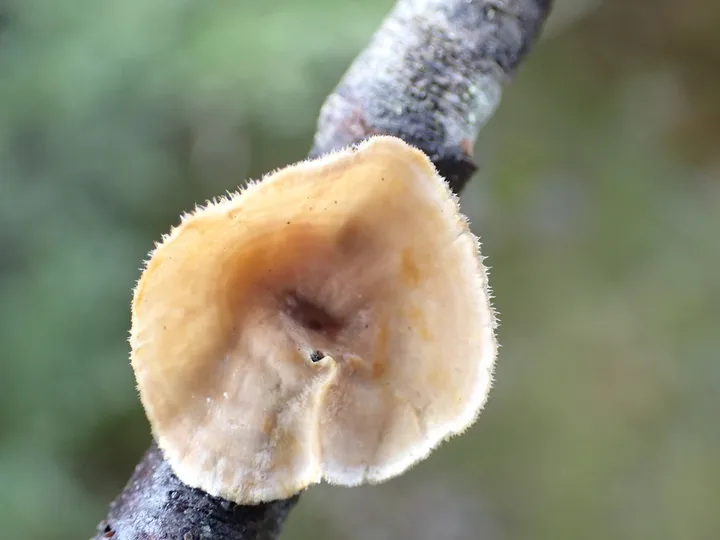
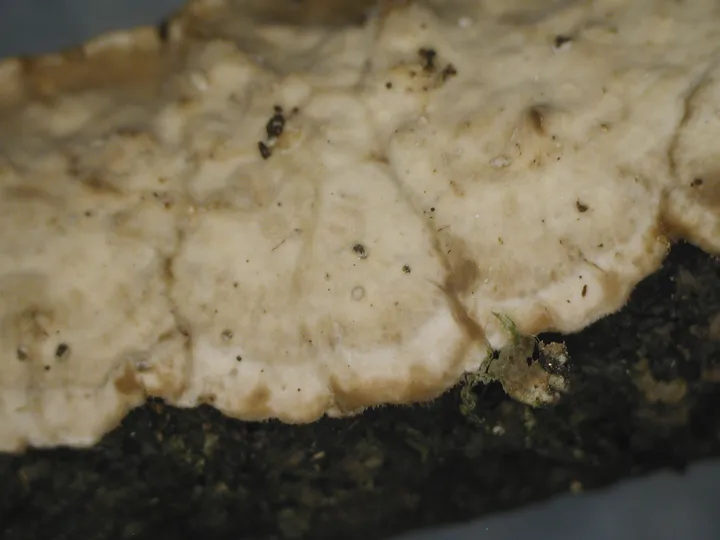
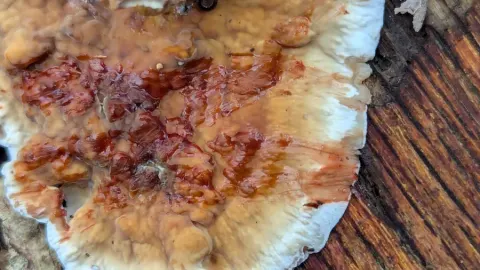
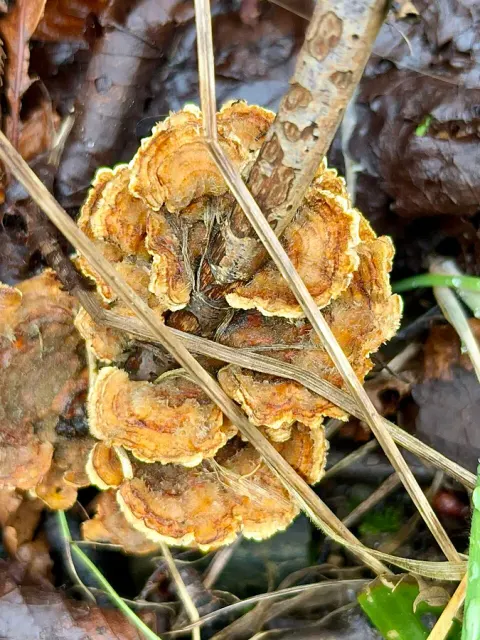
Dokumentasi Stereum vellereum menurut asosiasi foto pada record takson iNaturalist. Kredit: Lisa Bennett. Identitas mengikuti sumber; bukan penentuan spesimen independen.

Jenis
Fotografi
Kredit
(c) Lisa Bennett, some rights reserved (CC BY), uploaded by Lisa Bennett
Lisensi
CC BY 4.0
Sumber media
Buka entri sumber

Gambar menunjukkan objek menurut identifikasi sumber, bukan verifikasi independen spesimen oleh Fungi. Tidak ada skala baru yang ditambahkan.

Dokumentasi tambahan

06 / Rujukan

Sumber profil

  1. [1] Cunningham, G.H. 1956: Thelephoraceae of New Zealand. Part IX. The genus Stereum. Transactions of the Royal Society of New Zealand 84(2): 201-231. — Stereum vellereumBagian sumber: biota:1cb0def9-36b9-11d5-9548-00d0592d548c:1cb1a600-36b9-11d5-9548-00d0592d548c
    Tanggal penghimpunan sumber: 2026-10-12
    Teks sumber: CC BY 4.0 · Cunningham, G.H. 1956: Thelephoraceae of New Zealand. Part IX. The genus Stereum. Transactions of the Royal Society of New Zealand 84(2): 201-231.
  2. [2] Catalogue of Life Base2026-09-11 — Stereum vellereumBagian sumber: ColDP NameUsage.tsv ID 6ZR4C; accepted species; source 2073
    Tanggal penghimpunan sumber: 2026-10-12
  3. [3] Dokumentasi visual — Stereum vellereumBagian sumber: Identitas mengikuti sumber dokumentasi; bukan penentuan spesimen independen.
    Tanggal penghimpunan sumber: 2026-10-17
    Media sumber: CC BY 4.0 · (c) Lisa Bennett, some rights reserved (CC BY), uploaded by Lisa Bennett
  4. [4] Dokumentasi visual — Stereum vellereumBagian sumber: Identitas mengikuti sumber dokumentasi; bukan penentuan spesimen independen.
    Tanggal penghimpunan sumber: 2026-10-17
    Teks sumber: CC BY 4.0 · (c) Lisa Bennett, some rights reserved (CC BY), uploaded by Lisa Bennett
  5. [5] Dokumentasi visual — Stereum vellereumBagian sumber: Identitas mengikuti sumber dokumentasi; bukan penentuan spesimen independen.
    Tanggal penghimpunan sumber: 2026-10-17
    Teks sumber: CC BY 4.0 · (c) Jerry Cooper, some rights reserved (CC BY), uploaded by Jerry Cooper

Adaptasi teks: CC BY 4.0. Cunningham, G.H. 1956: Thelephoraceae of New Zealand. Part IX. The genus Stereum. Transactions of the Royal Society of New Zealand 84(2): 201-231. — Cunningham, G.H. 1956: Thelephoraceae of New Zealand. Part IX. The genus Stereum. Transactions of the Royal Society of New Zealand 84(2): 201-231. — Stereum vellereum

Uraian asli dan riwayat sumber

Riwayat atau halaman sumber

Ringkasan sumber

Hymenophore annual, coriaceous, pileate, sessile. Pilei effused-reflexed when dimidiate and usually attached by a broad resupinate base, umbonate or cupulate when attached by a central base, sometimes imbricate when reflexed pilei arise from a common broad resupinate base, 2-25 mm radius, and width, when laterally connate forming linear areas to 15 x 1-2 cm; pileus surface clothed with coarse hairs usually aggregated into strigose tufts, either erect or imbricated, concentrically zoned or not, concolorous or showing occasional bands of darker colour, white or pallid straw colour; margin thinning out, not inturned or complicate, slightly lobed or entire, sometimes torn when old; hymenial surface cream, pallid ochre with flesh tints, or grey, concolorous or lighter peripherally, marked with concentric zones, or raised lines where colonies merge, sometimes dimpled centrally and radially crenate, not creviced.

Revisi sumber

Morfologi sumber

Hymenophore annual, coriaceous, pileate, sessile. Pilei effused-reflexed when dimidiate and usually attached by a broad resupinate base, umbonate or cupulate when attached by a central base, sometimes imbricate when reflexed pilei arise from a common broad resupinate base, 2-25 mm radius, and width, when laterally connate forming linear areas to 15 x 1-2 cm; pileus surface clothed with coarse hairs usually aggregated into strigose tufts, either erect or imbricated, concentrically zoned or not, concolorous or showing occasional bands of darker colour, white or pallid straw colour; margin thinning out, not inturned or complicate, slightly lobed or entire, sometimes torn when old; hymenial surface cream, pallid ochre with flesh tints, or grey, concolorous or lighter peripherally, marked with concentric zones, or raised lines where colonies merge, sometimes dimpled centrally and radially crenate, not creviced. Context white or straw colour, 0.13-0.2 mm thick, a dense layer of parallel hyphae, sometimes with an interrupted colour zone beneath surface hairs; hyphal system dimitic; skeletal hyphae 6-8 µ diameter, lumen almost capillary, hyaline, sparsely septate, rarely branched; generative hyphae 3-4 µ diameter, walls 0.25 µ thick, branched, septate, without clamp connexions. Hymenial layer 30-50 µ deep, a dense palisade of basidia, paraphyses and cystidioid hyphae. Basidia subclavate, 16-22 x 4-5 µ, 4-spored; sterigmata slender, erect, to 5 µ long. Paraphyses subcylindrical, shorter and narrower than the basidia. Cystidioid hyphae penetrating the hymenial layer, scarcely projecting, 6-8 µ diameter, with a narrow lumen save near the apices, contents inconspicuous; crystal masses often embedded in the subhymenium.

Revisi sumber

Ekologi sumber

TYPE LOCALITY. Bay of Islands, New Zealand. DISTRIBUTION. New Zealand, Australia, Tasmania. HABITAT. Crowded or scattered on bark or decorticated wood.

Revisi sumber

Struktur reproduksi sumber

Hymenophore annual, coriaceous, pileate, sessile. Pilei effused-reflexed when dimidiate and usually attached by a broad resupinate base, umbonate or cupulate when attached by a central base, sometimes imbricate when reflexed pilei arise from a common broad resupinate base, 2-25 mm radius, and width, when laterally connate forming linear areas to 15 x 1-2 cm; pileus surface clothed with coarse hairs usually aggregated into strigose tufts, either erect or imbricated, concentrically zoned or not, concolorous or showing occasional bands of darker colour, white or pallid straw colour; margin thinning out, not inturned or complicate, slightly lobed or entire, sometimes torn when old; hymenial surface cream, pallid ochre with flesh tints, or grey, concolorous or lighter peripherally, marked with concentric zones, or raised lines where colonies merge, sometimes dimpled centrally and radially crenate, not creviced.

Revisi sumber

Rujukan halaman ini

Fungi. Stereum vellereum. Rilis data fungi-2026-10-12-expansion-2. https://fungi-atlas.mgadib.chatgpt.site/jamur/stereum-vellereum/.

Status: impor sumber; pemeriksaan editorial per profil belum selesai. Untuk klaim biologis, gunakan rujukan pada bagian terkait dan periksa konteks sumber aslinya.