Ciri dan struktur
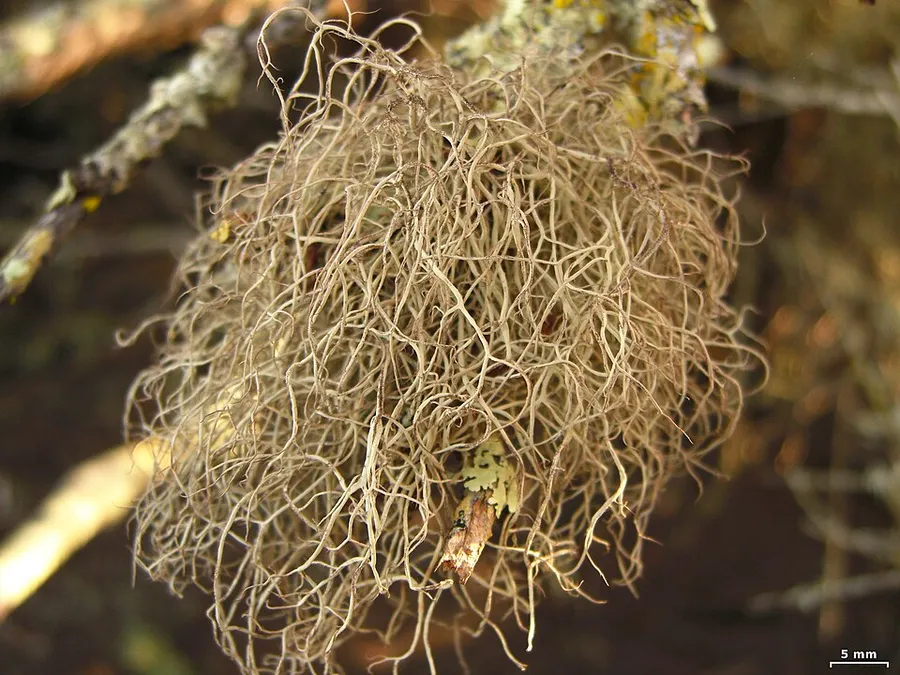
Sulcaria isidiifera is characterized by a thallus that is a dull yellowish-white, transitioning into light brown and reddish-brown at the more sun-exposed tips, and occasionally displaying shades of olive-gray. The lichen spans 3 – 5 cm in length and features a branching pattern that ranges from (equal branching) to - (unequal branching with divisions). Unique to this species are its more-or-less perpendicular branches that emerge from splits in the thallus, further splitting lengthwise and opening into relatively wide linear soralia. These soralia are filled with (spine-like) isidia and , which often have brown tips. The main branches of the lichen are about 0.3–0.5 mm in width, and the overall structure is quite brittle. Neither apothecia (reproductive structures where spores develop) nor (structures producing asexual spores) have been observed in this species. In terms of standard chemical spot tests, it is K−, C−, KC−, and Pd+ (orange) on the cortex. Sulcaria isidiifera contains protocetraric acid as its major lichen product. Although some other fruticose lichens have been mistaken for this species, including Alectoria sarmentosa, some Usnea species, Bryoria spiralifera and other pale species in the genus Bryoria, none of them display the distinct feature of having longitudinal soralia that split open to expose isidia.
Habitat dan peran ekologis
Sulcaria isidiifera is exclusively found near its original discovery site, confined within a region less than 7 mi in diameter. This lichen grows in mature coastal chaparral scrub environments. Within these coastal scrubland habitats, it shows a non-specific preference, growing on a variety of shrubs including Adenostoma fasciculatum, Quercus dumosa, Quercus agrifolia, Ceanothus ramulosus, and other unidentified shrub species.
- Habitat atau konteks temuan
- Informasi belum tersedia pada sumber rilis ini.
- Substrat
- Informasi belum tersedia pada sumber rilis ini.
- Peran atau konteks
- Pembentuk liken
Reproduksi
Sulcaria isidiifera is characterized by a thallus that is a dull yellowish-white, transitioning into light brown and reddish-brown at the more sun-exposed tips, and occasionally displaying shades of olive-gray. The lichen spans 3 – 5 cm in length and features a branching pattern that ranges from (equal branching) to - (unequal branching with divisions). Unique to this species are its more-or-less perpendicular branches that emerge from splits in the thallus, further splitting lengthwise and opening into relatively wide linear soralia. These soralia are filled with (spine-like) isidia and , which often have brown tips. The main branches of the lichen are about 0.3–0.5 mm in width, and the overall structure is quite brittle.
Catatan identitas dan cakupan
- Nama diterima mengikuti Catalogue of Life Base2026-09-11; uraian mempertahankan konsep dan nama sumber aslinya.
- Original geographic, specimen and life-cycle scope retained; source import awaits individual editorial review.
- Impor dan terjemahan otomatis belum diperiksa editorial per profil. Struktur reproduktif yang disebutkan tidak membuktikan seluruh siklus hidup diketahui.
- Pengukuran pada uraian mengikuti spesimen, kultur, dan metode sumber; angka tidak diperluas ke semua populasi.
Catatan distribusi dalam narasi mengikuti sumbernya. Dokumentasi spesimen atau foto mengikuti catatan sumber. Bukti wilayah Indonesia dan penilaian konservasi tidak disimpulkan dari gambar.
Melihat dengan konteks
Dokumentasi Sulcaria isidiifera dari Wikimedia Commons. Los Osos Oaks State Reserve, San Luis Obispo, California, 20121213 Identifikasi mengikuti record berkas sumber.
- Jenis
- Fotografi
- Kredit
- Jason Hollinger
- Lisensi
- CC BY 2.0
- Sumber media
- Buka entri sumber
Sumber profil
- [1] Sulcaria isidiifera — Wikipedia (en)
- [2] Catalogue of Life Base2026-09-11 — Sulcaria isidiifera
- [3] Dokumentasi visual — Sulcaria isidiifera
Rujukan halaman ini
Fungi. Sulcaria isidiifera. Rilis data fungi-2026-10-12-expansion-2. https://fungi-atlas.mgadib.chatgpt.site/jamur/sulcaria-isidiifera/.
Status: impor sumber; pemeriksaan editorial per profil belum selesai. Untuk klaim biologis, gunakan rujukan pada bagian terkait dan periksa konteks sumber aslinya.
