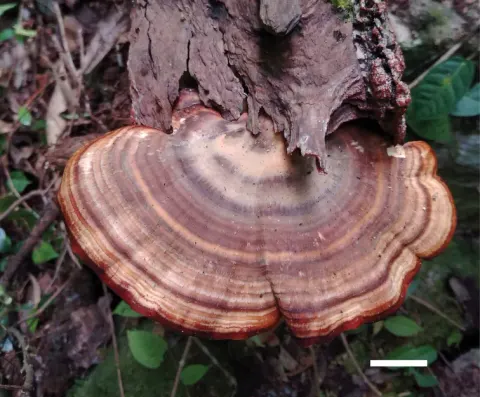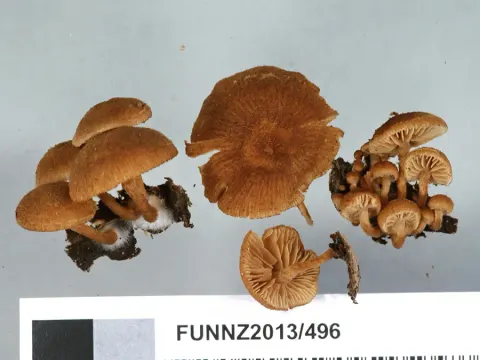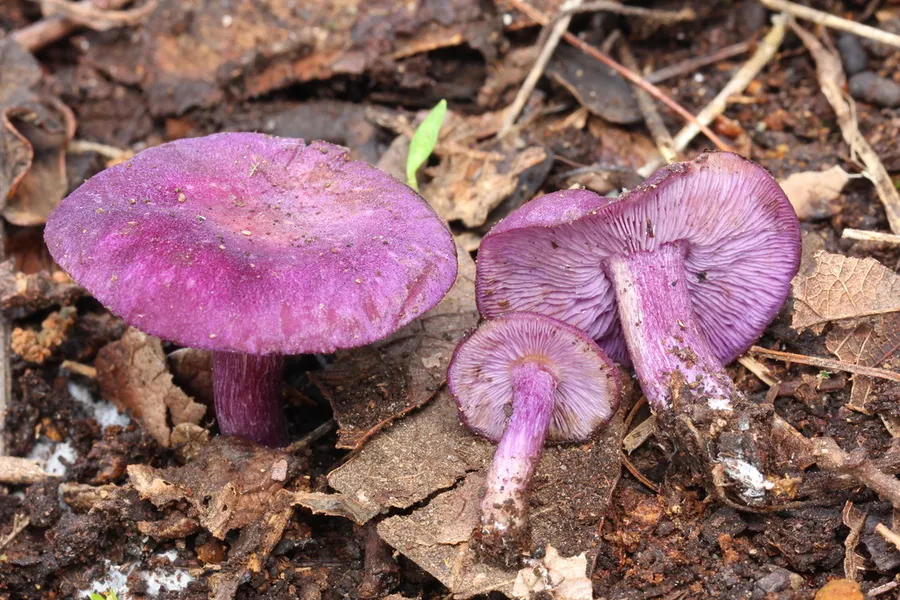
Ciri dan struktur
The cap is convex to flattened to slightly concave, measuring up to 6 cm in diameter. The color is bluish violet to greyish violet, drying to brownish. It is dry and smooth, although dry specimens may show radial grooves at the margin corresponding to the gills on the underside. The closely spaced gills have an adnate attachment to the stipe, and are pinkish brown to violet brown. The stipe measures about 3.5 cm long by 0.8 cm thick, and is somewhat bulbous at the base. It has a smooth surface that is whitish to light gray when fresh, drying to the same color as the cap. The flesh is whitish with a pleasant odor and taste. Spores are cross-shaped, thin-walled, hyaline (translucent), and typically measure 4.8–5.6 by 3.2–4 μm. They have a negative staining reaction with Melzer's reagent, and feature a conspicuous hilar appendage. The basidia (spore-bearing cells) are club-shaped with clamps at the base, and measure 24–32 long by 4.8–5.6 μm wide. Clamp connections are common in the hyphae. The hymenium contains an abundance of cystidia on both the gill edges (cheilocystidia) and faces (pleurocystidia).
Habitat dan peran ekologis
Koleksi jenis Tricholosporum tropicale ditemukan pada bulan September, berbuah tunggal di tanah di perkebunan kakao. The location was a tropical rainforest in the State of Chiapas, Mexico.
- Habitat atau konteks temuan
- Informasi belum tersedia pada sumber rilis ini.
- Substrat
- tanah
- Peran atau konteks
- Belum dikategorikan pada rilis ini.
Reproduksi
Spores are cross-shaped, thin-walled, hyaline (translucent), and typically measure 4.8–5.6 by 3.2–4 μm. They have a negative staining reaction with Melzer's reagent, and feature a conspicuous hilar appendage. The basidia (spore-bearing cells) are club-shaped with clamps at the base, and measure 24–32 long by 4.8–5.6 μm wide. Clamp connections are common in the hyphae. The hymenium contains an abundance of cystidia on both the gill edges (cheilocystidia) and faces (pleurocystidia).
Catatan identitas dan cakupan
- Nama diterima mengikuti Catalogue of Life Base2026-09-11; uraian mempertahankan konsep dan nama sumber aslinya.
- Original geographic, specimen and life-cycle scope retained; source import awaits individual editorial review.
- Impor dan terjemahan otomatis belum diperiksa editorial per profil. Struktur reproduktif yang disebutkan tidak membuktikan seluruh siklus hidup diketahui.
- Pengukuran pada uraian mengikuti spesimen, kultur, dan metode sumber; angka tidak diperluas ke semua populasi.
Catatan distribusi dalam narasi mengikuti sumbernya. Dokumentasi spesimen atau foto mengikuti catatan sumber. Bukti wilayah Indonesia dan penilaian konservasi tidak disimpulkan dari gambar.
Melihat dengan konteks
Dokumentasi Tricholosporum tropicale menurut asosiasi foto pada record takson iNaturalist. Kredit: Alan Rockefeller. Identitas mengikuti sumber; bukan penentuan spesimen independen.
- Jenis
- Fotografi
- Kredit
- (c) Alan Rockefeller, some rights reserved (CC BY), uploaded by Alan Rockefeller
- Lisensi
- CC BY 4.0
- Sumber media
- Buka entri sumber
Dokumentasi tambahan
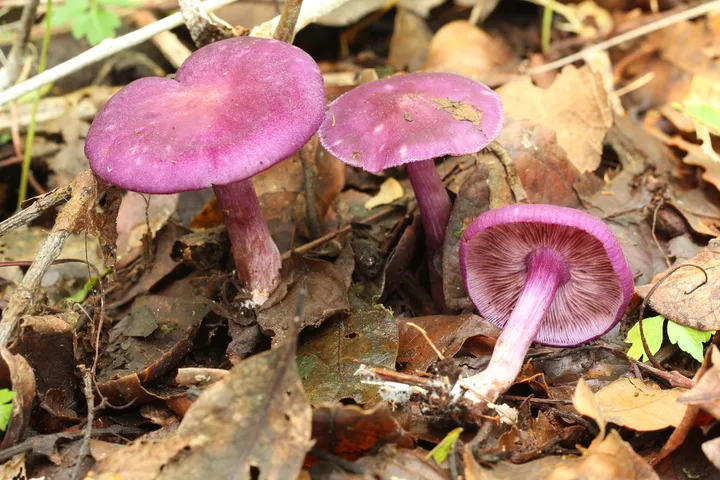
Foto yang diasosiasikan dengan Tricholosporum tropicale pada iNaturalist. Identifikasi mengikuti sumber; bukan penentuan spesimen independen.
Kredit dan penggunaan
(c) Alan Rockefeller, some rights reserved (CC BY), uploaded by Alan Rockefeller
Ukuran dan format gambar disesuaikan tanpa pemotongan, retus, atau penambahan skala. Lisensi sumber dipertahankan.
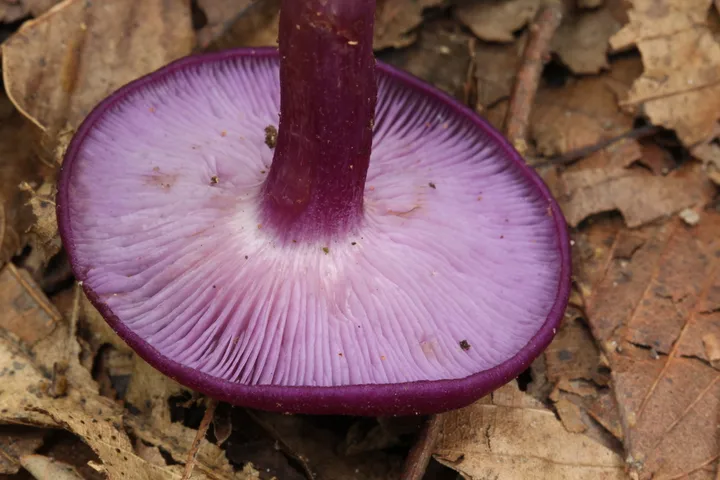
Foto yang diasosiasikan dengan Tricholosporum tropicale pada iNaturalist. Identifikasi mengikuti sumber; bukan penentuan spesimen independen.
Kredit dan penggunaan
(c) Alan Rockefeller, some rights reserved (CC BY), uploaded by Alan Rockefeller
Ukuran dan format gambar disesuaikan tanpa pemotongan, retus, atau penambahan skala. Lisensi sumber dipertahankan.
Sumber profil
- [1] Tricholosporum tropicale — Wikipedia (en)
- [2] Catalogue of Life Base2026-09-11 — Tricholosporum tropicale
- [3] Dokumentasi visual — Tricholosporum tropicale
- [4] Dokumentasi visual — Tricholosporum tropicale
- [5] Dokumentasi visual — Tricholosporum tropicale
Rujukan halaman ini
Fungi. Tricholosporum tropicale. Rilis data fungi-2026-10-12-expansion-2. https://fungi-atlas.mgadib.chatgpt.site/jamur/tricholosporum-tropicale/.
Status: impor sumber; pemeriksaan editorial per profil belum selesai. Untuk klaim biologis, gunakan rujukan pada bagian terkait dan periksa konteks sumber aslinya.