Ciri dan struktur
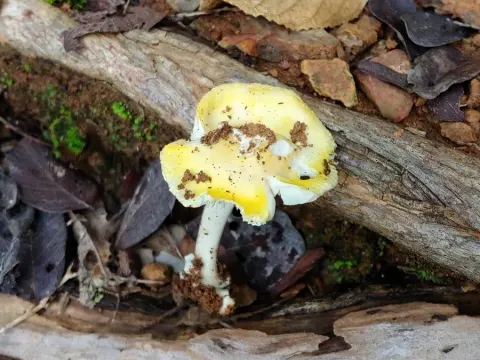
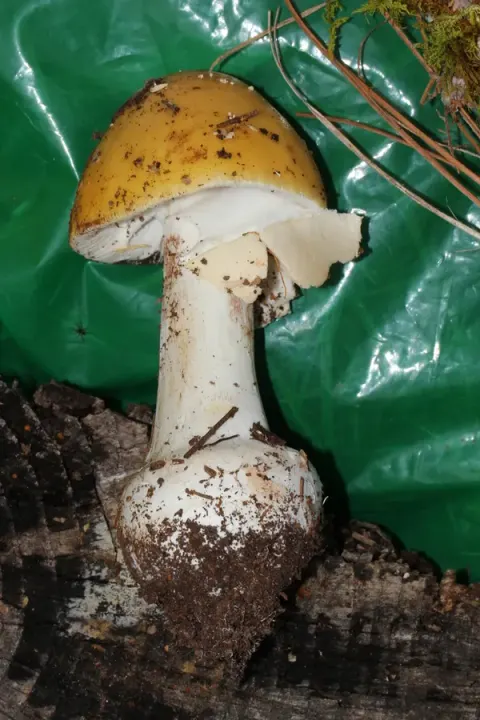
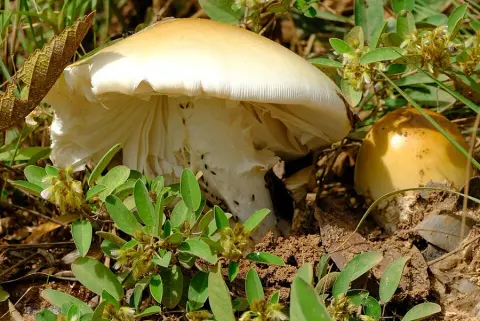
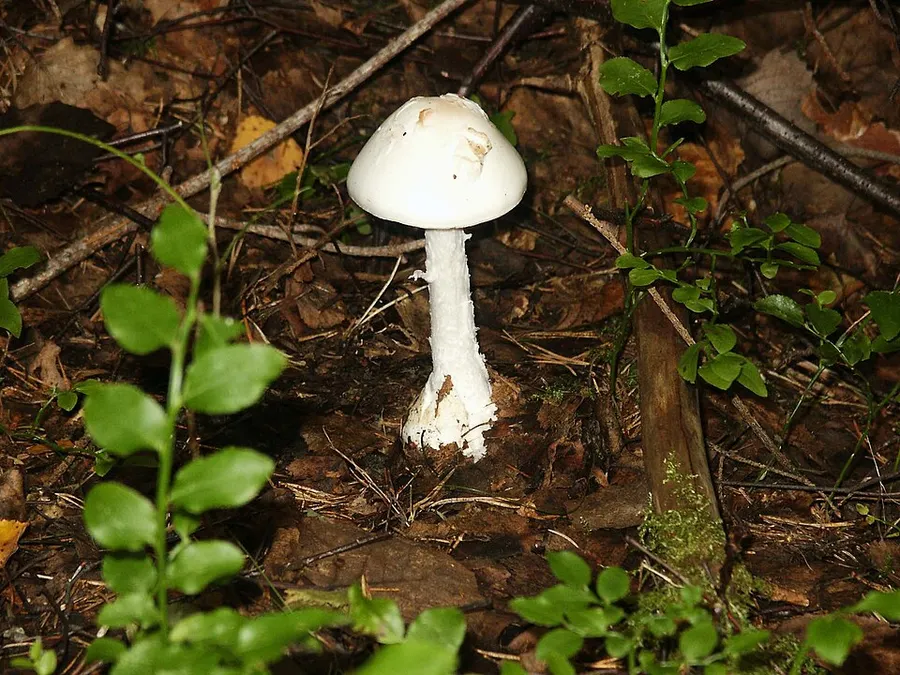
Amanita virosa first appears as a white, egg-shaped object covered with a universal veil. As it expands, the mushroom-shaped fruit body breaks free, though ragged patches of veil may persist at the cap edges. The cap is initially conical with inturned edges, before becoming hemispherical and flattening with a diameter up to 12 cm. The cap often has a distinctive boss; it is able to be peeled and is white, though the centre may be ivory. The crowded, free gills are white, as is the stipe and volva. The thin stipe is up to 15 cm tall, with a hanging, grooved ring. The spore print is white and the spores are subglobose and 7–10 μm long. They are amyloid, staining purple with Melzer's reagent. The flesh is white, with a smell reminiscent of radishes, and turns bright yellow with sodium hydroxide.
Habitat dan peran ekologis
Amanita virosa is found in woodland in late summer and autumn, especially in association with beech and chestnut, but also with pine, spruce, and fir. As with most Amanita species, it forms a mutually beneficial, ectomycorrhizal relationship with the roots of these trees. Amanita virosa was originally described from Sweden and is known throughout Europe, with additional confirmed records from northern Asia (China). The name was formerly used for similar-looking agarics in North America, but research has shown that these American species, including the eastern Amanita bisporigera, the western A. ocreata, and the northern Amanita amerivirosa, are distinct.
- Habitat atau konteks temuan
- hutan
- Substrat
- Informasi belum tersedia pada sumber rilis ini.
- Peran atau konteks
- Mitra tumbuhan
Reproduksi
Amanita virosa first appears as a white, egg-shaped object covered with a universal veil. As it expands, the mushroom-shaped fruit body breaks free, though ragged patches of veil may persist at the cap edges. The cap is initially conical with inturned edges, before becoming hemispherical and flattening with a diameter up to 12 cm. The cap often has a distinctive boss; it is able to be peeled and is white, though the centre may be ivory. The crowded, free gills are white, as is the stipe and volva. The thin stipe is up to 15 cm tall, with a hanging, grooved ring. The spore print is white and the spores are subglobose and 7–10 μm long. They are amyloid, staining purple with Melzer's reagent. The flesh is white, with a smell reminiscent of radishes, and turns bright yellow with sodium hydroxide.
Catatan identitas dan cakupan
- Nama diterima mengikuti Catalogue of Life Base2026-09-11; uraian mempertahankan konsep dan nama sumber aslinya.
- Original geographic, specimen and life-cycle scope retained; source import awaits individual editorial review.
- Impor dan terjemahan otomatis belum diperiksa editorial per profil. Struktur reproduktif yang disebutkan tidak membuktikan seluruh siklus hidup diketahui.
- Pengukuran pada uraian mengikuti spesimen, kultur, dan metode sumber; angka tidak diperluas ke semua populasi.
Catatan distribusi dalam narasi mengikuti sumbernya. Dokumentasi spesimen atau foto mengikuti catatan sumber. Bukti wilayah Indonesia dan penilaian konservasi tidak disimpulkan dari gambar.
Melihat dengan konteks
Dokumentasi Amanita virosa dari Wikimedia Commons. Original summary: "Picture taken by me in autumn -03 near my family home in Ludvika, Sweden. Amanita virosa, aka "Destroying angel"." Identifikasi mengikuti record berkas sumber.
- Jenis
- Fotografi
- Kredit
- en:User:Ben DeRoy
- Lisensi
- Public domain
- Sumber media
- Buka entri sumber
Sumber profil
- [1] Amanita virosa — Wikipedia (en)
- [2] Catalogue of Life Base2026-09-11 — Amanita virosa
- [3] Dokumentasi visual — Amanita virosa
Rujukan halaman ini
Fungi. Amanita virosa. Rilis data fungi-2026-10-12-expansion-2. https://fungi-atlas.mgadib.chatgpt.site/jamur/amanita-virosa/.
Status: impor sumber; pemeriksaan editorial per profil belum selesai. Untuk klaim biologis, gunakan rujukan pada bagian terkait dan periksa konteks sumber aslinya.