Ciri dan struktur
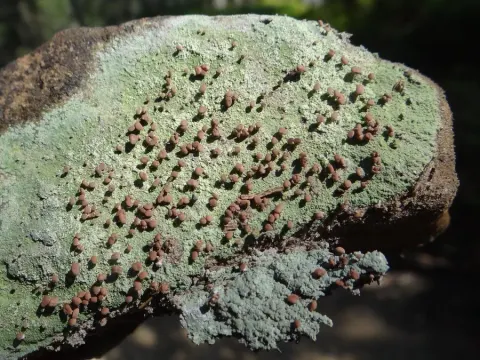
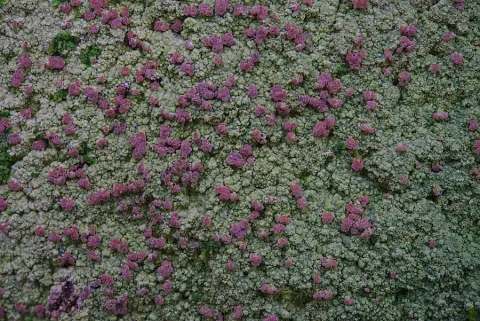
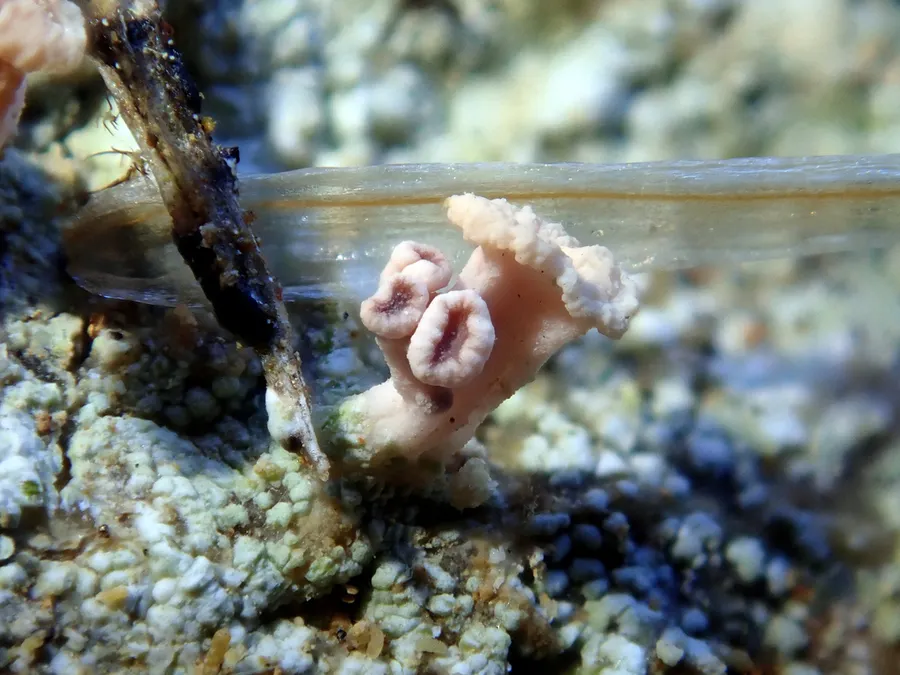
Baeomyces heteromorphus is a species of lichen with a diverse and intricate structure, primarily found forming wide, expansive patches that can exceed 50 cm in width. The lichen is characterised by its crustose thallus, which is the main body of the lichen, with a smooth, (wart-like), to - (cracked to slightly scaly) texture. Its colour ranges from pale greyish white to greenish grey, and it often turns pale pinkish grey when stored. The thallus is relatively thick, reaching up to approximately 700 μm, and spreads without a defined boundary, as it lacks a (the initial growth phase of lichens). Baeomyces heteromorphus does not produce or , which are common structures for asexual reproduction in many lichens. Instead, it occasionally develops (fragmented pieces of the thallus), but these are typically observed only in damaged specimens. The (fruiting bodies) of this lichen are small, ranging from 0.1 to 3 mm in diameter. They can be round, slightly raised (), or more frequently, distinctly stalked, appearing either singly or in clustered formations that resemble branches or racemes. The stalks of these apothecia can grow up to 7 mm tall and may be smooth or have longitudinal grooves, with some parts near the base appearing gnarled due to thalline tissue (lichen tissue). The colour of the apothecial varies from pale greyish pink to reddish brown, with its shape changing from persistently concave to flat, or even wavy to convex as it ages. The surrounding rim () is paler than the disc and may become less visible in older apothecia. Internally, the lichen has a (bottom layer beneath the hymenium in apothecia) ranging from clear to pale yellowish, underlain by a thick layer of loosely interwoven fungal filaments.
Habitat dan peran ekologis
Baeomyces heteromorphus has a broad geographical range, growing on a variety of including soil, peat, stones, and wood. Its presence is particularly noted in regions with high rainfall, as well as in locally moist microhabitats, spanning from lowland areas to alpine elevations. This species plays a role in ecological succession, often being among the first to colonise and stabilise newly exposed earth, such as areas disturbed by road construction, along pathways, or around the root mounds of upturned stumps. The species is commonly found across mainland Australia and New Zealand. On Tasmania's Mount Wellington, it occurs in three vegetations zones: in woodlands with mixed Eucalyptus coccifera and Eucalytpus urnigera stands; in wet sclerophyll forests dominated by Eucalyptus delegatensis; and in these forests dominated by Eucalyptus obliqua. Baeomyces heteromorphus also occurs in New Guinea, and Fiji. It has also been recorded from Kaikōura Island. It also extends its habitat to the subantarctic region, with documented populations on Macquarie Island.
- Habitat atau konteks temuan
- hutan
- Substrat
- Informasi belum tersedia pada sumber rilis ini.
- Peran atau konteks
- Pembentuk liken
Reproduksi
Baeomyces heteromorphus does not produce or , which are common structures for asexual reproduction in many lichens. Instead, it occasionally develops (fragmented pieces of the thallus), but these are typically observed only in damaged specimens. Internally, the lichen has a (bottom layer beneath the hymenium in apothecia) ranging from clear to pale yellowish, underlain by a thick layer of loosely interwoven fungal filaments. The hymenium (the fertile, spore-bearing layer) itself is clear and is topped by a yellow-brown layer that dissolves in potassium hydroxide (K). The (spore-containing structures) measure 70–95 by 5–8 μm, with (sterile filaments among the asci) being 1.5–2 μm thick. , the reproductive spores, vary in size from (7–)8.5 to 13(–15) by 3 to 5 μm. , which are asexual reproductive structures, were not observed in this species.
Catatan identitas dan cakupan
- Nama diterima mengikuti Catalogue of Life Base2026-09-11; uraian mempertahankan konsep dan nama sumber aslinya.
- Original geographic, specimen and life-cycle scope retained; source import awaits individual editorial review.
- Impor dan terjemahan otomatis belum diperiksa editorial per profil. Struktur reproduktif yang disebutkan tidak membuktikan seluruh siklus hidup diketahui.
- Pengukuran pada uraian mengikuti spesimen, kultur, dan metode sumber; angka tidak diperluas ke semua populasi.
Catatan distribusi dalam narasi mengikuti sumbernya. Dokumentasi spesimen atau foto mengikuti catatan sumber. Bukti wilayah Indonesia dan penilaian konservasi tidak disimpulkan dari gambar.
Melihat dengan konteks
Dokumentasi Baeomyces heteromorphus menurut asosiasi foto pada record takson iNaturalist. Kredit: Tony Wills. Identitas mengikuti sumber; bukan penentuan spesimen independen.
- Jenis
- Fotografi
- Kredit
- (c) Tony Wills, some rights reserved (CC BY-SA), uploaded by Tony Wills
- Lisensi
- CC BY-SA 4.0
- Sumber media
- Buka entri sumber
Dokumentasi tambahan
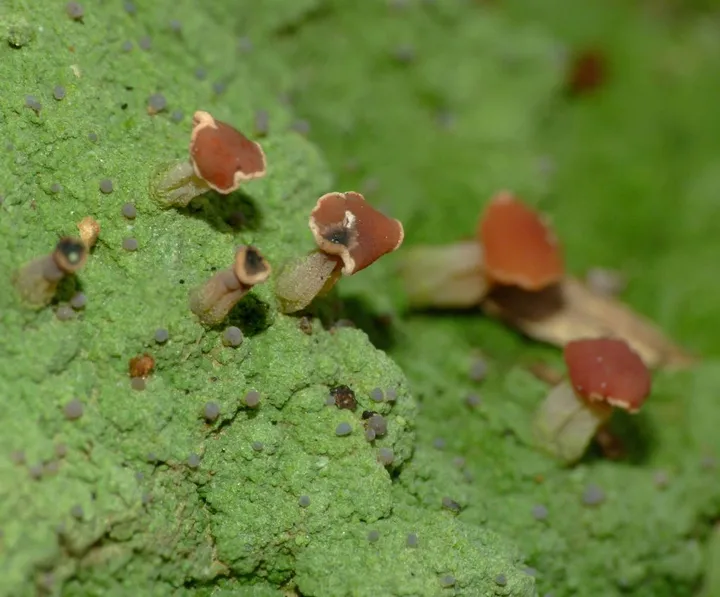
Foto yang diasosiasikan dengan Baeomyces heteromorphus pada iNaturalist. Identifikasi mengikuti sumber; bukan penentuan spesimen independen.
Kredit dan penggunaan
(c) Steve Kerr, some rights reserved (CC BY), uploaded by Steve Kerr
Ukuran dan format gambar disesuaikan tanpa pemotongan, retus, atau penambahan skala. Lisensi sumber dipertahankan.
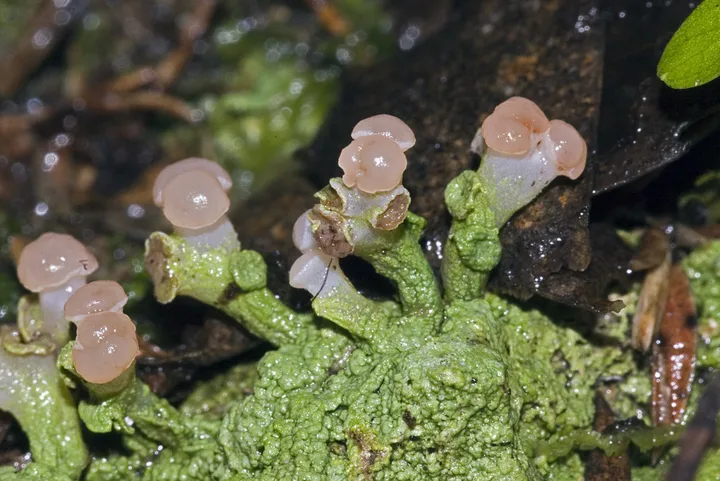
Foto yang diasosiasikan dengan Baeomyces heteromorphus pada iNaturalist. Identifikasi mengikuti sumber; bukan penentuan spesimen independen.
Kredit dan penggunaan
(c) Jeremy Rolfe, some rights reserved (CC BY), uploaded by Jeremy Rolfe
Ukuran dan format gambar disesuaikan tanpa pemotongan, retus, atau penambahan skala. Lisensi sumber dipertahankan.
Sumber profil
- [1] Baeomyces heteromorphus — Wikipedia (en)
- [2] Catalogue of Life Base2026-09-11 — Baeomyces heteromorphus
- [3] Dokumentasi visual — Baeomyces heteromorphus
- [4] Dokumentasi visual — Baeomyces heteromorphus
- [5] Dokumentasi visual — Baeomyces heteromorphus
Rujukan halaman ini
Fungi. Baeomyces heteromorphus. Rilis data fungi-2026-10-12-expansion-2. https://fungi-atlas.mgadib.chatgpt.site/jamur/baeomyces-heteromorphus/.
Status: impor sumber; pemeriksaan editorial per profil belum selesai. Untuk klaim biologis, gunakan rujukan pada bagian terkait dan periksa konteks sumber aslinya.