Ciri dan struktur
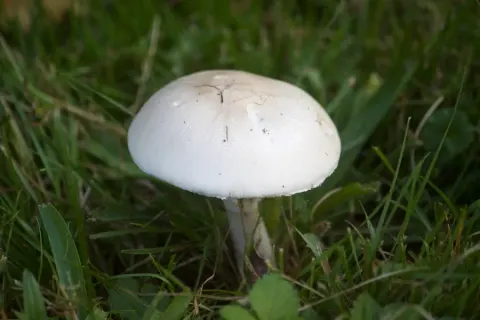
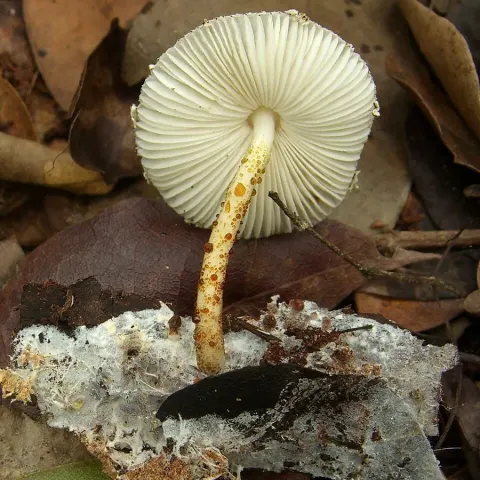
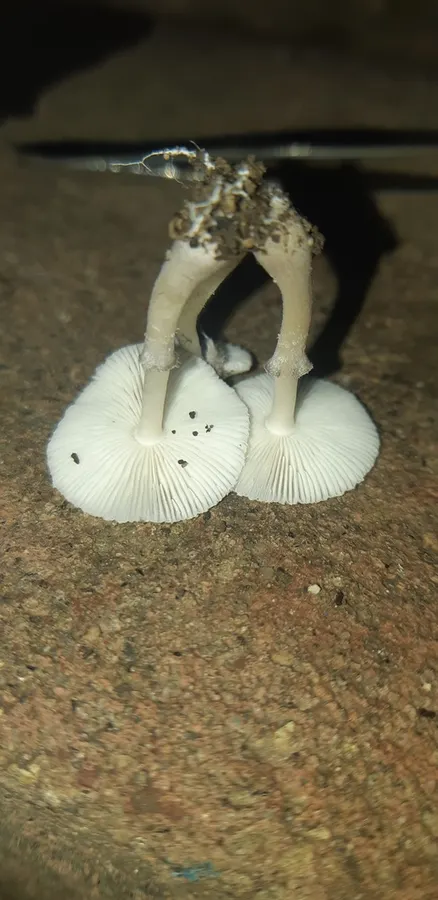
Leucocoprinus heinemannii is a small dapperling mushroom with thin white flesh. Cap: 16-22mm wide when mature, campanulate when young but flattening or becoming convex with age with edges which may lift upwards. The surface is pure white with a slightly umbonate disc which has very fine grey, purple and black tones densely concentrated in the middle. These colours extend sparsely across the cap dissipating towards the edges where there are striations which extend around a quarter of the way into the cap. Gills: Free, crowded and white. Stem: Smooth, 12-35mm long, 5 cm at most and 2mm thick tapering from a slightly bulbous 5mm base where traces of white mycelium are present. The persistent stem ring is white with brown edges and located towards the middle of the stem (median). Spores: Ellipsoidal or amygdaliform without apparent germ pore. 6.3-7.4 x 3.5-4.2 μm. Smell: Indistinct/mushroomy. Taste: Indistinct.
Habitat dan peran ekologis
L. heinemannii is not very well known and not often recorded. The first specimens studied were found growing individually in a greenhouse in Rome during the Autumn of 1985. GBIF has a few dozen recorded observations from all over the world since. A 2014 study of mushroom species found in botanical gardens in Poland documented L. heinemannii growing in a group under Dichondra and Euphorbia plants during several months of the year. This was the first recording of the species in Poland. This species was also documented in Washington state in 2010 where it was found growing gregariously amongst soil in greenhouses.
- Habitat atau konteks temuan
- Informasi belum tersedia pada sumber rilis ini.
- Substrat
- Informasi belum tersedia pada sumber rilis ini.
- Peran atau konteks
- Belum dikategorikan pada rilis ini.
Reproduksi
Cap: 16-22mm wide when mature, campanulate when young but flattening or becoming convex with age with edges which may lift upwards. The surface is pure white with a slightly umbonate disc which has very fine grey, purple and black tones densely concentrated in the middle. These colours extend sparsely across the cap dissipating towards the edges where there are striations which extend around a quarter of the way into the cap. Gills: Free, crowded and white. Stem: Smooth, 12-35mm long, 5 cm at most and 2mm thick tapering from a slightly bulbous 5mm base where traces of white mycelium are present. The persistent stem ring is white with brown edges and located towards the middle of the stem (median).
Catatan identitas dan cakupan
- Nama diterima mengikuti Catalogue of Life Base2026-09-11; uraian mempertahankan konsep dan nama sumber aslinya.
- Original geographic, specimen and life-cycle scope retained; source import awaits individual editorial review.
- Impor dan terjemahan otomatis belum diperiksa editorial per profil. Struktur reproduktif yang disebutkan tidak membuktikan seluruh siklus hidup diketahui.
- Pengukuran pada uraian mengikuti spesimen, kultur, dan metode sumber; angka tidak diperluas ke semua populasi.
Catatan distribusi dalam narasi mengikuti sumbernya. Dokumentasi spesimen atau foto mengikuti catatan sumber. Bukti wilayah Indonesia dan penilaian konservasi tidak disimpulkan dari gambar.
Melihat dengan konteks
Dokumentasi Leucocoprinus heinemannii menurut asosiasi foto pada record takson iNaturalist. Kredit: David Umanzor. Identitas mengikuti sumber; bukan penentuan spesimen independen.
- Jenis
- Fotografi
- Kredit
- (c) David Umanzor, some rights reserved (CC BY), uploaded by David Umanzor
- Lisensi
- CC BY 4.0
- Sumber media
- Buka entri sumber
Sumber profil
- [1] Leucocoprinus heinemannii — Wikipedia (en)
- [2] Catalogue of Life Base2026-09-11 — Leucocoprinus heinemannii
- [3] Dokumentasi visual — Leucocoprinus heinemannii
Rujukan halaman ini
Fungi. Leucocoprinus heinemannii. Rilis data fungi-2026-10-12-expansion-2. https://fungi-atlas.mgadib.chatgpt.site/jamur/leucocoprinus-heinemannii/.
Status: impor sumber; pemeriksaan editorial per profil belum selesai. Untuk klaim biologis, gunakan rujukan pada bagian terkait dan periksa konteks sumber aslinya.