01 / Morfologi

Ciri dan struktur

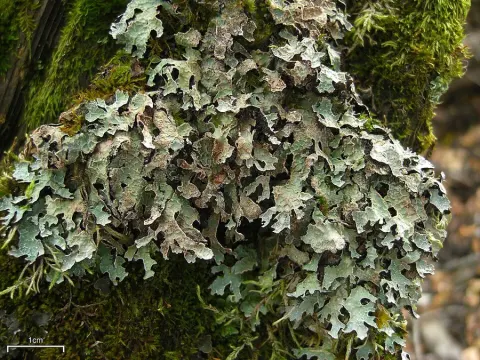
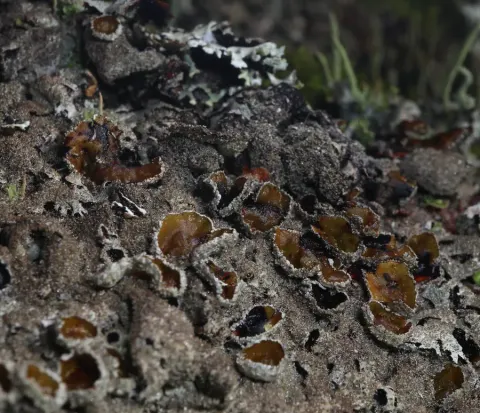
Parmelia sulcata is a foliose lichen with a generally circular thallus that can range in color from glaucous white to gray on the upper cortex; the lower surface is black. The thallus is broadly lobed. The thallus, loosely attached to its , is typically up to 6 cm, although diameters up to 10 cm have been recorded. Each lobe measures between 2 – 5 mm in width, and lobes are overlapping. The lobes, which are more or less linear, have both and soralia. Also present on both laminal and marginal regions of the lobes are elongated pseudocyphellae—small pores in the cortex—that form a pattern. Rhizines on the thallus underside are (unbranched) to (brush-like). Apothecia (fruiting bodies) are rare in this species. If present, they are up to 8 mm in diameter and in form, with a red-brown ; they often have a margin. Reproduction in P. sulcata occurs predominantly asexually through soredia, although apothecia are not exceptionally rare in rural areas. measure 8–14 μm. In terms of standard spot tests, the upper surface of Parmelia sulcata reacts K+ (yellow), KC−, C−, and P−, indicating the presence of the secondary metabolites (lichen products) atranorin and chloroatranorin. The lichen's medulla and soredia are K+ (red-orange) and Pd+ (orange). The lichen does not fluoresce in ultraviolet light. Salazinic acid and consalazinic acid are present in the medulla; lobaric acid is variably present.

Sebagian uraian ditampilkan dalam bahasa sumber; terjemahannya belum tersedia atau belum lolos pemeriksaan.

Rujukan: [1]

Pengukuran mengikuti objek, spesimen atau kultur, dan metode yang disebutkan sumber. Baca uraian asli untuk konteks lengkap.

02 / Kehidupan

Habitat dan peran ekologis

Parmelia sulcata adalah spesies yang umum di sebagian besar dunia, ditemukan dari daerah temperat hingga dingin di kedua belahan bumi selatan Northern and. Utara American distribution telah digambarkan sebagai "sangat luas, bahkan rumput liar", dan termasuk Baja California Meksiko. Ini adalah salah satu cairan yang paling umum di Eropa, setelah tercatat di negara-negara 43 di sana. Hal ini telah ditemukan untuk muncul kembali di daerah perkotaan setelah kadar sulfur dioksida telah menurun. Although common di Belahan Distrik Utara, Parmelia sulcata jarang terjadi di Amerika Selatan. Sebuah studi 2023 memberikan bukti molekul keberadaan hal ini di Chili, dan menunjukkan bahwa urutan DNA dari Chile belong ke haplotipe yang paling umum ditemukan di Eropa, Asia, dan Amerika Utara, menunjukkan distribusi luas haplotipe ini. Di Nepal, Parmelia sulcata telah dilaporkan dari 3,000 ke 3,366 m ketinggian dalam kompilasi catatan yang diterbitkan. Di Afrika, Parmelia sulcata telah didokumentasikan dari zona alpine rendah di Ethiopia and Kenya, pada ketinggian mulai dari 3500 sampai 4200 m, tetapi sebaliknya jarang terjadi. Although most umum di kulit kulit dan kayu, Parmelia sulcata juga tumbuh di batuan atau batuan yang bermunculan. Dalam sebuah studi tentang distribusi liken epifitik, termasuk Parmelia sulcata, di sepanjang batang pohon di iklim benua yang sedang, ditemukan bahwa ini paling banyak terjadi di bagian tengah hingga atas batang pohon, terutama di daerah dengan tingkat cahaya yang lebih tinggi.

Rujukan: [1]

Habitat atau konteks temuan
Informasi belum tersedia pada sumber rilis ini.
Substrat
kayu; kulit kayu
Peran atau konteks
Pembentuk liken
Temukan hubungan serupa
03 / Siklus hidup

Reproduksi

Parmelia sulcata is a foliose lichen with a generally circular thallus that can range in color from glaucous white to gray on the upper cortex; the lower surface is black. The thallus is broadly lobed. The thallus, loosely attached to its , is typically up to 6 cm, although diameters up to 10 cm have been recorded. Each lobe measures between 2 – 5 mm in width, and lobes are overlapping. The lobes, which are more or less linear, have both and soralia. Also present on both laminal and marginal regions of the lobes are elongated pseudocyphellae—small pores in the cortex—that form a pattern. Rhizines on the thallus underside are (unbranched) to (brush-like). Apothecia (fruiting bodies) are rare in this species.

Sebagian uraian ditampilkan dalam bahasa sumber; terjemahannya belum tersedia atau belum lolos pemeriksaan.

Rujukan: [1]

Sinonim menurut acuan taksonomi rilis: Imbricaria saxatilis f. sulcata; Imbricaria saxatilis var. sulcata; Parmelia saxatilis f. leucochroa; Parmelia saxatilis f. sulcata; Parmelia saxatilis subsp. sulcata; Parmelia saxatilis var. laevis; Parmelia saxatilis var. leucochroa; Parmelia saxatilis var. sulcata; Parmelia sulcata var. laevis; Parmotrema sulcatum
04 / Batas informasi

Catatan identitas dan cakupan

  • Nama diterima mengikuti Catalogue of Life Base2026-09-11; uraian mempertahankan konsep dan nama sumber aslinya.
  • Original geographic, specimen and life-cycle scope retained; source import awaits individual editorial review.
  • Impor dan terjemahan otomatis belum diperiksa editorial per profil. Struktur reproduktif yang disebutkan tidak membuktikan seluruh siklus hidup diketahui.
  • Pengukuran pada uraian mengikuti spesimen, kultur, dan metode sumber; angka tidak diperluas ke semua populasi.

Catatan distribusi dalam narasi mengikuti sumbernya. Dokumentasi spesimen atau foto mengikuti catatan sumber. Bukti wilayah Indonesia dan penilaian konservasi tidak disimpulkan dari gambar.

05 / Dokumentasi

Melihat dengan konteks

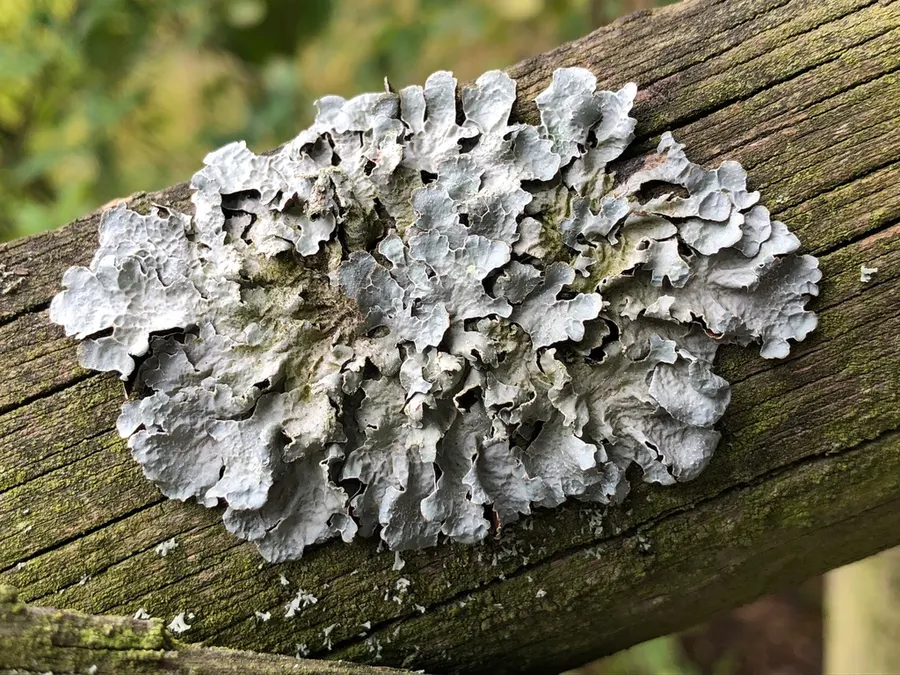
Dokumentasi Parmelia sulcata menurut asosiasi foto pada record takson iNaturalist. Kredit: mister_bumble. Identitas mengikuti sumber; bukan penentuan spesimen independen.

Jenis
Fotografi
Kredit
(c) mister_bumble, some rights reserved (CC BY), uploaded by mister_bumble
Lisensi
CC BY 4.0
Sumber media
Buka entri sumber

Gambar menunjukkan objek menurut identifikasi sumber, bukan verifikasi independen spesimen oleh Fungi. Tidak ada skala baru yang ditambahkan.

06 / Rujukan

Sumber profil

  1. [1] Parmelia sulcata — Wikipedia (en)Bagian sumber: Frozen revision 1360382831
    Tanggal penghimpunan sumber: 2026-10-12
    Teks sumber: CC BY-SA4.0 · Wikipedia contributors
  2. [2] Catalogue of Life Base2026-09-11 — Parmelia sulcataBagian sumber: ColDP NameUsage.tsv ID 75RD9; accepted species; source 2073
    Tanggal penghimpunan sumber: 2026-10-12
  3. [3] Dokumentasi visual — Parmelia sulcataBagian sumber: Individual media record; identification follows the source, not independent determination
    Tanggal penghimpunan sumber: 2026-10-12
    Media sumber: CC BY 4.0 · (c) mister_bumble, some rights reserved (CC BY), uploaded by mister_bumble

Adaptasi teks: CC BY-SA 4.0. Wikipedia contributors — Parmelia sulcata — Wikipedia (en)

Uraian asli dan riwayat sumber

Riwayat atau halaman sumber

Ringkasan sumber

Parmelia sulcata, commonly known as the hammered shield lichen or cracked-shield lichen, is a foliose lichen in the family Parmeliaceae. First described by Thomas Taylor in 1836, it is one of the most prevalent lichen species globally, known for its resilience to pollution and cosmopolitan distribution across temperate and cold regions of both hemispheres. P. sulcata forms a circular thallus up to 10 cm in diameter, with a glaucous white to grey upper surface and a black lower surface, featuring broadly structures with both marginal and laminal soralia and a distinctive pattern of pseudocyphellae.

Revisi sumber

Morfologi sumber

Parmelia sulcata is a foliose lichen with a generally circular thallus that can range in color from glaucous white to gray on the upper cortex; the lower surface is black. The thallus is broadly lobed. The thallus, loosely attached to its , is typically up to 6 cm, although diameters up to 10 cm have been recorded. Each lobe measures between 2 – 5 mm in width, and lobes are overlapping. The lobes, which are more or less linear, have both and soralia. Also present on both laminal and marginal regions of the lobes are elongated pseudocyphellae—small pores in the cortex—that form a pattern. Rhizines on the thallus underside are (unbranched) to (brush-like). Apothecia (fruiting bodies) are rare in this species. If present, they are up to 8 mm in diameter and in form, with a red-brown ; they often have a margin. Reproduction in P. sulcata occurs predominantly asexually through soredia, although apothecia are not exceptionally rare in rural areas. measure 8–14 μm. In terms of standard spot tests, the upper surface of Parmelia sulcata reacts K+ (yellow), KC−, C−, and P−, indicating the presence of the secondary metabolites (lichen products) atranorin and chloroatranorin. The lichen's medulla and soredia are K+ (red-orange) and Pd+ (orange). The lichen does not fluoresce in ultraviolet light. Salazinic acid and consalazinic acid are present in the medulla; lobaric acid is variably present.

Revisi sumber

Ekologi sumber

Parmelia sulcata is a common species throughout much of the world, found from temperate to cold regions of both the Northern and Southern Hemispheres. Its northern North American distribution has been described as "extremely widespread, even weedy", and includes Mexico's Baja California. It is one of the most common lichens in Europe, having been recorded in 43 countries there. It has been found to reappear in urban areas after sulphur dioxide levels have decreased. Although common in the Northern Hemisphere, Parmelia sulcata is rare in South America. A 2023 study provided molecular evidence for its presence in Chile, and showed that DNA sequences from Chile belong to the most common haplotype found in Europe, Asia, and North America, indicating a widespread distribution of this haplotype. In Nepal, Parmelia sulcata has been reported from 3,000 to 3,366 m elevation in a compilation of published records. In Africa, Parmelia sulcata has been documented from the low alpine zone in Ethiopia and Kenya, at elevations ranging from 3500 to 4200 m, but it is otherwise rare. Although most common on bark and on wood, Parmelia sulcata also grows on rocks or mossy rocks. In a study of the distribution of epiphytic lichens, including Parmelia sulcata, along tree trunks in a temperate continental climate, it was found to be most abundant in the middle to upper parts of tree trunks, particularly in areas with higher light levels.

Revisi sumber

Struktur reproduksi sumber

Parmelia sulcata is a foliose lichen with a generally circular thallus that can range in color from glaucous white to gray on the upper cortex; the lower surface is black. The thallus is broadly lobed. The thallus, loosely attached to its , is typically up to 6 cm, although diameters up to 10 cm have been recorded. Each lobe measures between 2 – 5 mm in width, and lobes are overlapping. The lobes, which are more or less linear, have both and soralia. Also present on both laminal and marginal regions of the lobes are elongated pseudocyphellae—small pores in the cortex—that form a pattern. Rhizines on the thallus underside are (unbranched) to (brush-like). Apothecia (fruiting bodies) are rare in this species.

Revisi sumber

Rujukan halaman ini

Fungi. Parmelia sulcata. Rilis data fungi-2026-10-12-expansion-2. https://fungi-atlas.mgadib.chatgpt.site/jamur/parmelia-sulcata/.

Status: impor sumber; pemeriksaan editorial per profil belum selesai. Untuk klaim biologis, gunakan rujukan pada bagian terkait dan periksa konteks sumber aslinya.