Ciri dan struktur
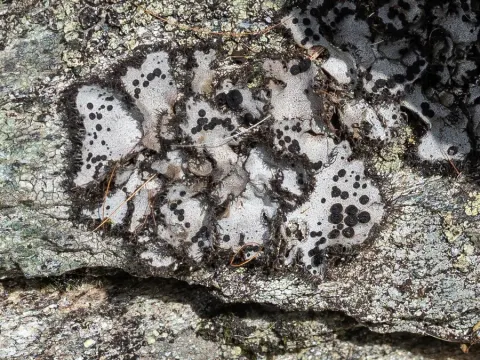
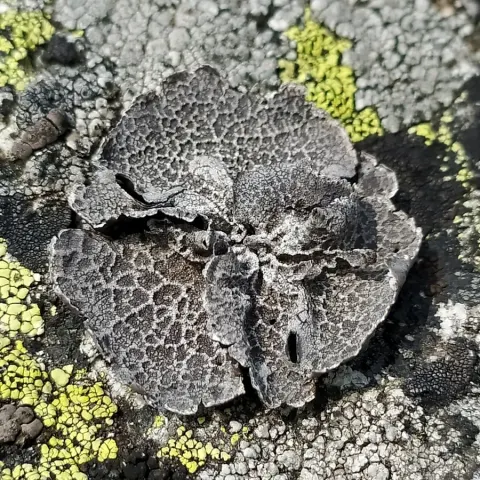
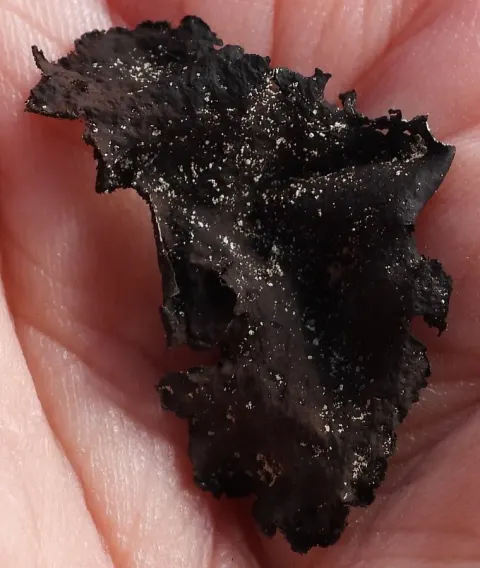
The thallus of Umbilicaria aprina is single-leaved (), shield-shaped (), and rigid, measuring up to 6 cm in diameter. The upper surface is light grey, typically featuring radiating ridges from the central, elevated point known as the . The lower surface is predominantly sooty black with a light grey rim about 2–3 mm wide along the margins. This lower surface is covered with single-celled reproductive propagules known as and adorned with white —root-like extensions that are unbranched or sparsely branched and densely populate the rim. Reproductive structures (apothecia) are rare, black, and may be up to 2.5 mm in diameter.
Habitat dan peran ekologis
Umbilicaria aprina is commonly found in the high alpine regions near glaciers and is present worldwide, including extreme arctic and Antarctic areas. Although it is not commonly found in the Andes, it exists throughout the mountain range. The species grows on boulders in these cold, exposed environments, which helps it avoid competition and survive in harsh conditions.
- Habitat atau konteks temuan
- Informasi belum tersedia pada sumber rilis ini.
- Substrat
- Informasi belum tersedia pada sumber rilis ini.
- Peran atau konteks
- Pembentuk liken
Reproduksi
The thallus of Umbilicaria aprina is single-leaved (), shield-shaped (), and rigid, measuring up to 6 cm in diameter. The upper surface is light grey, typically featuring radiating ridges from the central, elevated point known as the . The lower surface is predominantly sooty black with a light grey rim about 2–3 mm wide along the margins. This lower surface is covered with single-celled reproductive propagules known as and adorned with white —root-like extensions that are unbranched or sparsely branched and densely populate the rim. Reproductive structures (apothecia) are rare, black, and may be up to 2.5 mm in diameter.
Catatan identitas dan cakupan
- Nama diterima mengikuti Catalogue of Life Base2026-09-11; uraian mempertahankan konsep dan nama sumber aslinya.
- Original geographic, specimen and life-cycle scope retained; source import awaits individual editorial review.
- Impor dan terjemahan otomatis belum diperiksa editorial per profil. Struktur reproduktif yang disebutkan tidak membuktikan seluruh siklus hidup diketahui.
- Pengukuran pada uraian mengikuti spesimen, kultur, dan metode sumber; angka tidak diperluas ke semua populasi.
Catatan distribusi dalam narasi mengikuti sumbernya. Dokumentasi spesimen atau foto mengikuti catatan sumber. Bukti wilayah Indonesia dan penilaian konservasi tidak disimpulkan dari gambar.
Melihat dengan konteks
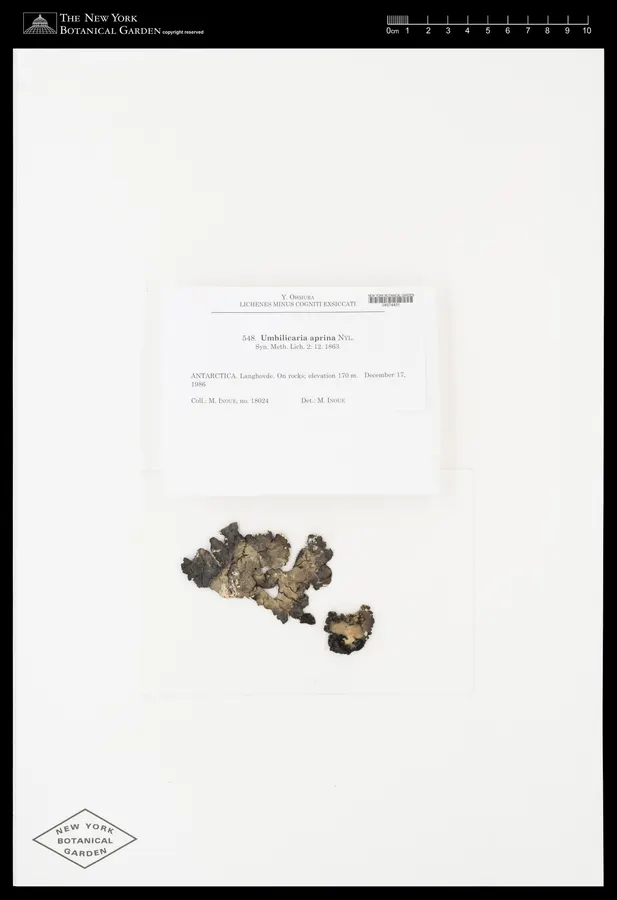
Voucher herbarium Umbilicaria aprina (04574431), The New York Botanical Garden. Identifikasi mengikuti record spesimen sumber. Foto bahan, kemasan, atau label herbarium sebagaimana tersedia pada record institusi; bukan foto lapangan atau penentuan spesimen independen.
- Jenis
- Voucher herbarium
- Kredit
- The New York Botanical Garden
- Lisensi
- CC BY 4.0
- Sumber media
- Buka entri sumber
Sumber profil
- [1] Umbilicaria aprina — Wikipedia (en)
- [2] Catalogue of Life Base2026-09-11 — Umbilicaria aprina
- [3] Dokumentasi visual — Umbilicaria aprina
Rujukan halaman ini
Fungi. Umbilicaria aprina. Rilis data fungi-2026-10-12-expansion-2. https://fungi-atlas.mgadib.chatgpt.site/jamur/umbilicaria-aprina/.
Status: impor sumber; pemeriksaan editorial per profil belum selesai. Untuk klaim biologis, gunakan rujukan pada bagian terkait dan periksa konteks sumber aslinya.